


You usually wash your bedsheets along with your pillowcases. But what about the pillows? Most homeowners usually ask, “Can you wash pillows?” Well, pillows can accumulate germs due to sweating, body oil, dead skin cells, etc, which should be cleaned often.
Washing the pillow cases can get rid of the surface-level germs. However, to actually get rid of all the germs inside the pillow, you need to wash your pillows. It prevents build-up, foul smells, and stains inside the pillow. This blog will explain if you can wash your pillows and how often to wash them, in addition to other care tips.
How Often Should Pillows Be Washed?
You should wash the pillows at least twice a year. It is also advised to immediately wash them if you notice visible spots, excessive dust buildups, etc. Most people spend at least 56 hours on the pillow every week, on average. Given the statistics, no matter how clean your pillow looks, dirt, grime, and other factors are still present.
When you sleep, your body constantly sheds skin cells, known as dead skin cells, which, upon contact with the pillow, attract dust mites. The mites’ dropping contains allergen-causing factors that can trigger dust mite allergy symptoms, such as asthma, itchy eyes, head, and skin.
Before washing the pillows, consider checking the manufacturer’s instructions because not all pillows can be machine-washed. Having the right information beforehand makes sure that the pillows won’t get damaged.
How to Wash Your Pillow?
Here are three effective ways to wash your pillow -
Handwash With Warm Water
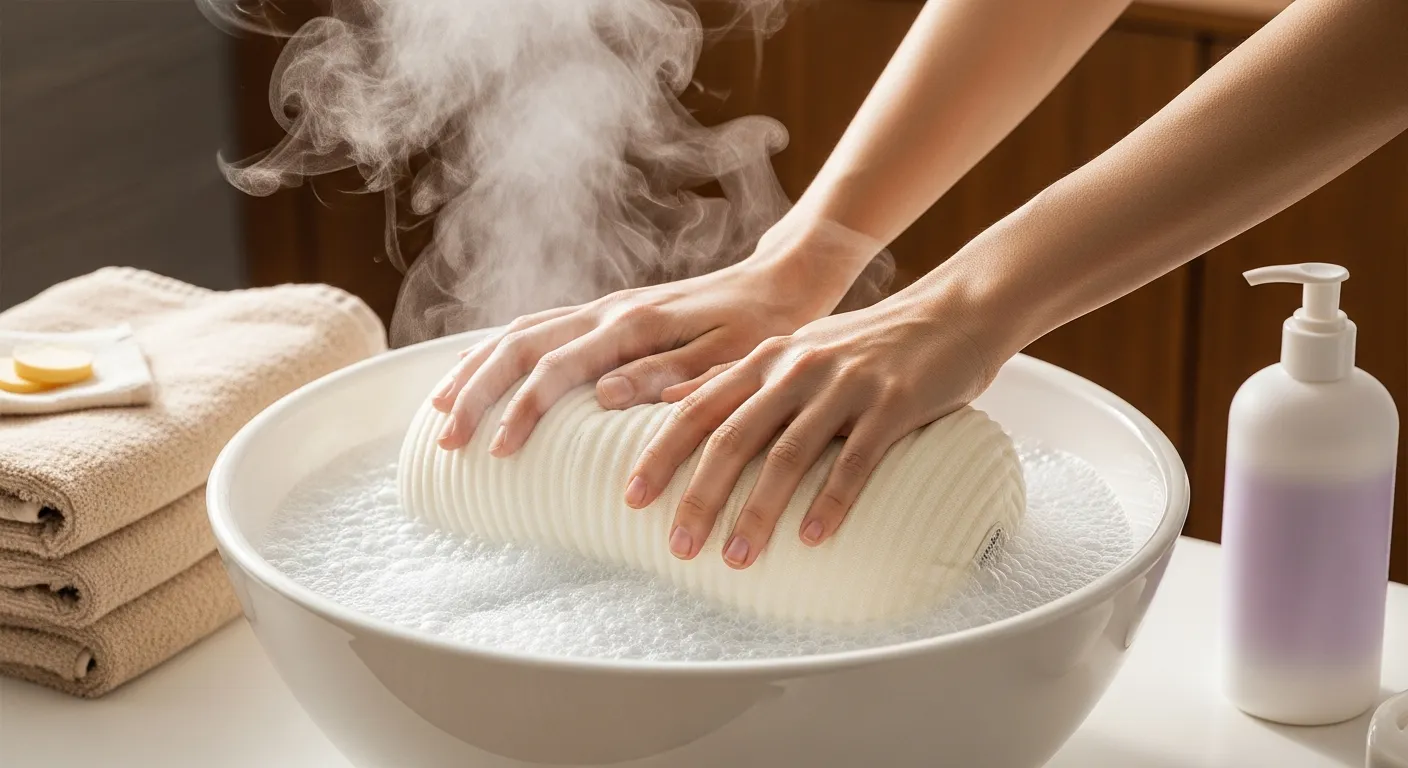
To hand-wash the pillows, fill the sink with lukewarm water and add a tablespoon of dish soap. Next, submerge the pillow and gently swish it around. It is better to let the pillow soak for a while and then empty the sink. Ensure to squeeze out the excessive water before setting the pillow out to dry.
If you feel that the soap hasn’t rinsed out completely, run a second rinsing cycle. It can be quite challenging to wash the pillow in the sink if you have a small one. Also, carrying the pillow can be messy as the water will drip all the way down.
Machine Wash With Warm Water
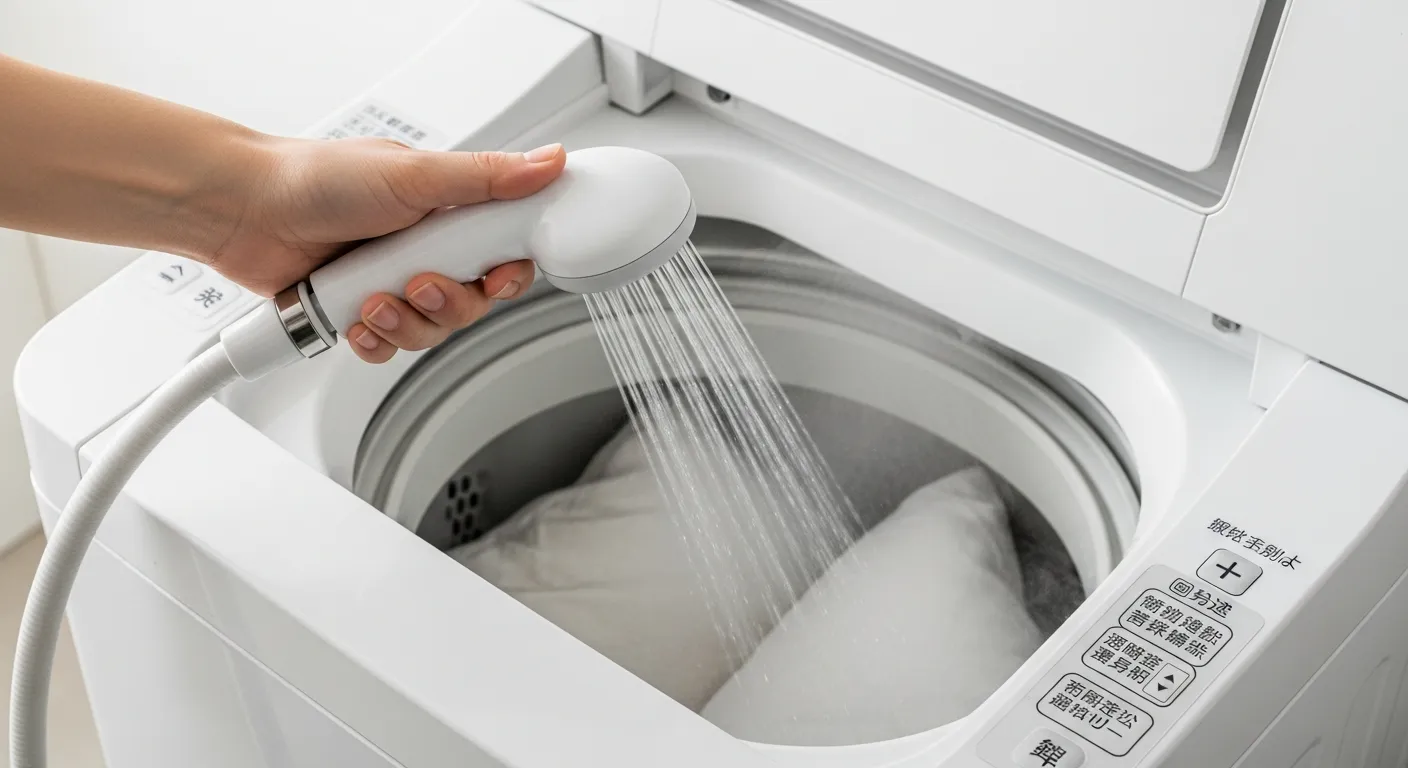
Place a pillow in the machine and make sure it is loosely wrapped around the agitator of the machine (in case of a top loader). During the spin cycle, the machine may become unstable, so it is advised to place a few towels opposite the pillow for balance.
Once everything is placed in order, set the water temperature to warm, and cycle to delicate. Add two tablespoons of liquid detergent and start the machine. You can do an extra rinse and spin cycle, if needed, and then take the pillow out to dry. This method is less messy as there won’t be water dripping all over the floor. Also, the pillow will be visibly clean with minimal effort.
Machine Wash With Cold Water
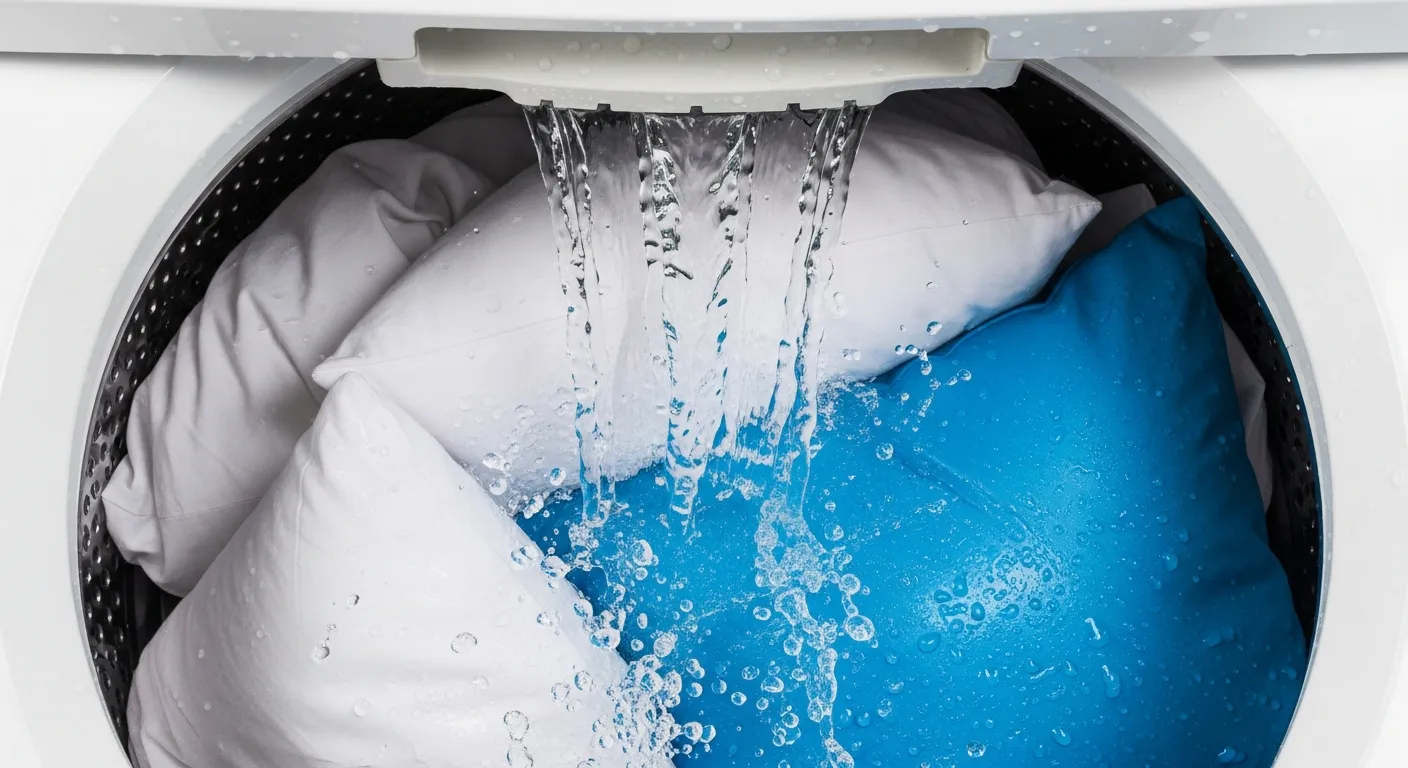
For this, you have to follow the same steps as above, until starting the machine. The only additional thing to do is set the water temperature to cold. Also, do the extra rinse and spin to make sure that all the detergent and water are squeezed out properly. The result would be soft and clean pillows. Though this method works well, washing the pillows with warm water is considered more efficient and effective.
Can the Pillows Be Put Into the Dryer?
Yes. The pillows can be put into the dryer. However, you have to make sure that the dryer is set to no heat or air dry mode. If the pillows require handwashing, let them dry in the natural air. This is because heated dry cycles can damage the pillow filling. Also, check the laundry label to ensure that you are not doing anything that can ruin the quality of the pillow.
How to Refresh Your Pillows After Washing?
To keep your pillows refreshed between washes, here are some ways to re-fluff your bed and throw pillows -
- Shake down the pillows with your hand to distribute the fillings, to fluff them down.
- Check the label if it can go into the dryer. If it does, then use a short, low-temperature cycle to restore the loft. Also, add wool dryer balls to distribute the filling.
- Leave the pillows in the sun. This also airs it out and dries up any moisture that may be causing the lump formation.
- Gently knead the pillow to encourage airflow, which also adds a lot of loft to the pillow.
- If nothing works, wash the pillow again to get rid of the lumps.
Conclusion
Washing pillows can help get rid of the residue, dirt, grime, dust, and sweat buildup. Hence, understanding the right ways to wash them is important. Even though you wash them regularly, it is also advised to replace them every 2-3 years.