

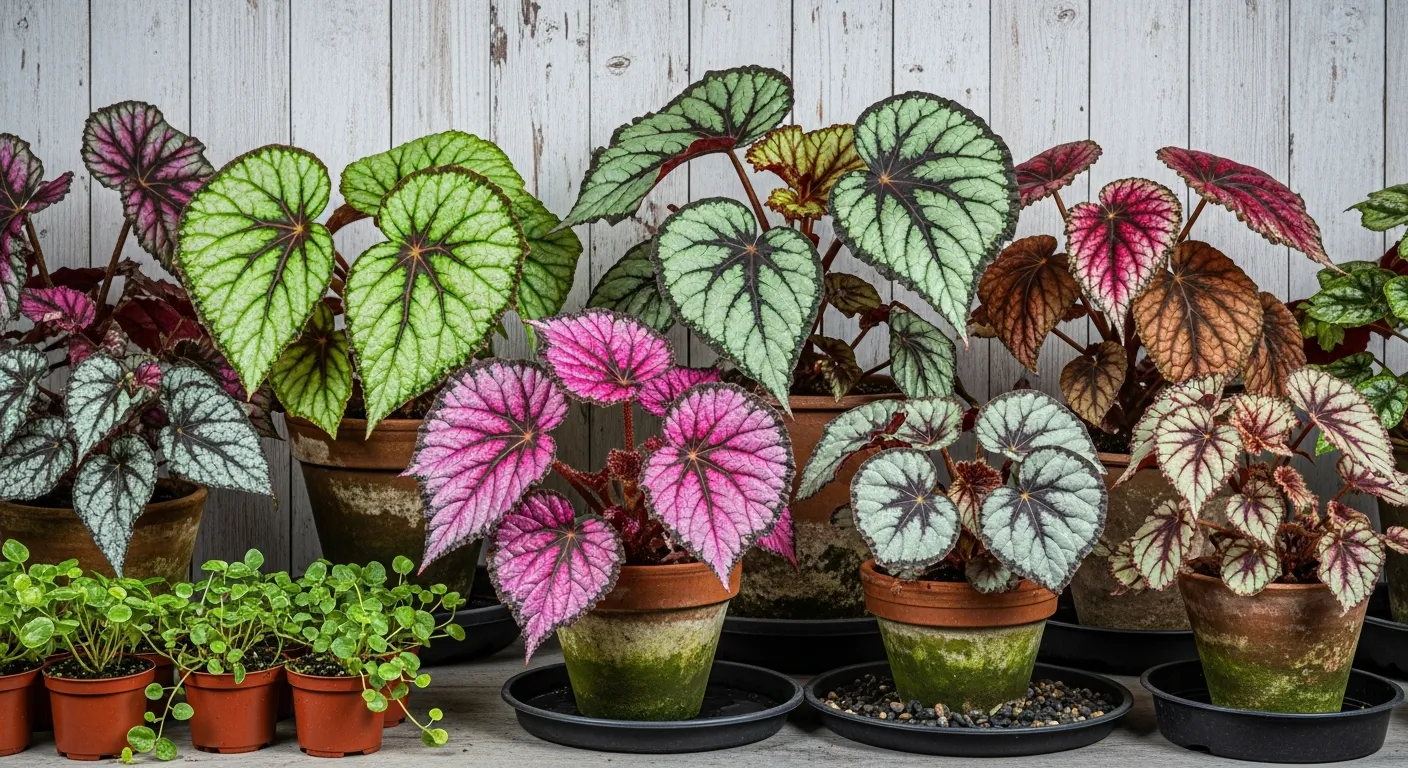
Begonia rex, also known as painted-leaf or fancy-leaf begonia, is a stunning addition to a home. It is highly preferred for its vibrant foliage and unique pattern and is often added as an indoor plant due to its low-maintenance features. This blog covers everything about Begonia Rex, including the types, the care tips, the propagation techniques, and the common problems.
What is Begonia Rex?
Begonia rex is identified by its large variegated leaves with bright shades of green, purple, red, and silver. The botanical name of the plant is “Begonia rex-cultorum,” which grows between 12 and 18 inches tall. It thrives in bright and indirect light and requires well-drained soil. The origin of Rex Begonia is from the tropical to sub-tropical environment of the Southern Hemisphere. It is often grown as a houseplant for its decorative foliage.
Different Types of Begonia Rex
Breeders have worked to breed rex begonia with better salt tolerance and better capacity to hold their leaves over winter. There are multiple cultivars with distinct features. Here is the list of the various varieties of rex begonia.
Carolina Moon
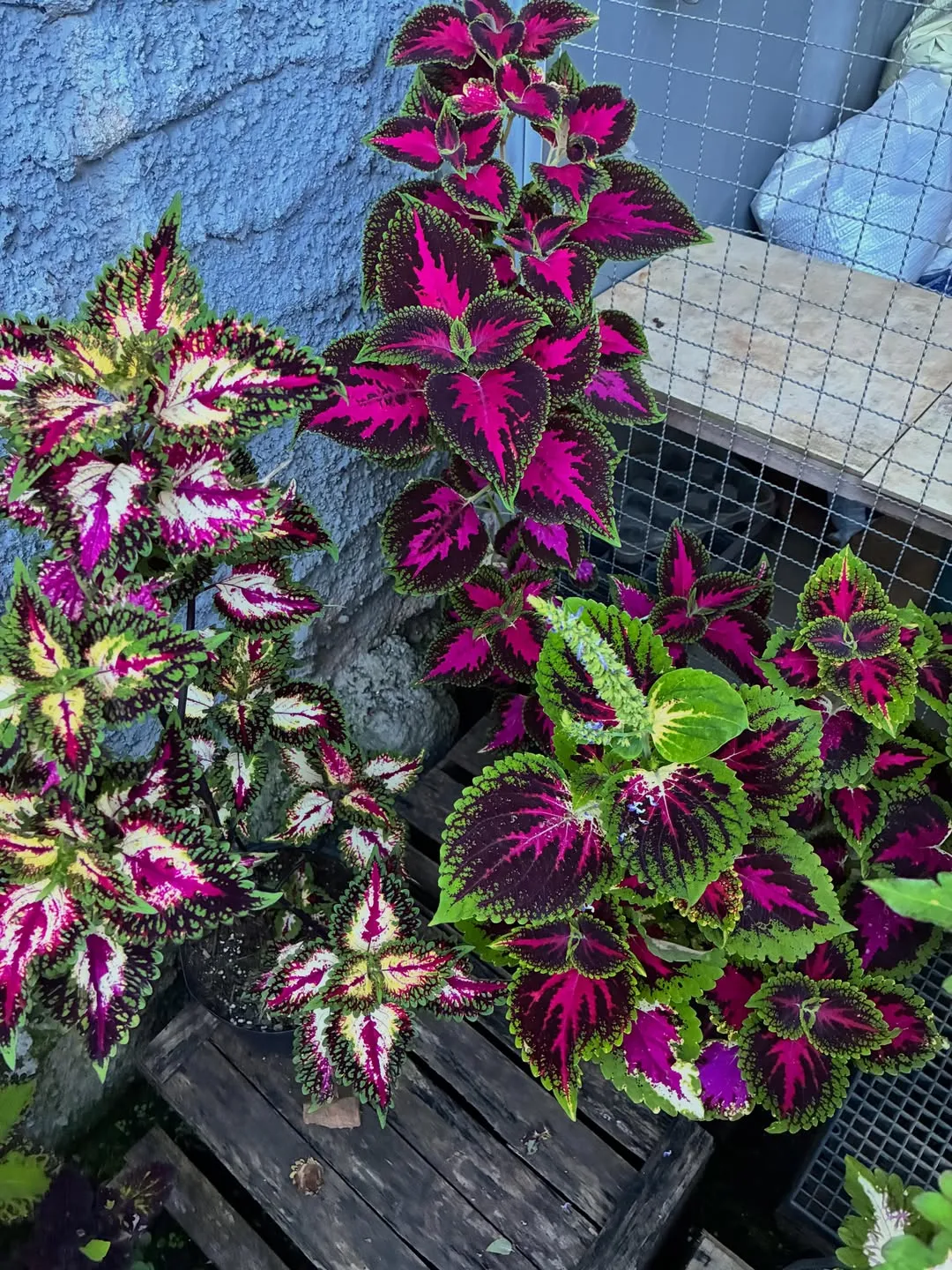
It has spiral leaves that bend inwards to a reddish-purple center, which is surrounded by a pale metallic green band. The leaves are also surrounded by a thin band of reddish-purple at the toothed edges.
Escargot
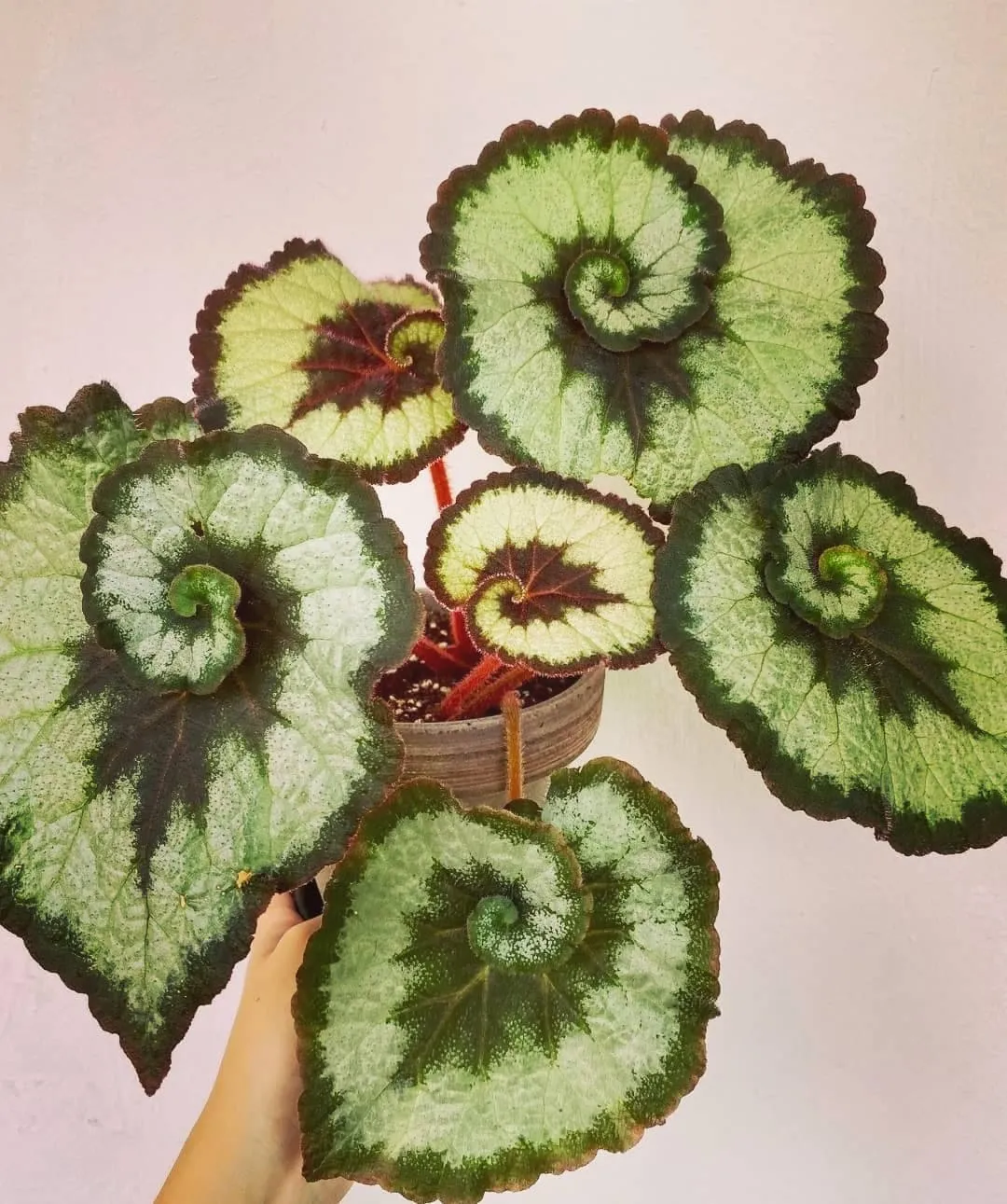
It has a single spiral pattern on the leaves with olive green and lighter silvery green colors. The surface of leaves is lightly covered by pink hair, noticeable at the edge.
Sea Serpent
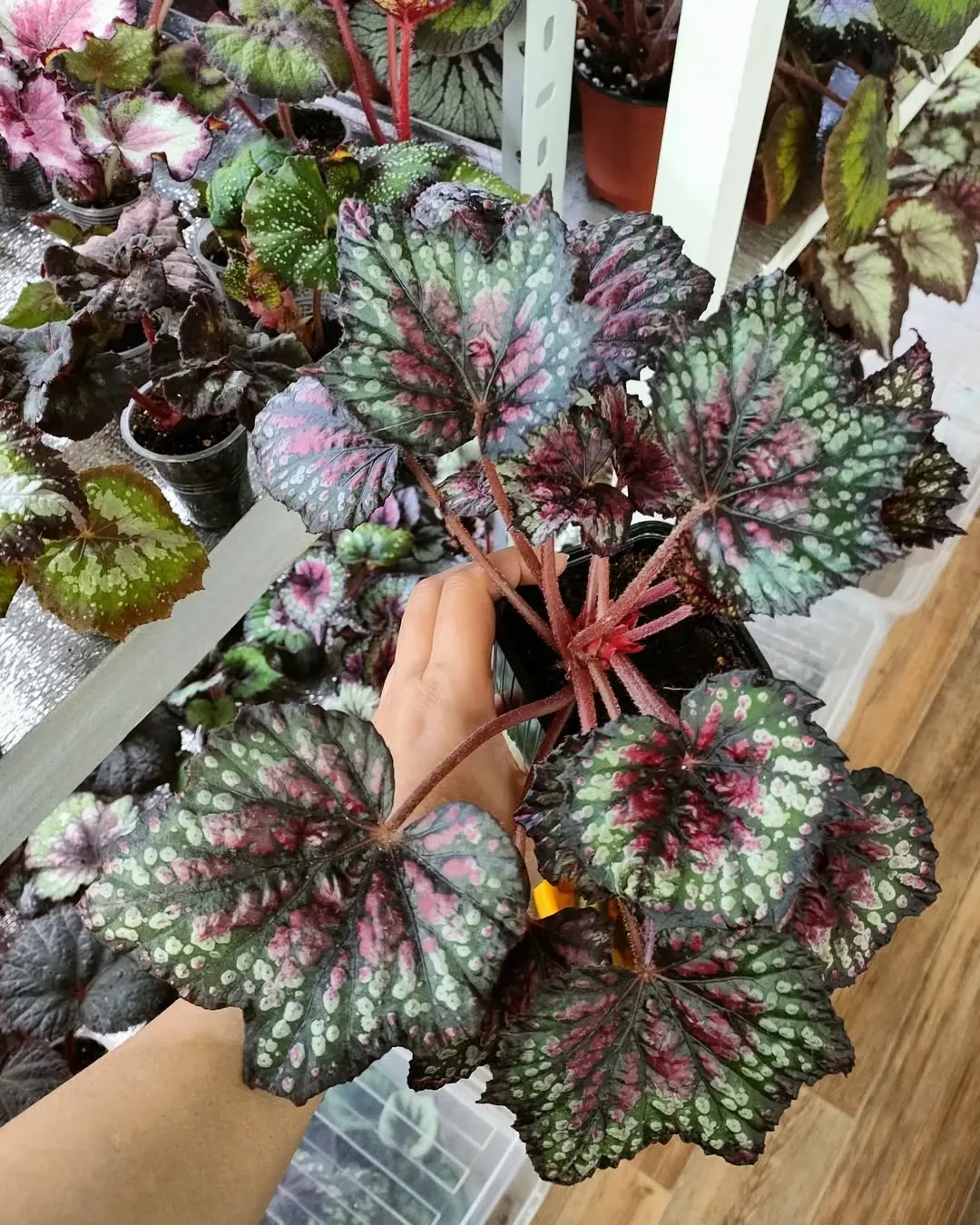
It is an evergreen perennial with coupled black leaves. The leaves have red and metallic spots.
Begonia ‘Avatar’
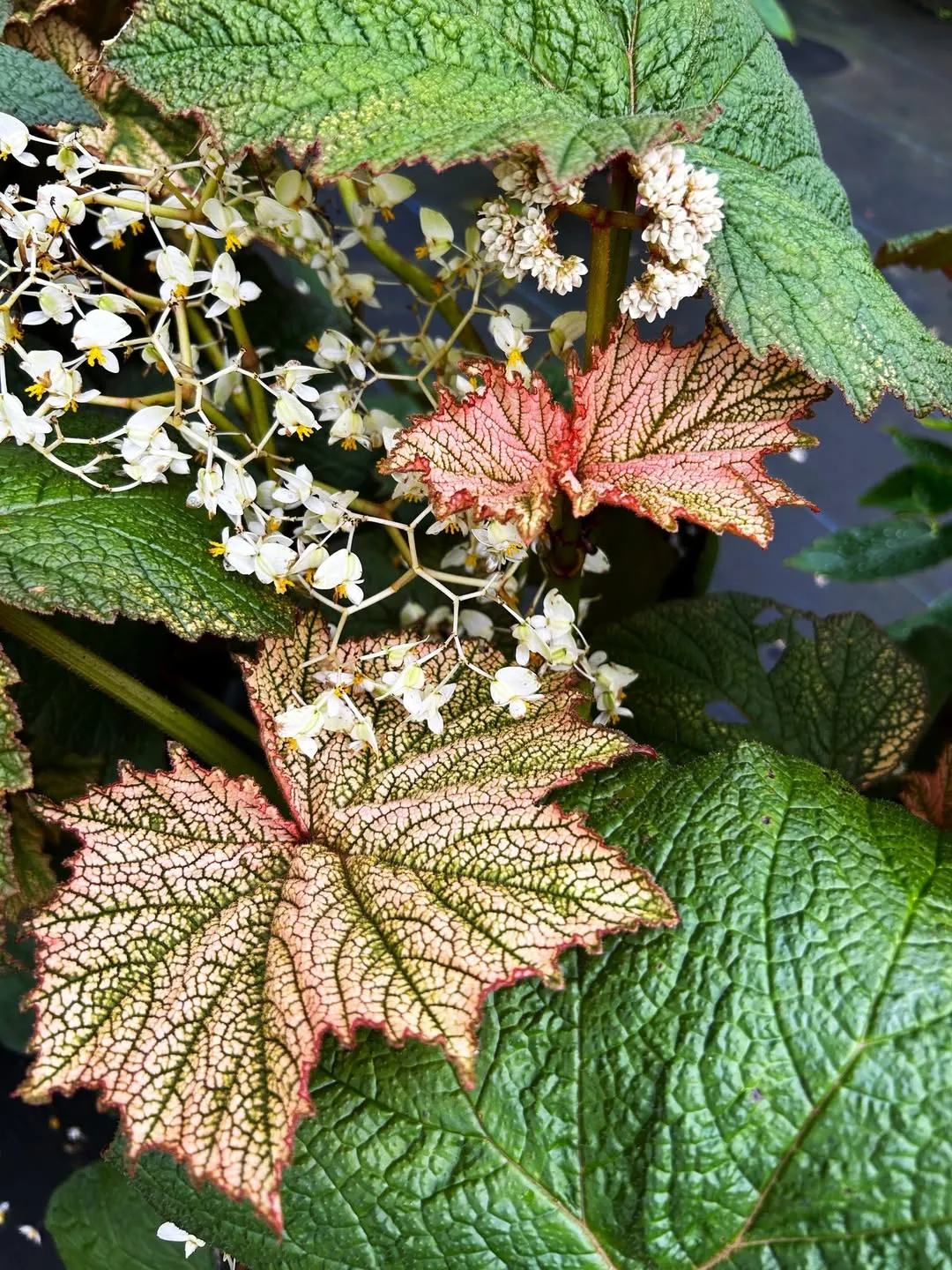
This cultivar has pale green leaves with a pop of light purple and pink color and deep purple veining in its frilly-edged leaves.
Begonia ‘China Curl’
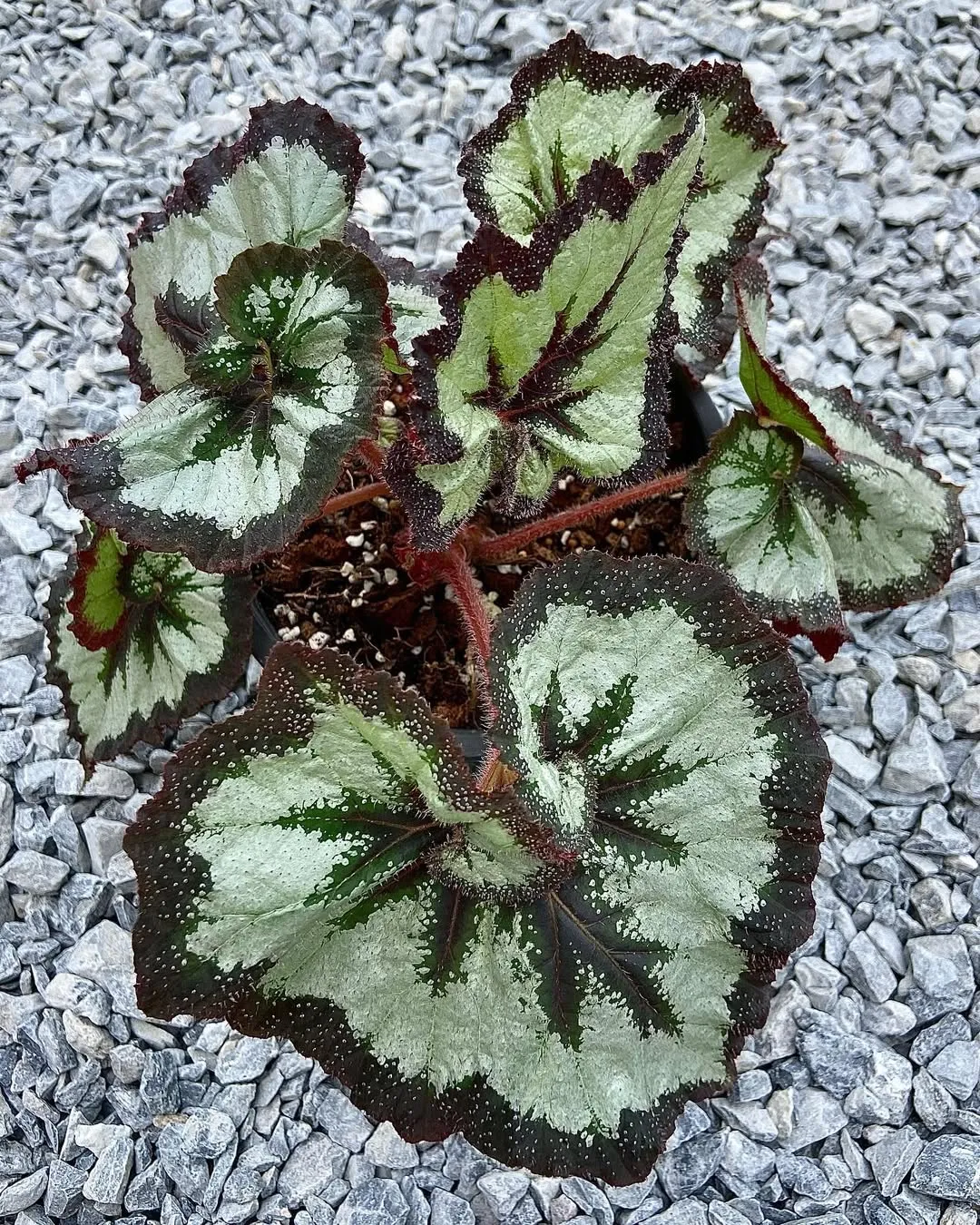
The leaves of this cultivar are teardrop-shaped with spiral variegation patterns that switch between deep purple-black and pale silver-green.
Begonia ‘Curly Fireflush’
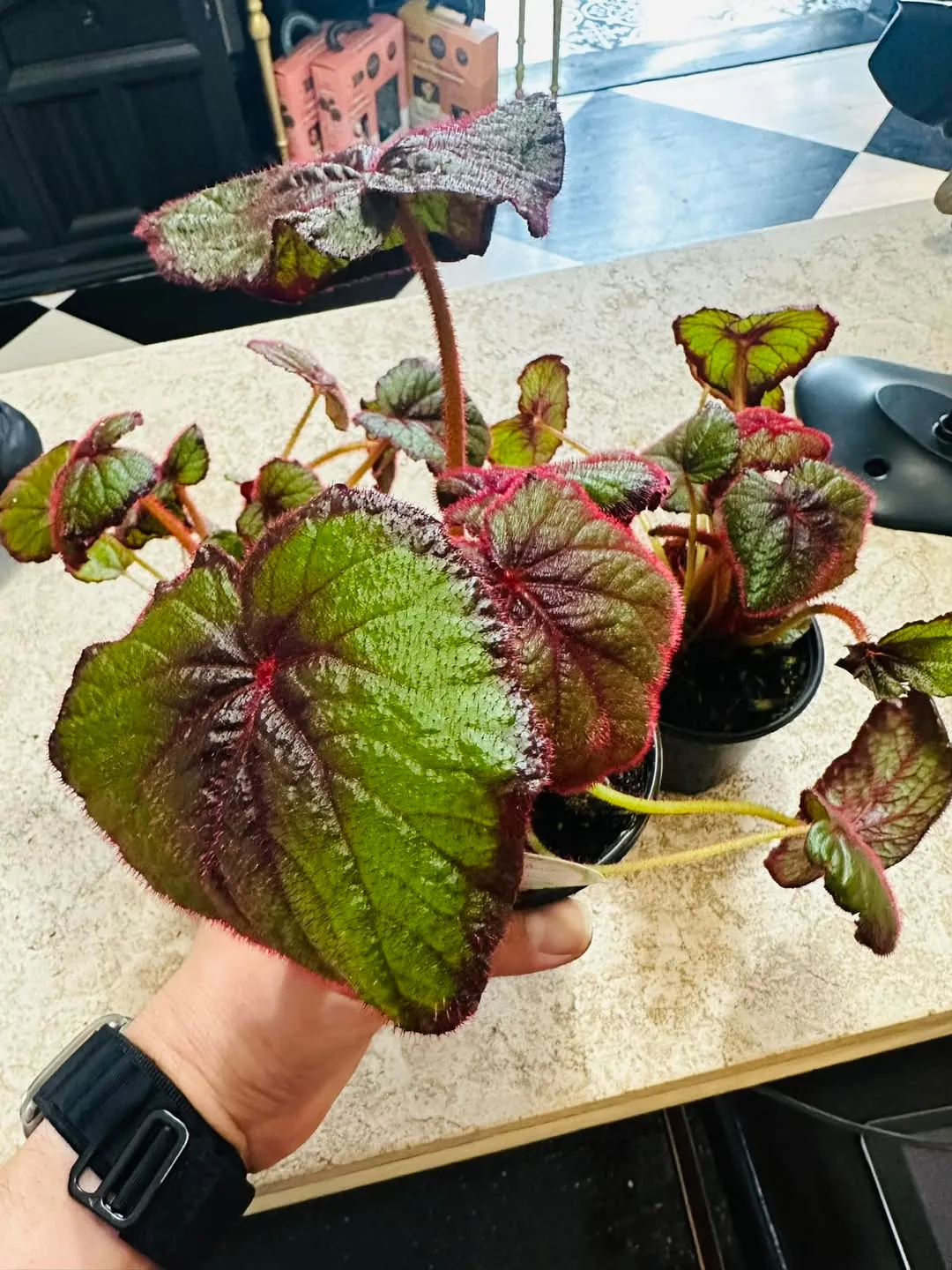
It was originally introduced in 1866 and was called ‘Bettina Rothschild’. It has pale yellow-green leaves with deep burgundy edges and a pale lilac flush at the center.
Begonia ‘Emerald Wave’
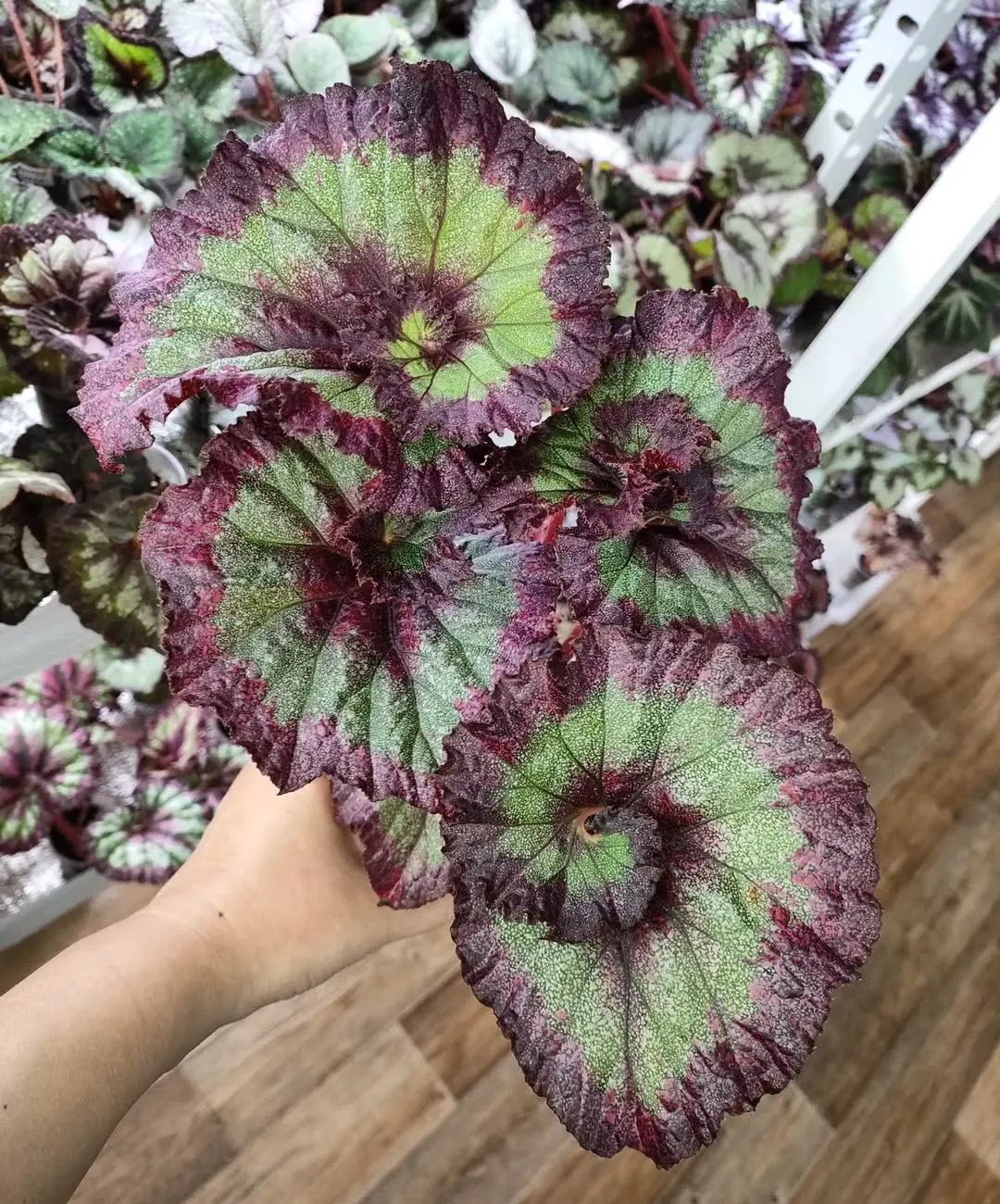
This variant of rex begonia has spiral leaves of emerald green and deep plum purple.
Begonia ‘Fireworks’
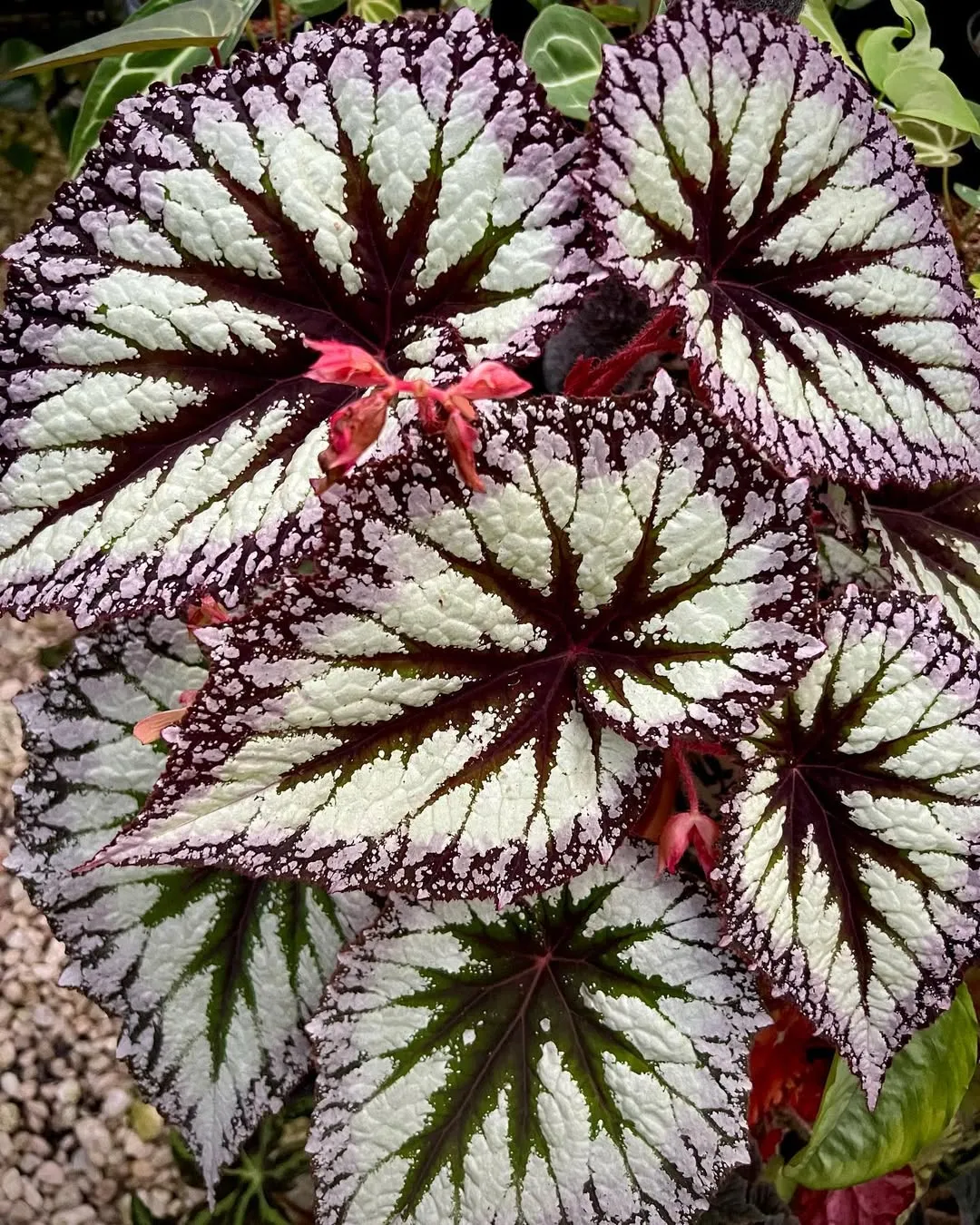
This hybrid variety has a stunning appearance with silver heart-shaped leaves with dark red veining and pale plum edges.
Begonia ‘Froggy’
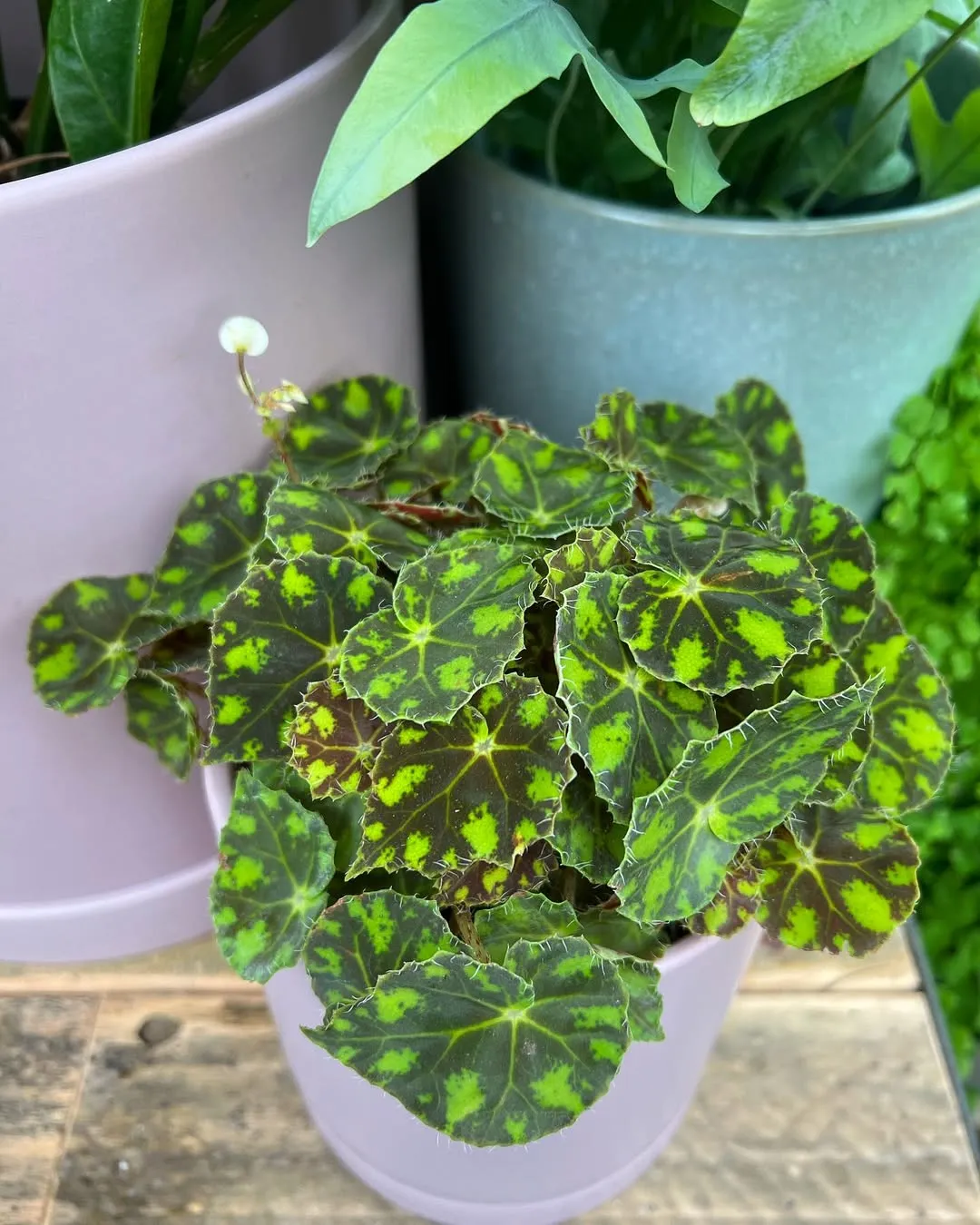
Begonia ‘Froggy’ has stunning olive green leaves with black accents that resemble spiderwebs or stained glass. The white flowers accentuate the look further.
How to Care for Begonia Rex?
- Light Requirements
Begonia rex requires less light compared to other plants of the begonia family. It thrives under bright, indirect light all year round. Even if there’s no source of proper lighting in your home, the plant can thrive under fluorescent lights.
- Watering Needs
It requires regular watering to maintain slight dampness in the soil. Water the plant in the morning if the top of the soil feels dry on touching. After 15 minutes, remove excess water from the run-off dish to avoid root rot. Let the potting mix dry, but not completely. Also, make sure the leaves don’t get wet while watering the plant; the leaves may get damaged. Maintain moist soil that drains well.
- Soil and Potting Mix
Begonia rex grows well in well-drained, light, and airy soil. The plant prefers well-aerated, peat-based potting soil because of its fine root systems.
- Temperature and Humidity
The ideal temperature for begonia rex is a moderate temperature (60°F to 70°F) and moderately high humidity (approximately 50%). During winter, the plant grows at a slow pace, and some go into dormancy due to a lack of light.
-
Fertilization
Fertilize the plant with a dilute, water-soluble fertilizer (approximately 15-30-15) during the active growth phase after every 2-4 weeks (February through October). Then, reduce the frequency after mid-summer and stop fertilizing completely in winter to prevent plant stress and leaf drop.
How to Propagate Begonia Rex?
There are several propagation methods for begonia rex, such as leaf cutting, rhizome division, and water propagation. Here is the detailed information on all the types.
Leaf Cutting Method
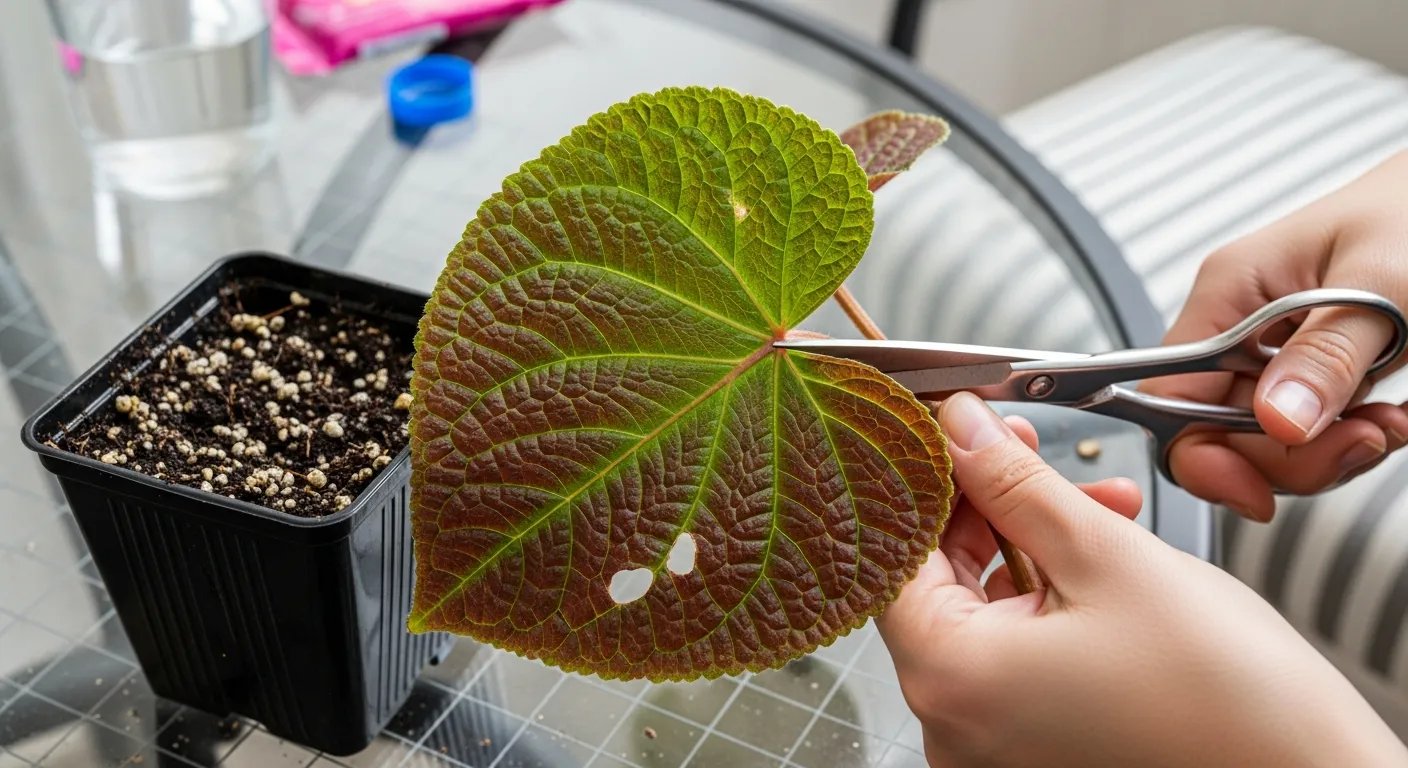
Leaf cutting is the easiest method to expand your garden. Here are the steps:
- Choose a mature and healthy leaf that is small in size, so that it fits in the new pot. If small leaves are not available, trim back the sides of a bigger leaf and use it.
- Detach the leaf from the plant while retaining 2-6 inches of the stem intact.
- Then, dip the leaf stem in rooting hormone. Put the stem into a moist medium, but make sure the leaf doesn’t touch the soil to prevent disease.
- If the humidity level is low, cover the propagation with a bag to maintain airflow.
- Keep the propagation at 70-75°F in bright indirect sunlight.
- Make sure the soil is moist, but not wet, and it should never get completely dry.
- You will notice new plantlets emerging from the soil near the stem in 12 weeks.
- Finally, each shoot has a minimum of two leaves on the plantlets; either pot them individually or leave them in the original pot.
Propagation Through Stem Cuttings
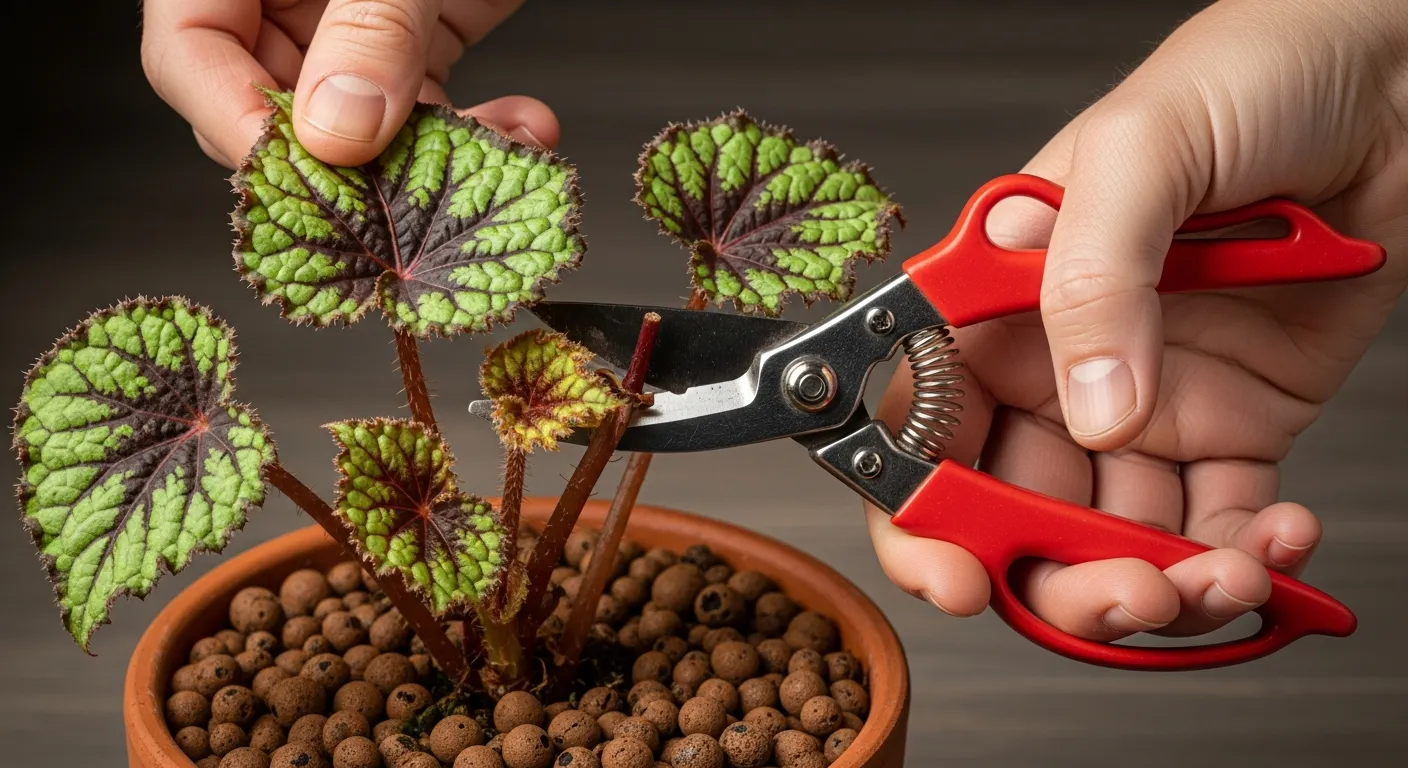
- Take 2-3 inches of the stem in the spring. Place the cutting in a potting mix of ½ sand and ½ moist sphagnum, depending on the position it was growing originally on the parent plant, be it horizontally or vertically.
- Cover the potted cutting with a plastic bag to control humidity, but ensure the bag doesn't touch the leaves of the cutting.
- Place the cutting in indirect light. After 4 weeks, you can notice the roots.
- Once 3 new leaves grow, consider it an adult plant. Then, pot the begonia mixture.
Propagation Through Rhizome Cuttings
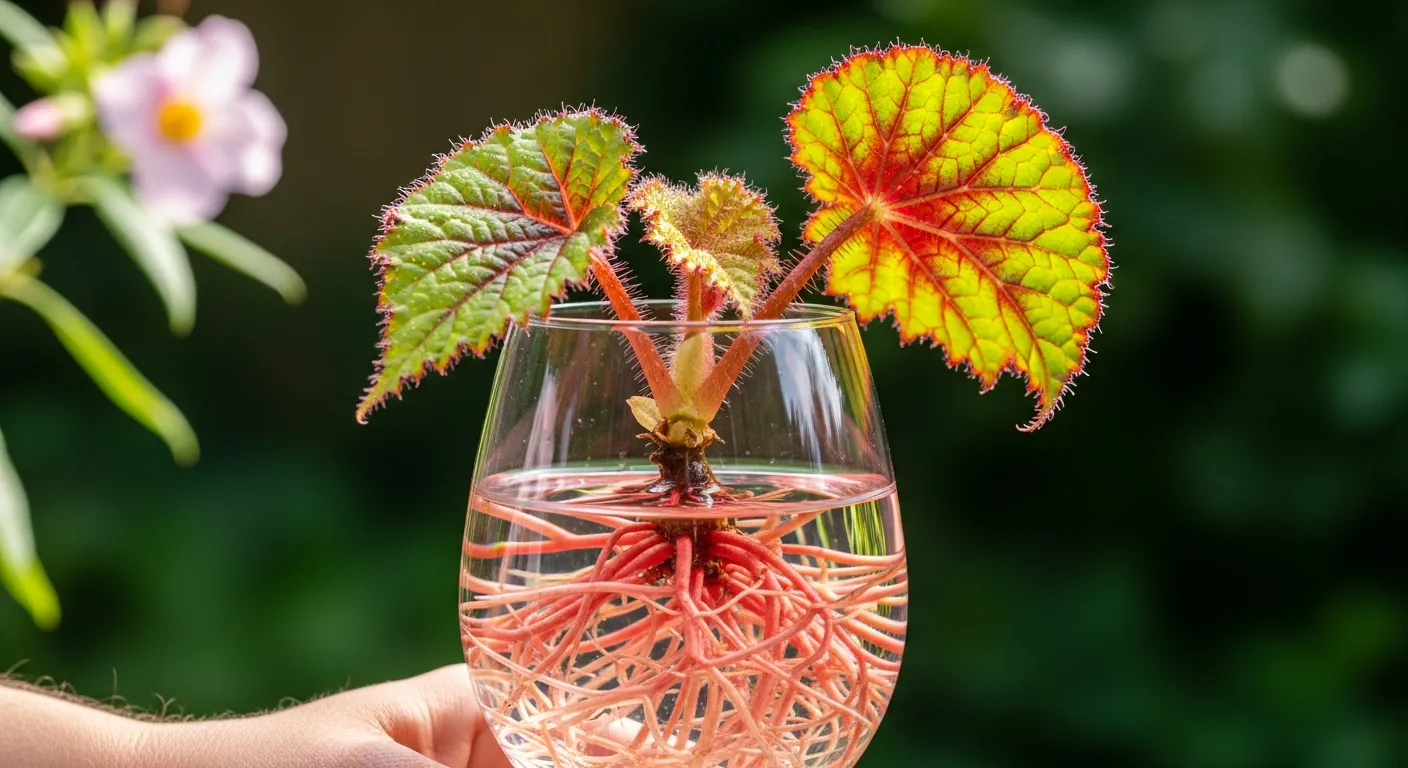
- Cut 1-3 inch segments of a rhizome using a sterile tool in spring. Each cutting should have one or two leaves.
- Put the cutting in the potting mixture, same as used for stem cuttings, to a depth of ½ inch.
- Cover the potted cutting with a plastic bag without touching the leaves of the cuttings. Place the cutting in indirect light.
- Rhizomes start developing roots after 3 weeks.
- Finally, pot the cutting in a begonia mixture.
Common Problems and Solutions
There are multiple problems caused by overwatering, infrequent watering, and many other reasons. All these problems can be solved with a few careful tips. Here is the list:
Brown Edges of Leaves
Reason: It happens because of a nutrient imbalance in the water
Solution: Water the plant with rainwater or distilled water. Also, keep fertilizing in the growing season to ensure the plant gets some nutrients.
Dropping of Leaves in Winter
Reason: It is an outcome of the dormancy phase
Solution: Stop fertilizing until spring, when the growth resumes. Also, limit the watering frequency.
Faded Color of the Plant
Reason: Pale or faded color indicates a lack of sufficient light. This problem often occurs in winter.
Solution: The best solution to tackle this problem is to shift the plant to a place where it gets bright indirect sunlight.
Powdery Mildew
Reason: The white coating on leaves, often known as “powdery mildew,” is the outcome of a lack of air circulation or high humidity levels. It happens when the season changes.
Solution: Proper ventilation and preventing overhead watering are the perfect solutions to avoid powdery mildew. During the changing season, spray the leaves every 10-14 days with a solution made by mixing 1 tbsp of baking soda with 3 drops of mild liquid soap and a gallon of water.
Root Rot
Reason: There are two reasons for root rot, overwatering or poor drainage.
Solution: Make sure the pots have proper drainage holes and water the plant only when the soil gets slightly dry.
Slow Growth or No Growth
Reason: It happens during winter when plants are in their rest period.
Solution: Once spring arrives, resume the normal care.
Is Begonia Rex Toxic to Pets?
Yes, it is toxic to pets and even to humans. Despite keeping pets away from the plant, if they ingest significant amounts and show signs like vomiting, take them to a veterinarian. The pet owners should look for non-toxic alternatives. If they want to grow begonia rex, they should keep it at a height where pets can’t reach.
Conclusion
Begonia rex is a houseplant often appreciated by homeowners for its beautiful foliage colors and unique pattern on the foliage. There are multiple varieties of these cultivars, giving you an option to choose from.