

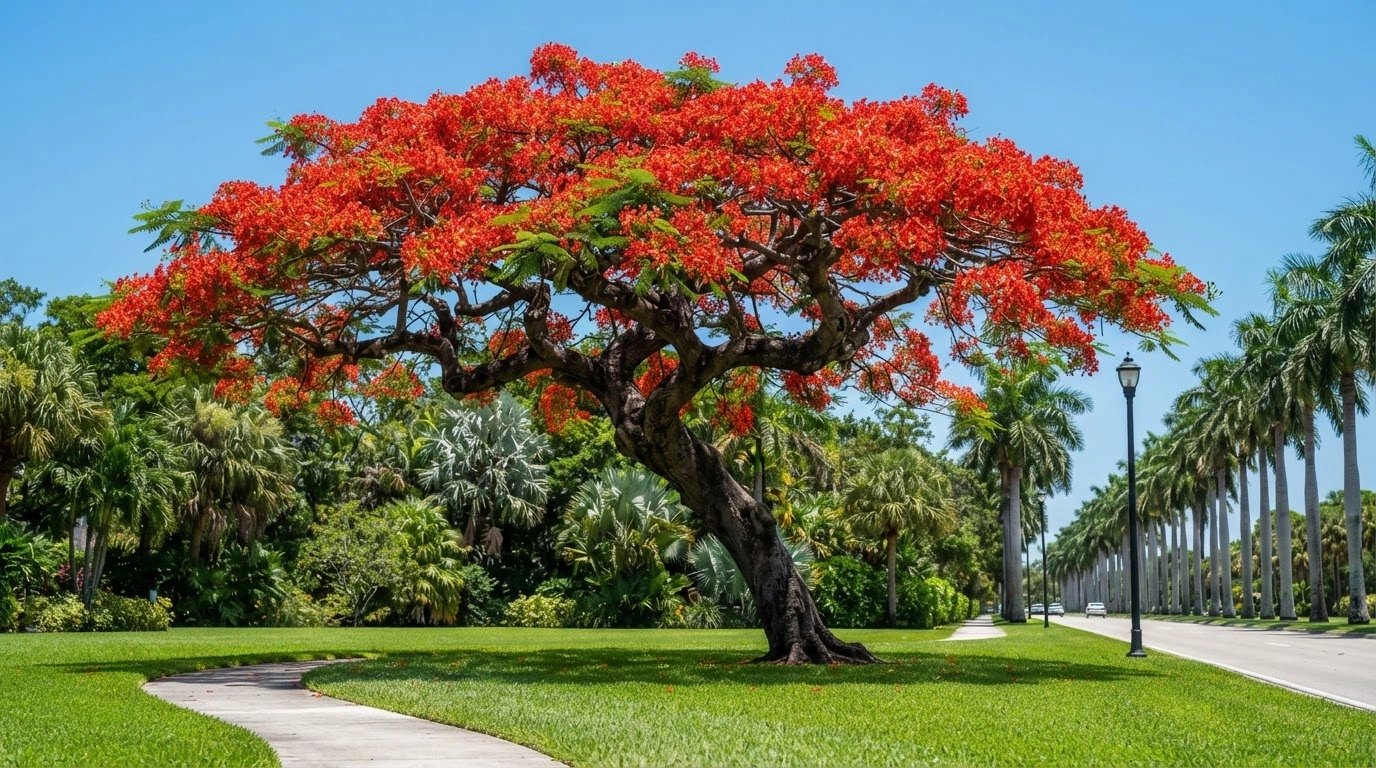
Trees with red, green, pink, and purple flowers are common in yards and gardens, but trees with orange flowers are rare. Orange flowers have a unique energy that brings life to the garden. A large tree with orange flowers looks exquisite during the sunset. What makes them even more unique are the distinct shapes, hues, and tones of the orange flowers. Depending on the species and climate, flowering happens in spring, summer, or at other times of the year. If you are looking for huge trees with blooming orange flowers, this blog is for you.
Large Trees With Orange Flowers at a Glance
| Tree | Mature Height | Flower Color | Bloom Season | Best For |
| Royal Poinciana | 30-40 ft | Orange-red | June-August | Landscaping |
| African Tulip Tree | 50-80 ft | Orange-scarlet | Late winter into early summer, or late summer through fall | Tropical Gardens |
| Red Silk Cotton Tree | 70 ft | red-orange | Spring | Tropical Gardens |
| Australian Flame Tree | 110 ft | Scarlet | Late spring to Early summer | Large Landscapes |
| Flame of the Forest | 30-40 ft | Orange | Dry spring months | Gardens |
| Coral Trees | 98 ft | Red-orange to orange yellow | Late winter to spring | Streetscapes |
| Bronze Shower Tree | 66 ft | Golden yellow-copper | Spring to early Summer | Tropical Landscapes |
| Red Buckeye | 10-20 ft | Orange-red | April-May | Small Gardens |
| Silky Oak | 60-100 ft | Bright orange | Spring to early summer | Streetscapes |
| Orange Champak | 30-50 ft | Orange-yellow | Year-round | Fragrant Gardens |
10 Large Trees That Grow Orange Flowers
Royal Poinciana (Delonix Regia)
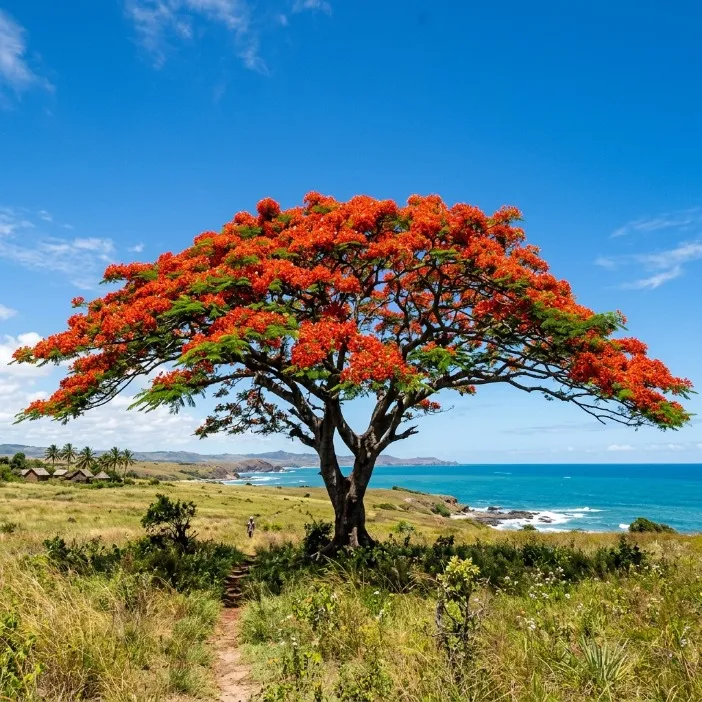
When the tree blooms completely, it becomes so dense that you cannot see the canopy at all. The entire tree turns orange-red, which looks great at sunset.
The flowers are quite large, growing up to 4 inches wide, with 5 petals, of which 4 are orange-red. However, the fifth petal is different, featuring white streaks running through the red, and that’s what makes it stand out.
This evergreen tropical tree may become deciduous during dry summers or mild winters and grows up to 30-40 feet tall. It spreads to almost double the height and has a flat top with an umbrella-like crown. The Royal Poinciana usually blooms most fully between June and August, when it is hard to miss even from a distance.
-
Sun: Grows best in full sun
-
Water: Drought-tolerant once established, but grows best with medium moisture
-
Temperature: Can become stressed when the temperature drops below 50 degrees Fahrenheit
-
Soil type: Well-drained soil
African Tulip Tree (Spathodea Campanulata)
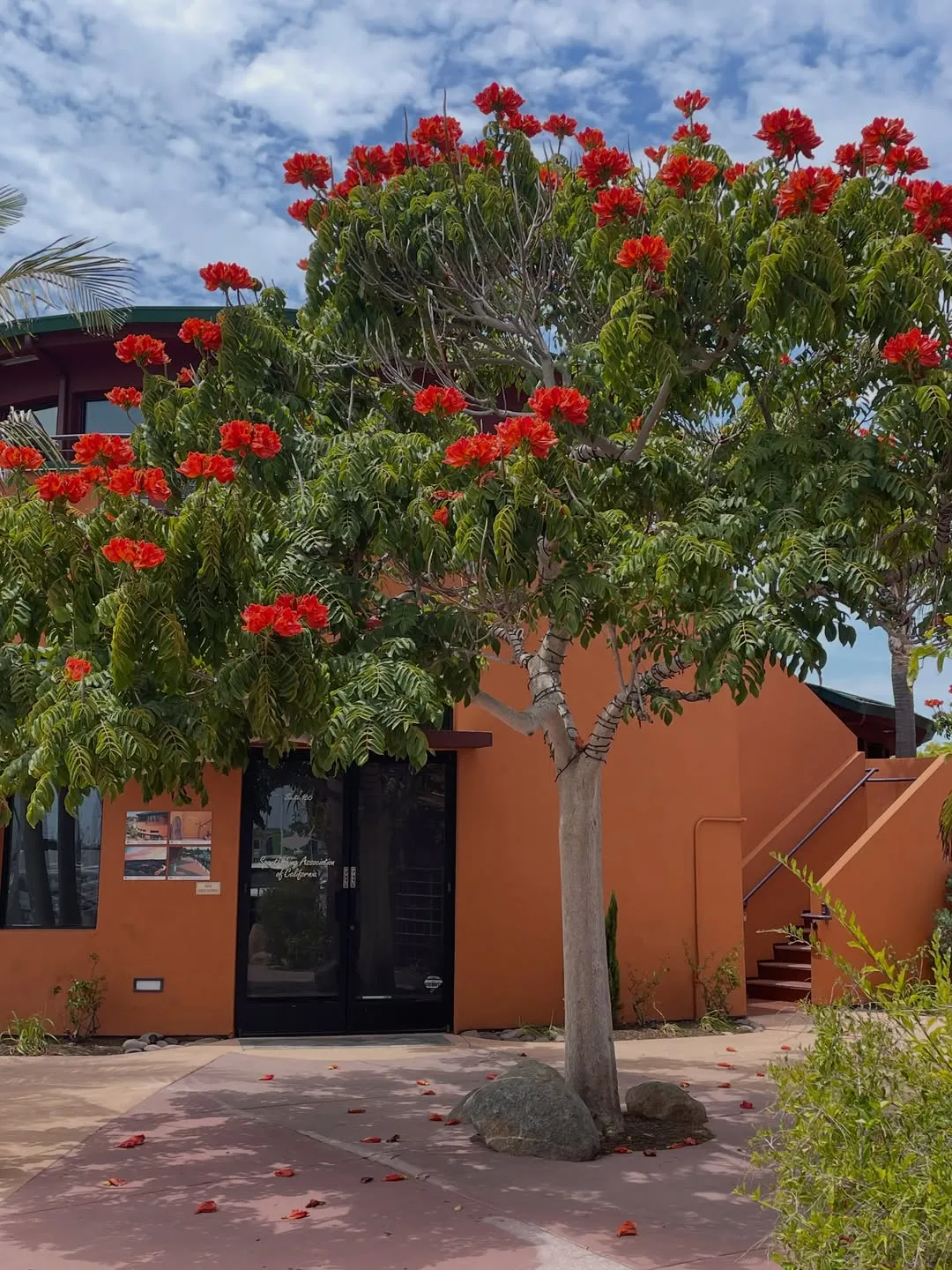
The African Tulip is one of the largest trees (approximately 50-80 feet when mature) and produces some of the most vibrant orange flowers. These flowers are large and waxy, like cups, and range from deep orange to scarlet.
Each flower spreads up to 4 inches and grows in a dense cluster that covers almost the entire branch. The leaves also grow quite large (up to 18 inches) and contain about 7-17 leaflets. African Tulip Tree is native to tropical Africa and is most commonly planted in Hawaii and South Florida.
In Hawaii, it is mostly classified as invasive, as it spreads extremely fast and takes over native species. Also, people considering planting African Tulip plants must check the local rules and regulations, as it is banned in some regions.
-
Sun: Shade, full sun
-
Water: Thrives with proper watering
-
Temperature: Warm tropical to subtropical climates
-
Soil Type: Rich, well-draining soil
Red Silk Cotton Tree (Bombax Ceiba)
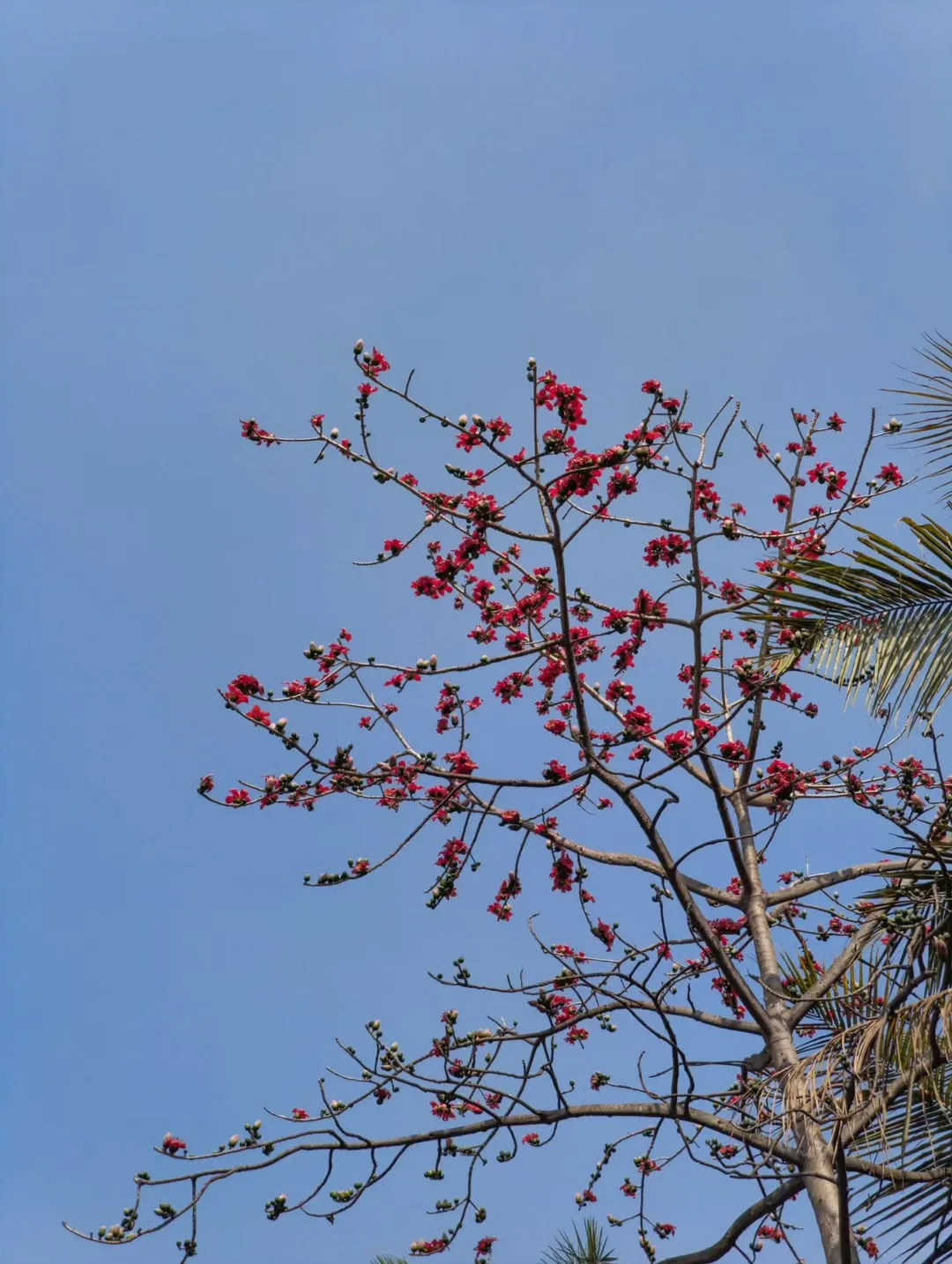
Red Silk Cotton Tree is native to Australia and is commonly prized for its ornamental value. It grows up to 70 feet tall and blooms all spring. It thrives in wet tropical regions, and its leaves are palmate, meaning they look like the fingers of an open hand. Each leaf has about 6 small leaflets that grow from a central point.
The flowers are cup-shaped and usually appear alone or in small clusters near the tip of the branches. They often bloom when there are few to no leaves. The fruit appears during March and April as the tree matures.
-
Sun: Full sun
-
Water: Moderate watering
-
Temperature: Warm tropical or subtropical temperatures
-
Soil Type: Neutral, well-drained
Australian Flame Tree (Brachychiton Acerifolius)
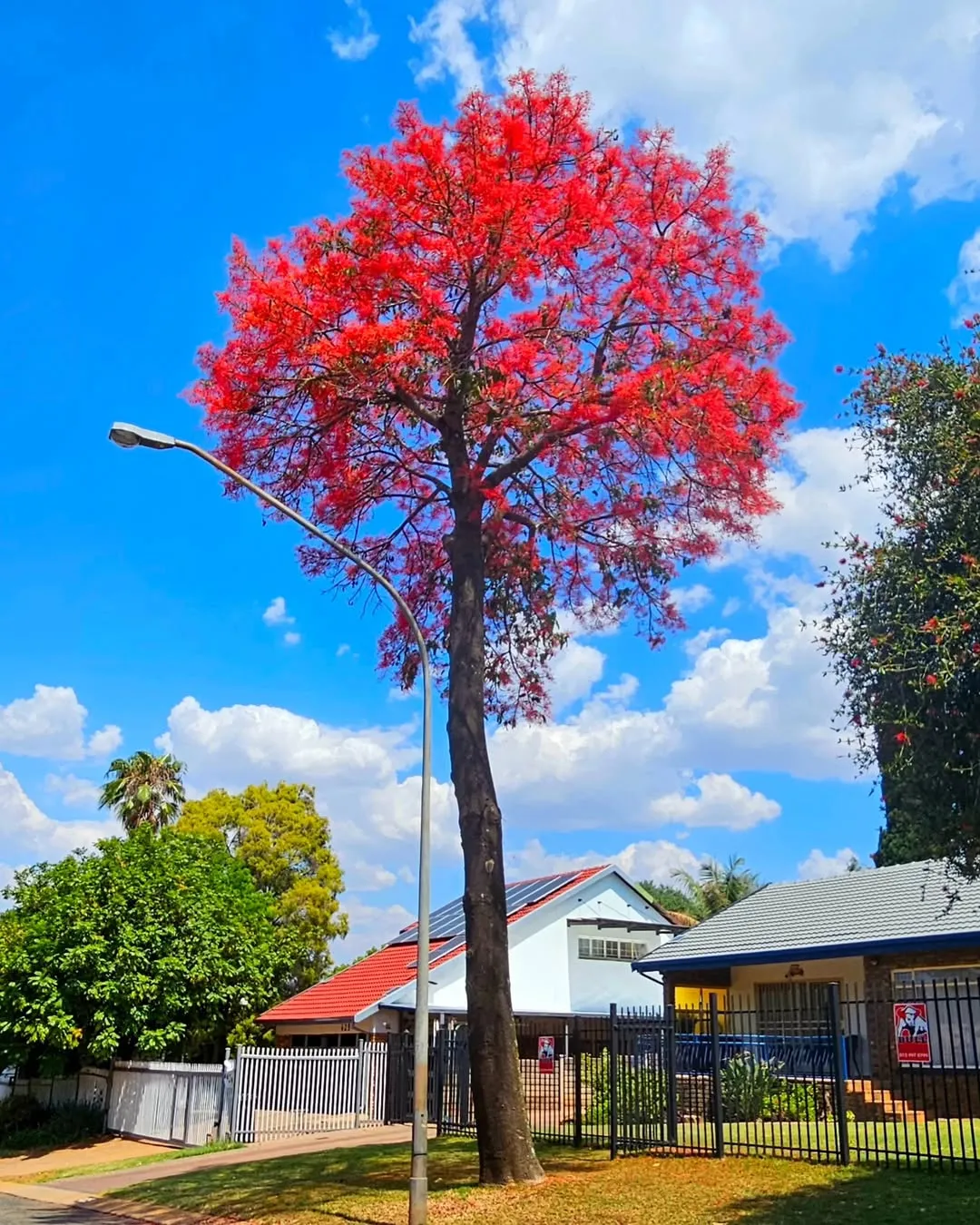
The Australian Flame Tree is a deciduous tree native to the seasonal rainforest of eastern Australia. The tree grows up to 110 feet tall; however, in cooler climates, it remains smaller. The leaves have a leathery texture and vary in shape as the tree matures.
Younger trees have deeply lobed leaves, while older trees feature shallower lobes or oval-shaped leaves. The tree is popular for its scarlet colored flowers that appear at the tips of the branches. They bloom in clusters, and each flower is about 1 inch long, with a waxy, bell-like appearance.
The Australian Flame tree produces flowers in late spring or early summer, although timing can change from year to year. After flowering, the tree develops black seed pods around 10 centimeters (4 inches) long, containing numerous yellow seeds.
-
Sun: Full sun to partial shade
-
Water: Requires minimal watering when matured
-
Temperature: Tropical, subtropical, and warm temperate
-
Soil Type: Well-drained sandy, loamy, clay soil
Coral Trees (Erythrina Species)
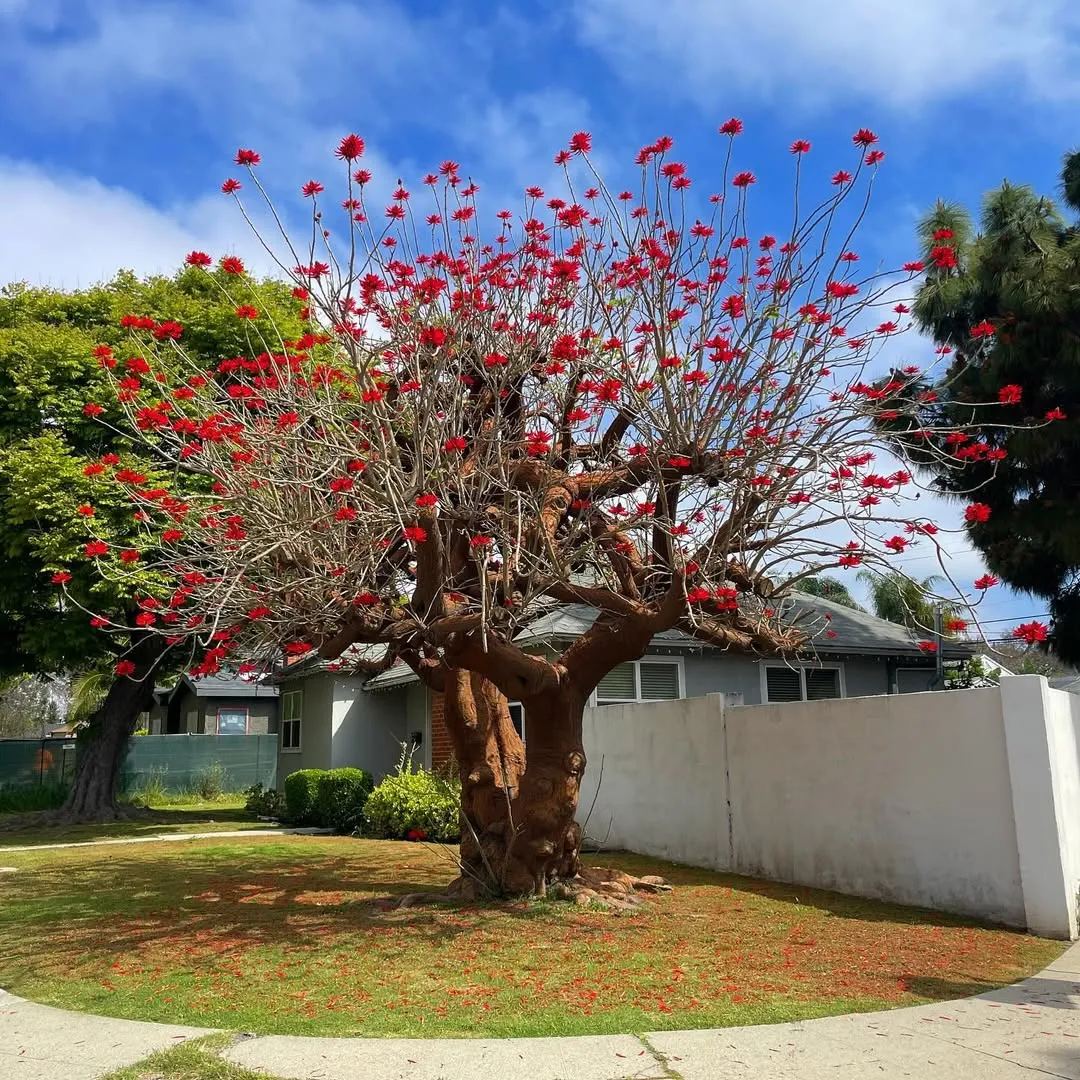
Coral trees can grow up to 98 feet tall and are known for their large flowers with long and bright red or orange petals. From late winter through spring, they bloom pea-shaped flowers in dense clusters at the tips of the branches. Their color ranges from deep red-orange to orange-yellow, depending on the species.
Coral trees are mostly planted along streets, but they're also a great option for the garden. The tree produces long, tube-shaped pods about 15cm long, constricted around the seeds. Some are smooth with very little hair and do not pop open at maturity. The seeds inside are oval-shaped and are reddish-brown in color.
-
Sun: Full sun
-
Water: Requires regular to moderate water
-
Temperature: Warm climates with ideal temperatures
-
Soil Type: Thrives in almost any soil
Bronze Shower Tree (Cassia Ferruginea)
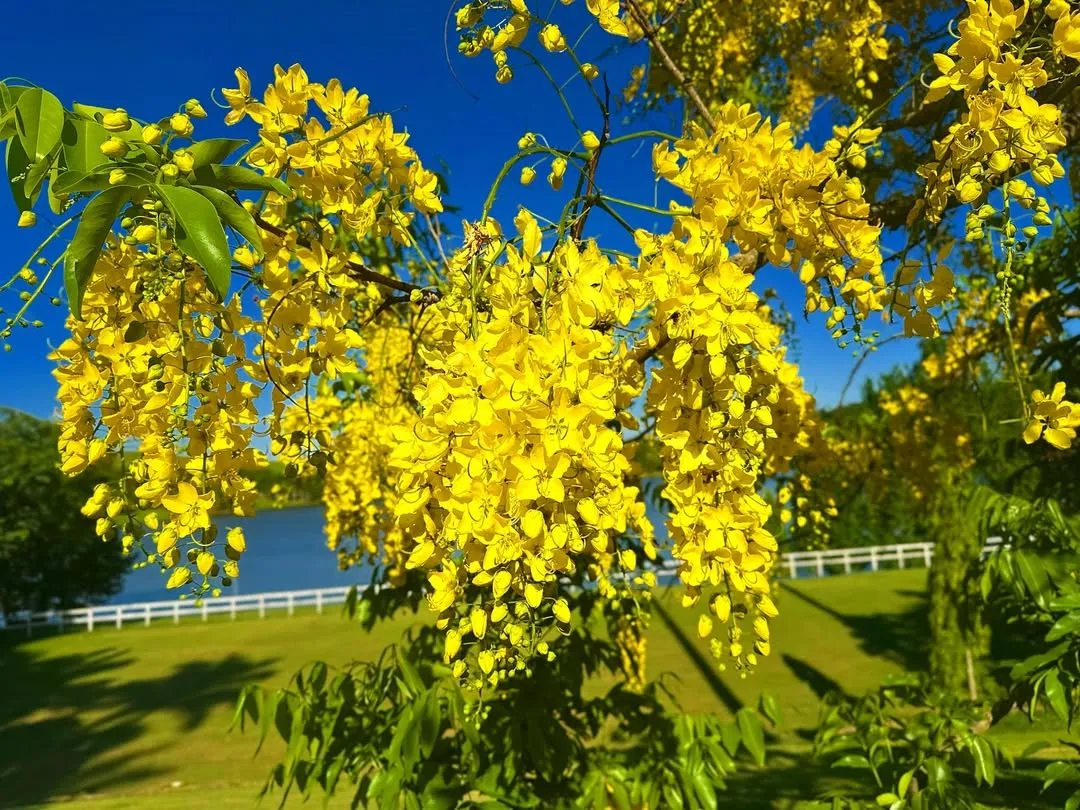
The Bronze Shower tree can grow up to 66 feet tall. It is a dry deciduous to semi-deciduous tree that develops a broad, spreading crown covered with compound leaves. When the tree has no leaves, you can find beautiful, long, drooping flower clusters, each carrying up to 70 flowers in shades ranging from golden yellow to coppery tones.
The Bronze Shower tree is native to Mexico, the Caribbean, and northern South America, and is well suited to warm, tropical climates.
-
Sun: Full sun
-
Water: New plants need frequent watering; however, upon maturing, it requires deep but infrequent watering
-
Temperature: Warm tropical and subtropical climates
-
Soil Type: Rich, well-draining soil
Red Buckeye (Aesculus Pavia)
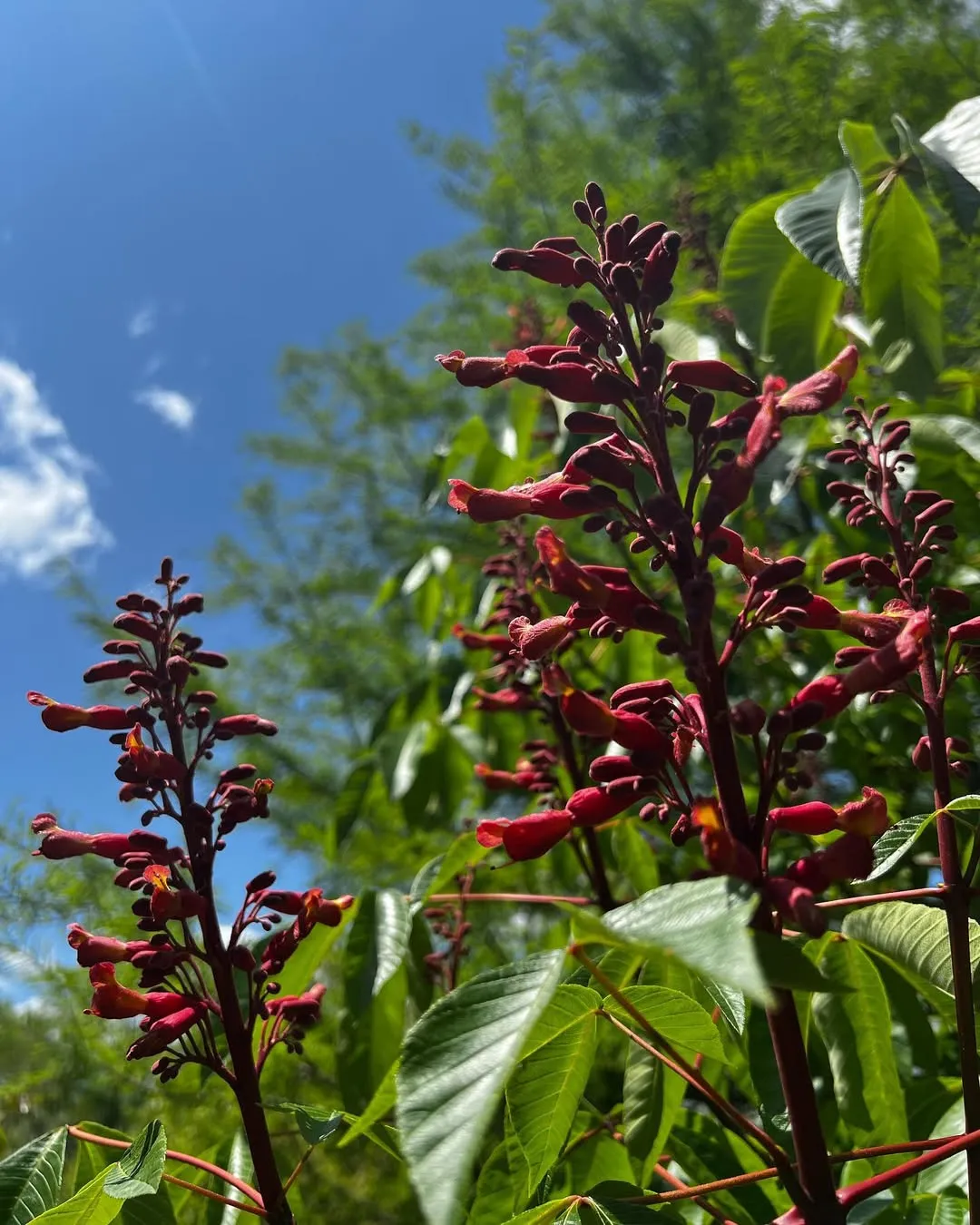
The Red Buckeye grows 10-20 feet tall and has tubular orange-red flowers. These flowers grow in upright clusters that look like candles, which are about 4-8 inches tall. They bloom in April and May, making them one of the earliest orange flowers to appear in the eastern United States.
The flowers are quite attractive to hummingbirds as they have a tubular shape. The bright red-orange color also makes it impossible to miss, helping with pollination. The tree has leaves with 5-7 leaflets arranged like an open hand. The fruit the plant bears is round and has a leathery texture, which contains approximately 1-3 brown, shiny seeds.
-
Sun: Both shade and sun
-
Water: Requires regular watering during the hot season
-
Temperature: Can handle higher summer temperatures
-
Soil Type: Well-drained but moist
Silky Oak (Grevillea Robusta)
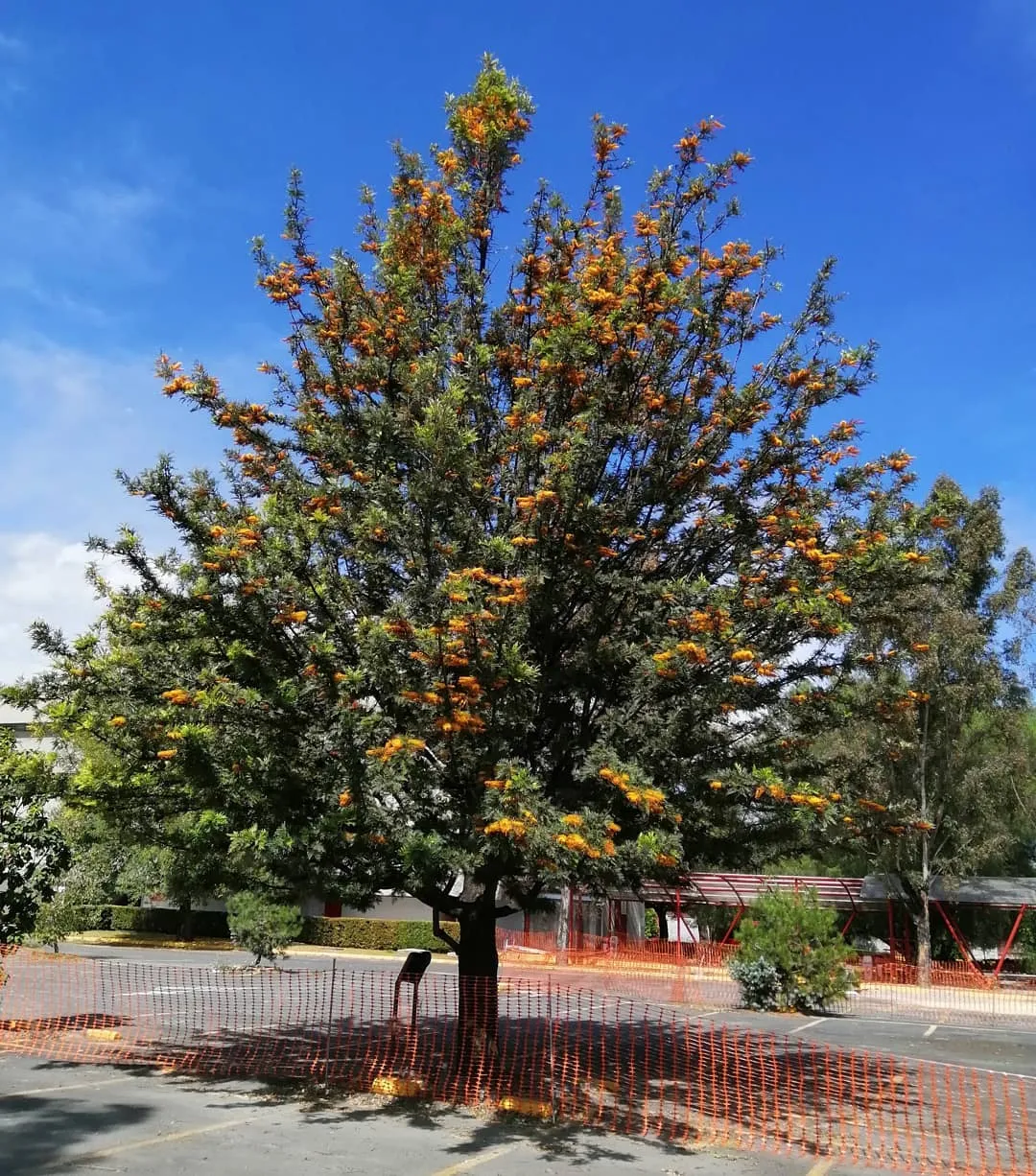
The Silky Oak tree is a big tree from Australia. Even though it's called an “oak,” it's not actually an oak tree. The tree can grow about 60-100 feet tall, making it one of the largest trees that produce lots of bright orange flowers. It usually blooms in spring and early summer.
The flower grows about 3-5 inches long and looks like little spiders, as it has long, thin parts. The leaves look somewhat like ferns and have a silvery white underside. This distinctive feature makes the leaves quite easy to recognize. People usually plant it mostly along the streets and in gardens. However, like the African Tulip tree, it is invasive in Hawaii.
-
Sun: Full sun (minimum of 6+ hours)
-
Water: Regularly; however, once established, water less
-
Temperature: Moderate to warm
-
Soil Type: Well-drained
Orange Champak (Magnolia Champaca)
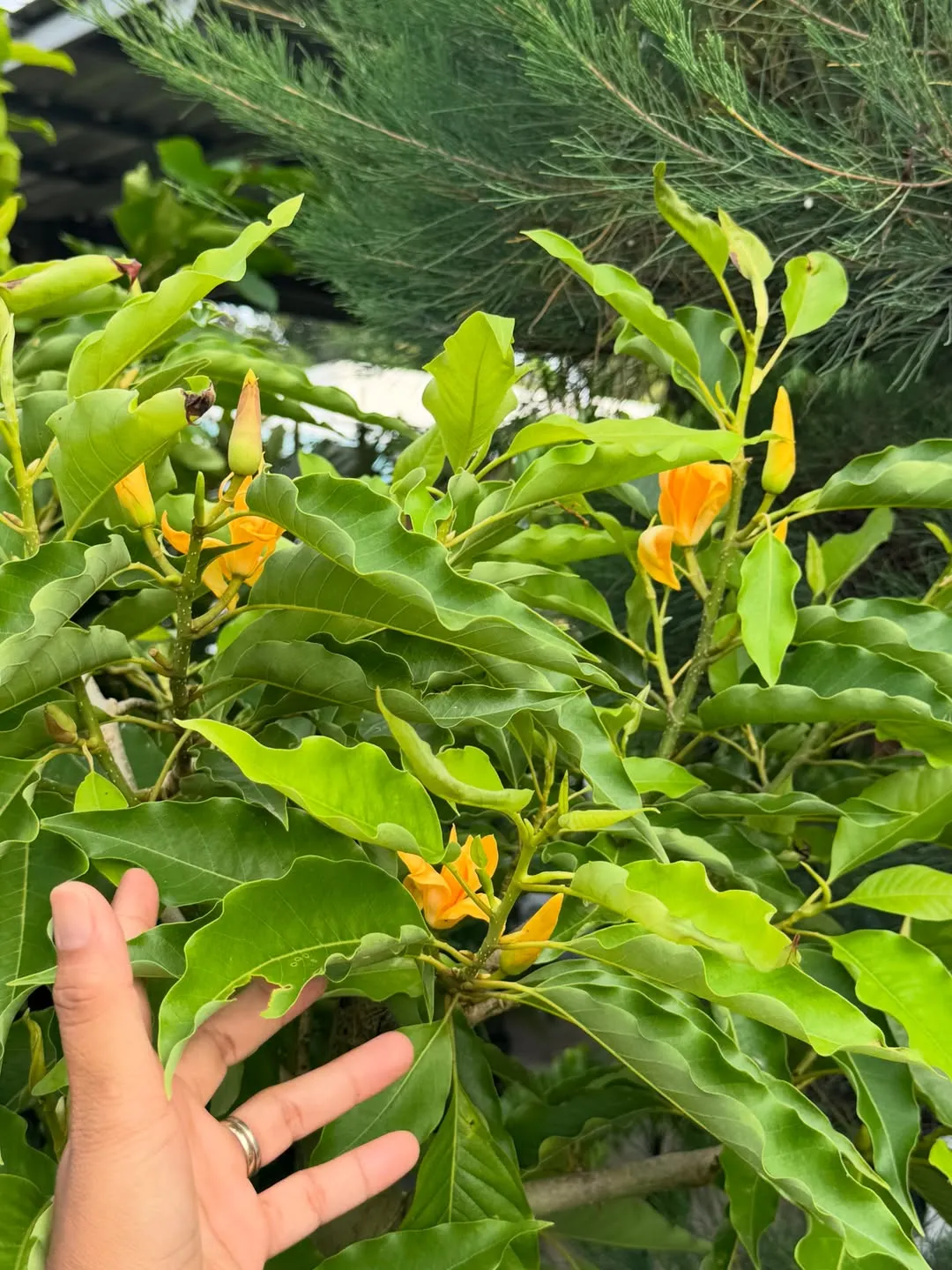
The Orange Champak tree is native to Southeast Asia and can be found in Southern California, Florida, and Hawaii. The flowers are quite small (about 2 inches), but the tree can grow 30-50 feet in height. The flowers are fragrant and bloom year-round.
The flowers usually grow alone and are yellow when they are young. As they mature, they turn orange-yellow, and each flower grows up to 2-4.5 cm long, with five tepals. The outer tepals are wider and more rounded, while the inner ones are thinner and narrower.
-
Sun: Full sun
-
Water: Moderate watering
-
Temperature: Warm ambient temperatures
-
Soil Type: Rich, loamy, deep, or sandy-loam soil
Flame of the Forest (Butea Frondosa)
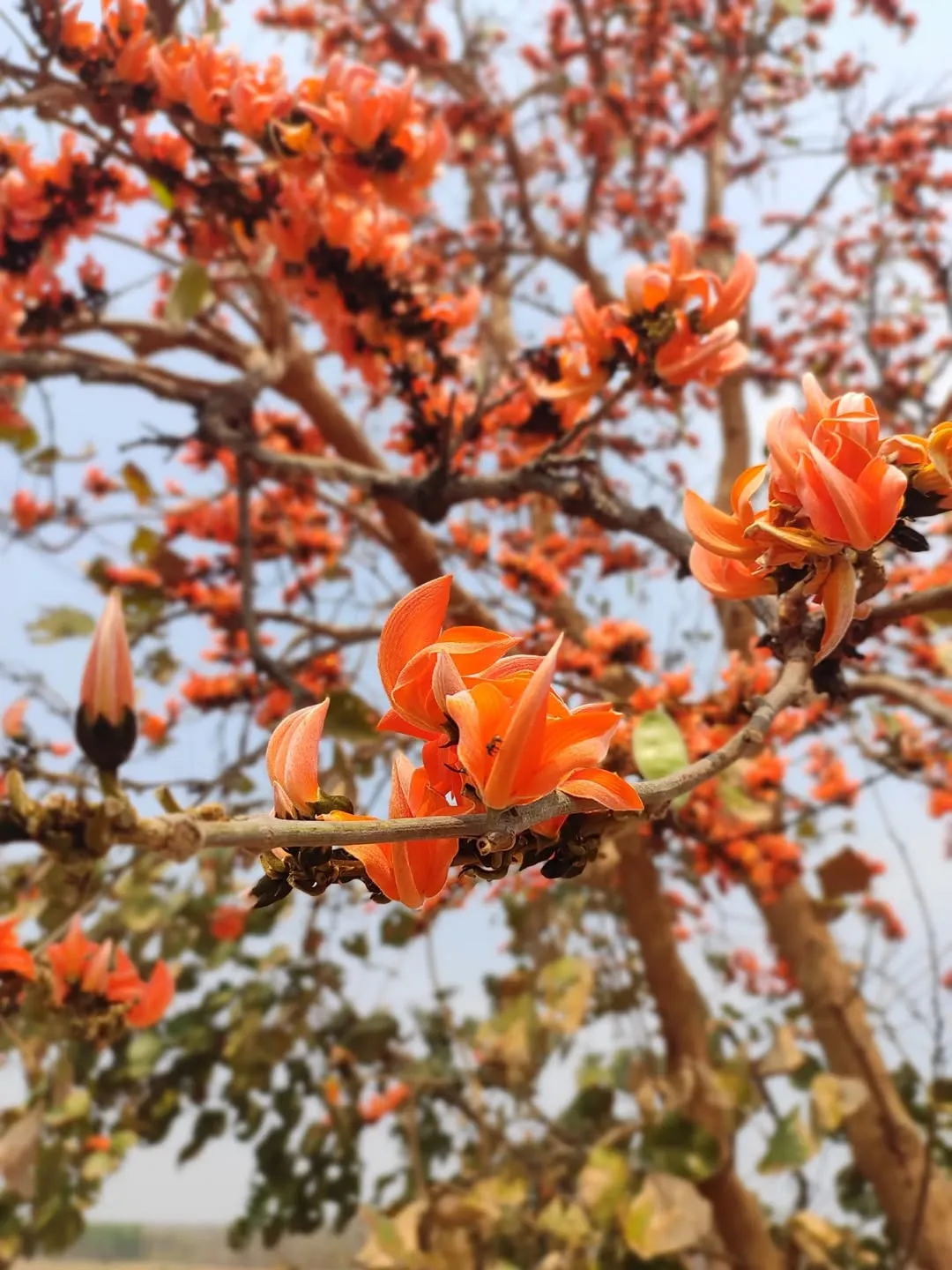
The orange flowers on the tree resemble a flame, which justifies the name of the tree. It grows to 30-40 feet when mature, which is large enough for gardens. The trunk of the tree twists as it matures.
After the flower blooms, they quickly turn into seed pods, and each pod contains just one seed. As per the Missouri Botanical Garden, the tree often doesn’t produce flowers if the weather turns too cold.
-
Sun: Full sun, part shade
-
Water: Average
-
Temperature: Warm to hot temperatures
-
Soil Type: Well-draining loamy or sandy soil
Which Large Orange-Flowering Tree Is Best for Your Garden?
The large orange-flowering trees discussed above are among the largest. However, if you have a small garden and you want a large orange tree, consider the species that is 10-20 feet (Red Buckeye) that can comfortably fit in your small garden. You can also consider Royal Poinciana, Flame of the Forest, and Orange Champak.
If you have plenty of space, larger trees such as African Tulip Tree, Australian Flame Tree, Silky Oak, Coral Trees, or Bronze Shower can be a good choice. When planting, consider your local climate and the tree's spread.
Conclusion
Orange flowering trees are a beautiful addition to the garden, and the ones mentioned above are some of the large trees that bear orange flowers. You could enjoy the beautiful evening while watching the sunset behind the canopy of bright orange colored flowers. Based on what you need, the growing size of the tree, growing conditions, climate requirements, and, of course, the size of the garden, pick the variety that suits your needs the best.