

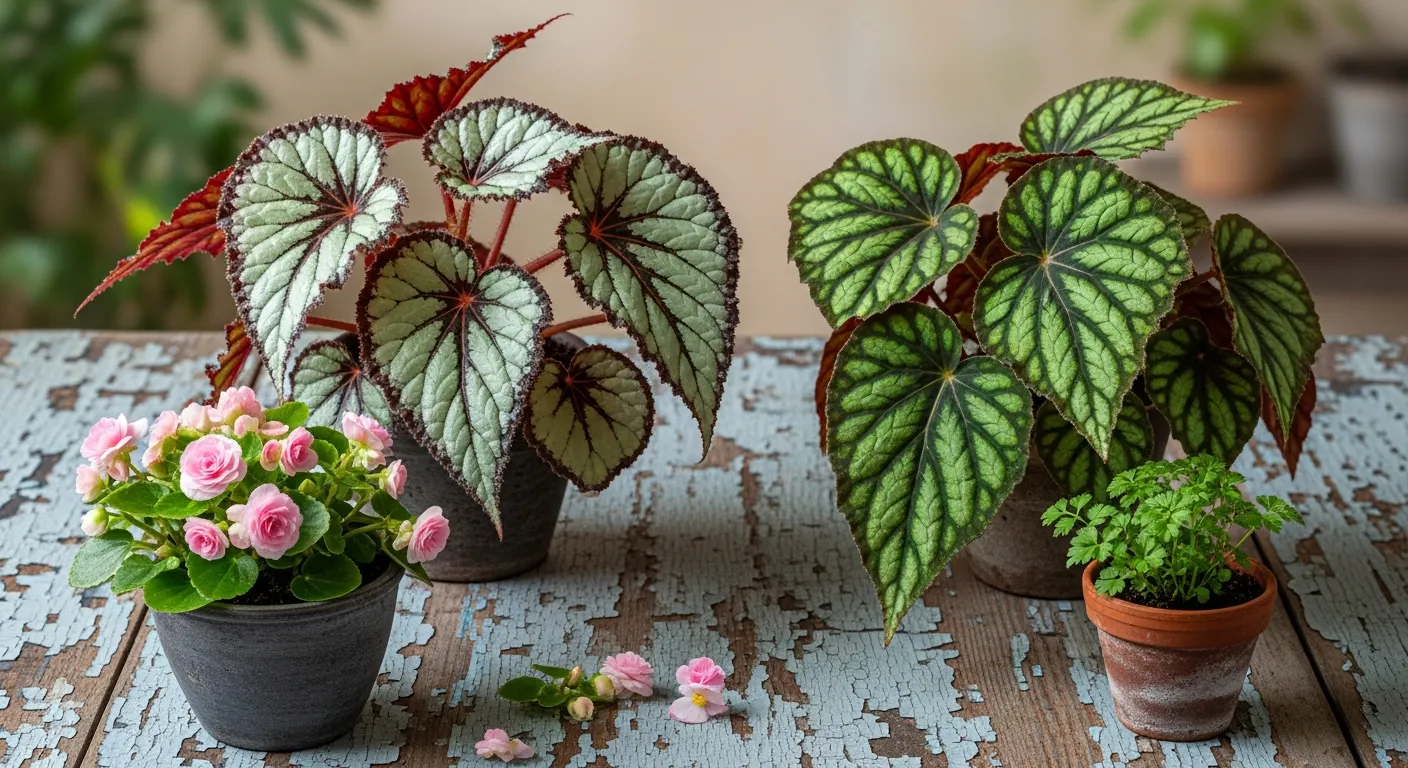
Native to South and Central America, Asia, and Africa, begonias are semi-tropical ornamental plants. They are grown for their beautiful flowers and brightly colored leaves. With their color ranging from silvers and greens to reds, pinks, whites, and creams, they create a beautiful view in the garden. They are low maintenance houseplant, thus making them a perfect choice for beginners.
Some thrive in partial or full shade, while others may tolerate a bit of sunlight. While they are often seen as a bit fussy, caring for them is surprisingly easy once you understand their basic needs. To help you care for begonias, this blog explains their different needs.
Understanding Begonia Types: Wax, Tuberous, and Rex
Begonias come in different types, and here are the three most commonly grown plants -
| Wax Begonias |
|
| Tuberous Begonias |
|
| Rex Begonias |
|
Light and Temperature Requirements for Begonias
Sunlight
Begonias need at least 3-6 hours of indirect sunlight every day. Here are the lighting requirements, depending on whether you keep them indoors or outdoors.
- Indoor Light Placement: It is best to place them where there is a little shade, and the room also gets natural light. This replicates their natural habitat, where the tall trees in the forest protect them from harsh sunlight that may cause the leaves to burn or wilt.
- Outdoor Light Placement: If planting begonias outdoors, consider a space that receives morning sun and afternoon shade. This is because morning sunlight is gentle, which helps the plant bloom, while afternoon sunlight oon is harsh and may damage the foliage.
Temperature
The begonia makes an excellent houseplant, as they thrive in temperature ranges between 65 degrees Fahrenheit and 75 degrees Fahrenheit. Begonias are considered annuals or houseplants in colder areas. When growing begonias, make sure that the temperature does not drop dramatically.
The Golden Rules of Watering: Avoiding Root Rot
When watering begonias, the first thing to keep in mind is to avoid overwatering. For some gardeners, especially beginners, watering can feel overwhelming. But, actually, it is not that challenging. The goal is to keep the soil moist, not drenched, which means the soil should be wet when touched.
How to Check if the Begonias Need Water?
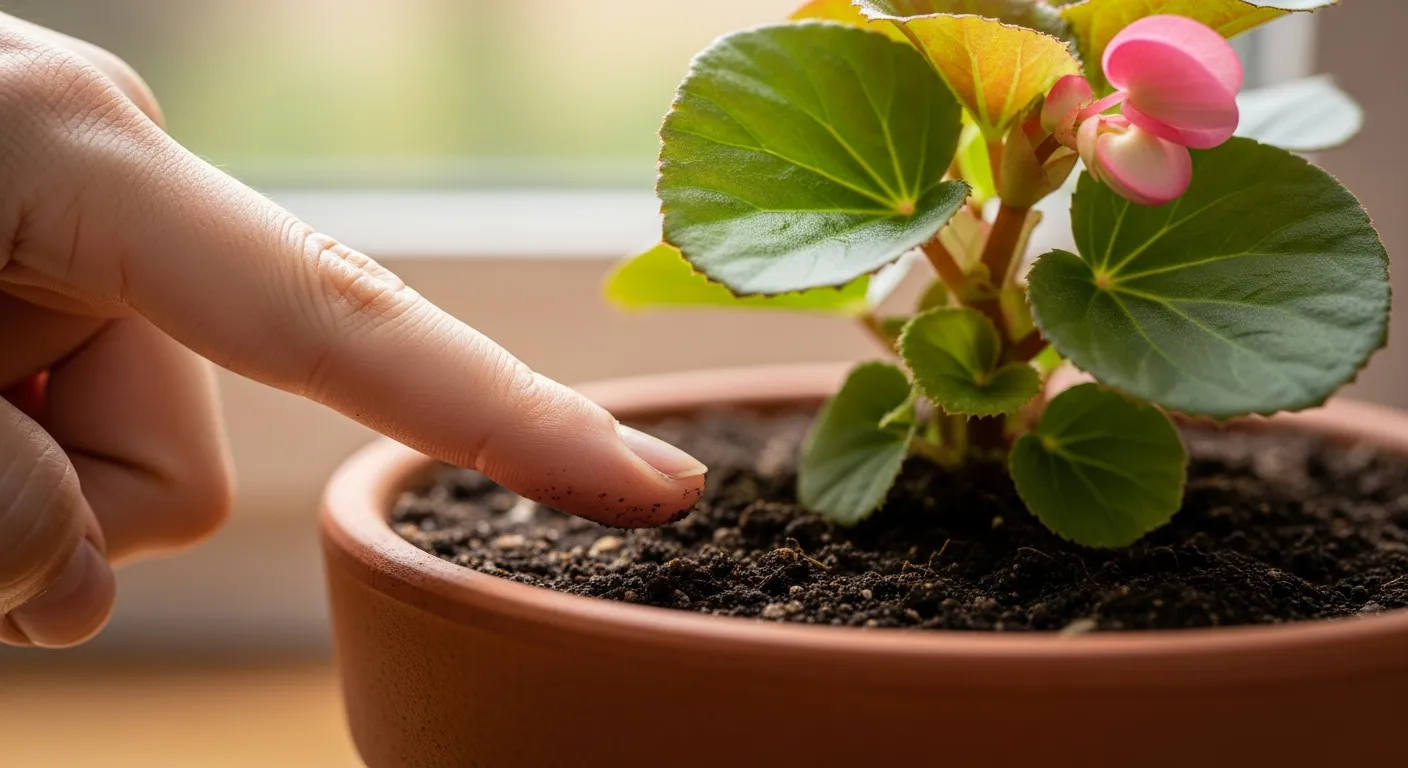
To check if the begonias need water, insert your finger about 1-2 inches into the soil. If the soil feels cool and damp, it means the plant is well watered. Wait 1-2 days, then use the same technique to see if your begonias need water. On the other hand, if the soil feels dry and hard, water the plants.
How to Water the Begonias Properly?
Do not splash water onto the leaves. Instead, pour the water at the base of the plant. This is the best way to water the plant, especially if they are located in a spot with poor air circulation. Also, make sure not to keep the leaves wet, as it can cause fungal issues or root rot.
Choosing the Right Potting Mix and Container
Begonias need well-draining soil that can retain moisture for the roots to stay healthy. When planting begonias in a container, ensure you add high-quality peat moss or coco-coir-based potting mix.
How to Choose the Right Container for Begonias?
When planting begonias in a container, make sure to get a pot that is quite snug. This is because a large pot can hold more water, which keeps the soil soggy for too long. When repotting, consider upgrading to a pot that is one size bigger than the previous one.
Opt for clay or terracotta pots because they are breathable and allow moisture to evaporate through. When using plastic or ceramic pots, consider watering less often, as these materials retain moisture longer.
Fertilizing Schedules for Better Blooms and Foliage
To ensure your begonias grow well, fertilize them regularly. Include a balanced slow-release fertilizer in the regular care at the time of planting. You can also use a liquid fertilizer once a month when the plant is actively growing.
Pruning and Pinching for Bushier Growth
Begonias don’t need much pruning. However, you can pinch the stem tips if the plant seems leggy. Also, as begonias are self-cleaning plants, you don’t even have to worry about deadheading.
Common Begonia Pests and Diseases, and How to Prevent Them?
Even with the best care, begonias may still be affected by pests and diseases. Some of the common diseases and pests are -
- Botrytis rot, also known as bud rot, attacks the plant’s buds and stems, and causes them to rot.
- Powdery mildew is a white, powdery coating on the stems and leaves that weakens the plant and stunts its growth. Thus, causing the leaves to turn yellow and leads to premature leaf drop.
- Mealybugs and whiteflies suck sap from the plant and can weaken it, while causing yellowing or stunted growth.
- Yellowing leaves can occur due to overwatering. So, reduce the frequency and allow the soil to dry between waterings.
- Leaf drop is usually caused by stress, which occurs when you change the environment.
How to Control the Pest?
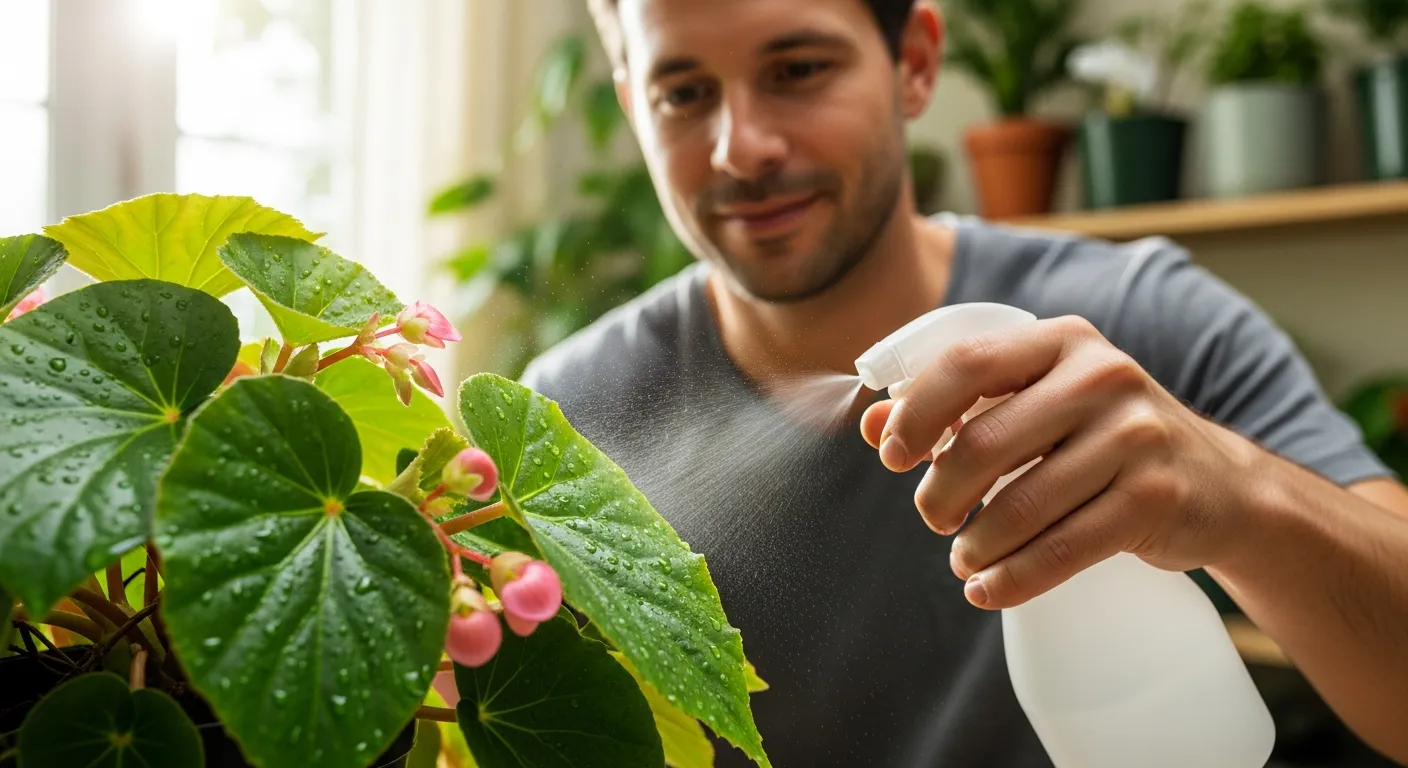
Spray insecticidal soap on the plants to kill the insects. Mealybugs can be taken care of with a cotton ball or cotton swab dipped in rubbing alcohol.
Conclusion
Begonias are a rewarding choice of plant that can thrive with the right care. Though they are low-maintenance, they still need care to bloom beautiful flowers. The major factors to consider are choosing the right potting mix and container, as well as minimal watering throughout the growing season.