

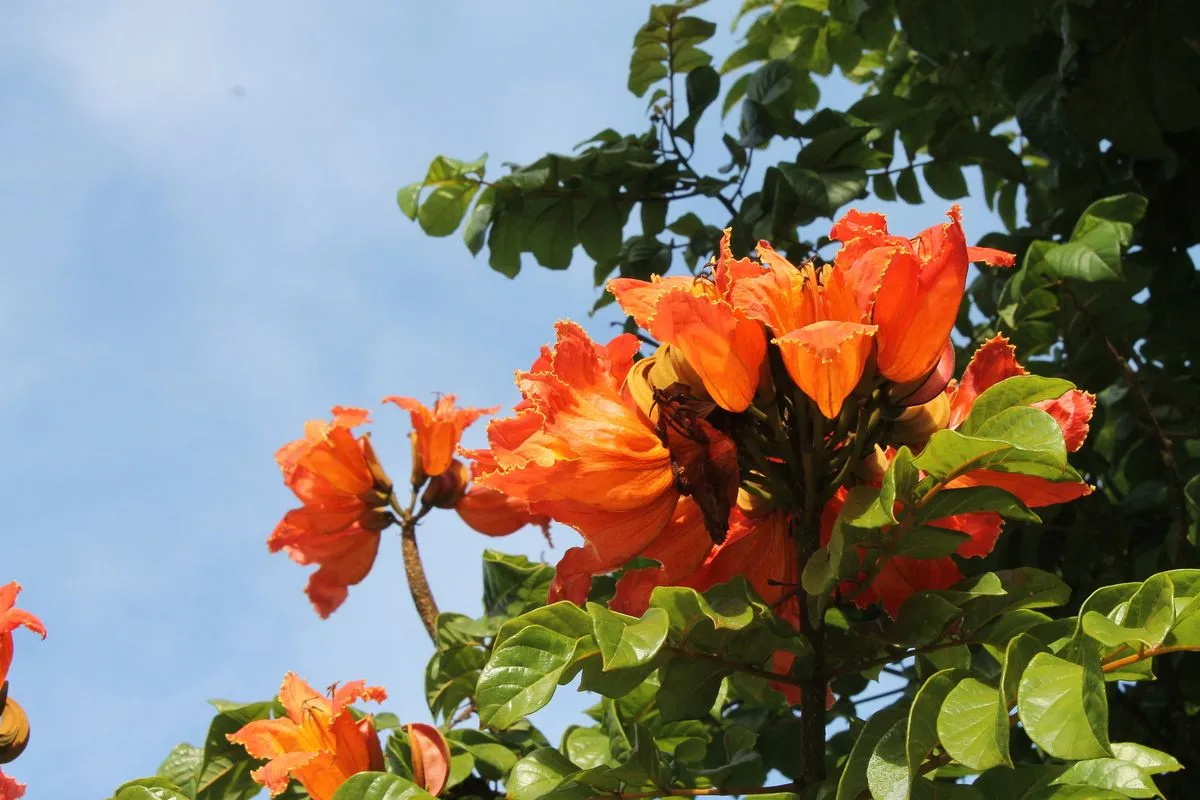
The African tulip tree (Spathodea campanulata) is a fast-growing tropical tree with orange-red, tulip-shaped flowers, and in the US it survives outdoors only where frost never comes. It is also invasive in Hawaii and southern Florida, and its nectar can kill small native bees. So the useful question is not how to grow one. It is whether you should grow it. Here is how I would think it through before buying a sapling.
What the African Tulip Tree Actually Is?
Despite the name, it has nothing to do with true tulips. It belongs to the Bignoniaceae family, the same group as trumpet vine and jacaranda, and it comes from tropical Africa. If you landed here hoping to grow the spring bulb, my list of flowers that look like tulips but are easier to grow is a much safer place to start.
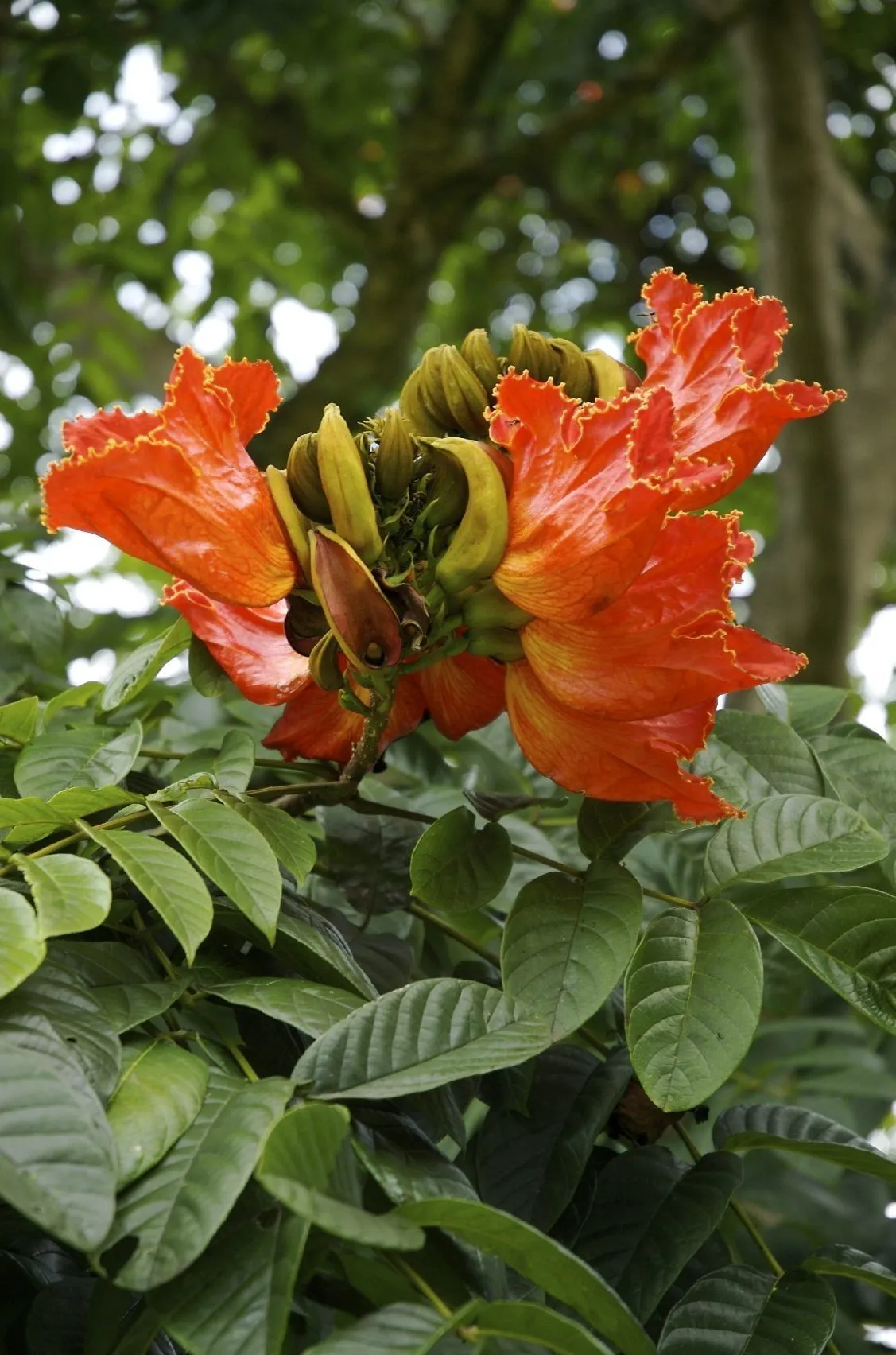
The flowers are what sell this tree. Each bloom runs roughly 3 to 6 inches long, orange-scarlet with a ruffled yellow edge. They open a few at a time from curved, fuzzy buds that are filled with water, and kids across the tropics squeeze those buds like squirt guns. That is where the nickname "fountain tree" comes from.
The scale surprises people. UF/IFAS Extension describes a 50- to 60-foot tree with a crown about 50 feet wide and leaves close to a foot and a half long. After flowering, upright pods form, 5 to 10 inches long, and each one holds around 500 papery seeds. Keep that number in mind. It matters later.
Where It Will Grow in the US?
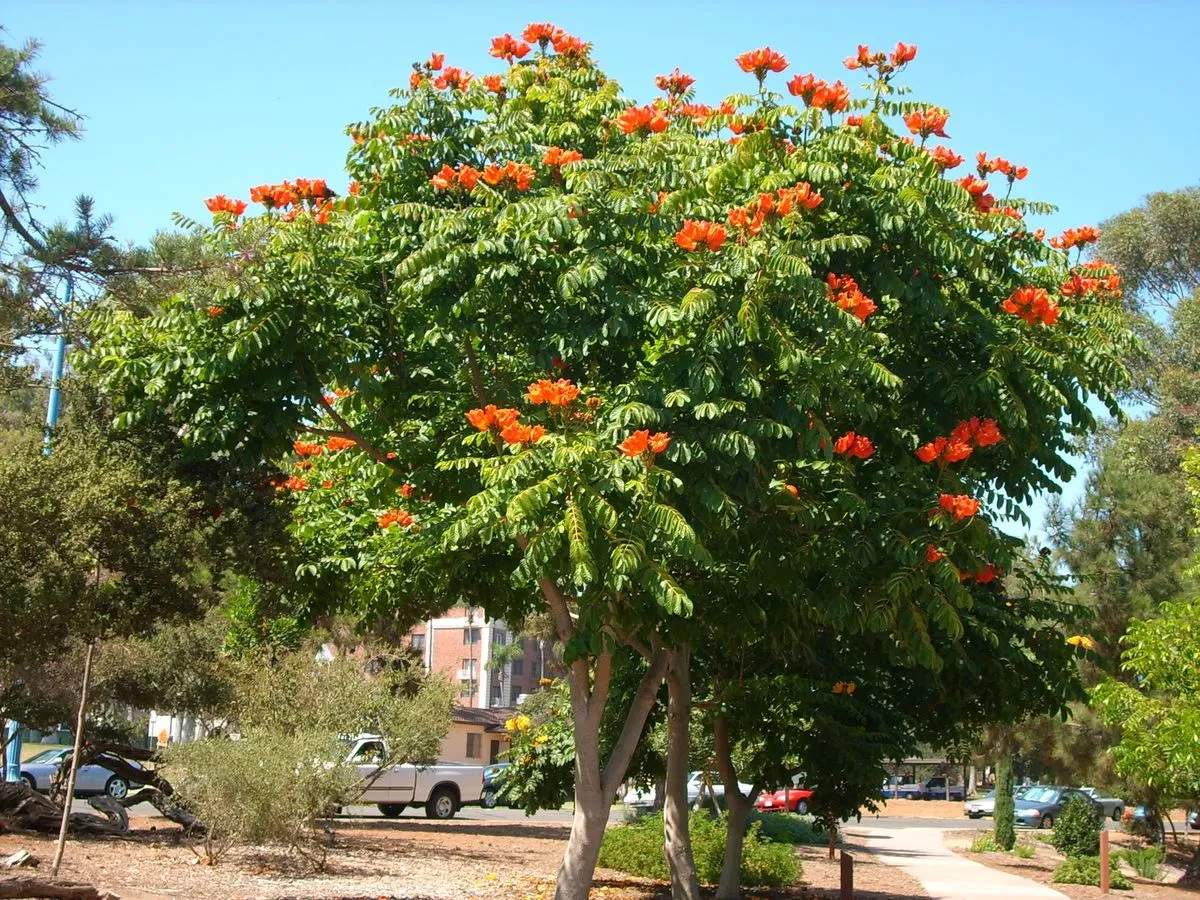
Frost is the dealbreaker. Most sources put it in USDA zones 10 and above, which in practice means Hawaii, South Florida, the Keys, and the warmest coastal pockets of Southern California. Pacific Horticulture suggests a warm, south-facing slope with full sun and good drainage.
Some growers list zone 9 for the yellow form. I would treat that as a gamble. Young trees are the most frost-sensitive, and one hard freeze can set you back years. Blooming also runs on the tree's own schedule. UF/IFAS says flowers appear from winter into late spring in Florida, but plenty of owners report scattered bloom at odd times of year.
If you are in zones 10 to 12 and want another big red-orange flowering tree, the red silk cotton tree is worth a look. Our guide notes that it can take 8 to 10 years to bloom, so patience is the tradeoff there.
The Bee Problem Nobody Mentions in the Nursery
This is the part that changed my mind about the tree. Researchers in Brazil and Australia have found that the nectar and pollen can be toxic to stingless bees. A University of California Cooperative Extension team checked about 9,500 flowers on roughly 50 trees around San Diego over 2022 and 2023. They kept finding dead native bees, mostly tiny sweat bees. In one small flower alone, they counted 84 dead bees.
The results were not uniform. Some trees and some days looked far worse than others, and the researchers say more work is needed to understand how big the impact really is. Still, the pattern is hard to ignore. In Africa, the tree is pollinated mostly by birds and bats, which may explain why bees get the short end.
My take: if your yard borders a natural area, or your garden is for pollinators, skip this tree. It is a poor trade.
Why It Is Called Invasive?
The tree spreads in two ways. Wind carries the seeds, and the roots send up suckers. New Zealand's Manaaki Whenua Landcare Research reports that densities are as high as 12,000 plants per hectare in Fiji, and the species appears on lists of the world's worst invasive plants. In Hawaii and southern Florida, it forms dense thickets that crowd out native plants. Gardening Know How points out it is less of a problem in drier places like Southern California, which is a fair distinction.
Australia goes further. In Queensland, the tree is a restricted invasive plant, and the state government recommends removing it, especially near natural areas. Rules differ a lot across the US, so call your county extension office before you plant.
If You Still Want One: Realistic Care Notes
Say you live in a frost-free spot, far from wild land, and you have already decided to plant an African Tulip Tree. Here is what the extension guidance and nursery notes agree on.
Light and Soil: Full sun, and any soil with reasonable drainage and fertility. It grows fast in those conditions.
Water: Regular watering until the tree is established, then it mostly looks after itself.
Propagation: Seeds are fussy. Cuttings and suckers root easily, which is convenient and also exactly why the tree escapes.
Placement: Keep it well away from your house, fences, and power lines. The branches are brittle and snap in strong wind, the wood is soft and rots quickly, and storms can bring whole trees down. UF/IFAS also notes it can form large surface roots, so it is a bad match for a lawn you mow or a patio you love.
Mess: Nursery plant guides call it high maintenance, and the fruit can be messy enough to need regular cleanup.
Pods: This is my own suggestion, not extension advice. On a young tree you can still reach, snip pods before they split open; on a 50-foot tree, that stops being realistic fast.
Here is the Tradeoff I Keep Coming Back To: The same traits that make this tree attractive, fast-growing and easy rooting from cuttings, are the traits that make it a headache later. A sapling that looks tidy in a 7-gallon nursery pot can become a 50-foot liability, with branches that drop in storms and suckers that surface in the neighbor's yard.
A Pot Is Another Route for the Yellow Form: Some growers keep it at 10 to 20 feet with pruning and move it under cover in winter. I have not seen solid evidence that a potted tree keeps blooming well for years, so I would call that experimental.
Better Orange-Red Trees to Plant Instead
You can get the sunset-colored canopy without the bee risk. Our roundup of a large tree with orange flowers compares ten options by size, bloom season, and climate. Royal poinciana suits warm yards, and red buckeye tops out at 10 to 20 feet and draws hummingbirds, which makes it a better fit for smaller properties.