


Gardeners often worry about their plants and want to do everything possible to help them grow healthy. Are you also worried about your plants, especially the homegrown organic tomatoes? And want something that can make them thrive. If yes, then don’t worry. Apart from other sources of nutrients, using milk for tomato plants is one of the effective ways to promote their healthy growth. It has been scientifically proven that milk does as much good to plants as it does to humans. This isn't just true for tomatoes, the same calcium and antifungal properties benefit most garden plants. If you want the broader rundown before narrowing in on tomatoes, what milk does for plants covers the general mechanics.
Is Milk Good for Tomato Plants?
Yes, milk is good for tomato plants because it saves the plant from dreaded blight by providing essential nutrients. Many scientists have found that milk helps plants fight diseases. It also helps prevent blossom-end rot and blight and acts as a natural fertilizer. The vitamin and sugar content present in the milk helps the plant grow well.
Benefits of Using Milk on Tomato Plants
It is interesting to learn that milk is used for tomato plants for the same reason it is used for humans- to provide calcium and vitamins. Calcium boosts the growth of plants and helps prevent diseases like blossom-end rot, whereas the antifungal properties of milk prevent powdery mildew. Here is the detailed information on the other benefits.
Help Prevent Blossom-end Rot- Calcium deficiency is the cause of this disease that can be identified with brown or black sunken patches at the bottom of the tomatoes. As milk contains high calcium content, it helps the plant prevent blossom-end rot.
Prevent Blight on Tomatoes- Milk breaks down the fungal spores in the plant as it produces lactic acid, which helps prevent blight.
Boost Healthy Plant Growth- Milk acts as a natural fertilizer as it contains vitamins and sugars which provide nourishment to tomato plants, resulting in a higher yield of tomatoes.
How to Use Milk on Tomato Plants?
Milk can be used in any form in the garden, be it fresh, expired, evaporated, or powdered, but it should be diluted well. Try to use reduced-fat or low-fat milk and skip whole milk.
As a Foliar Spray
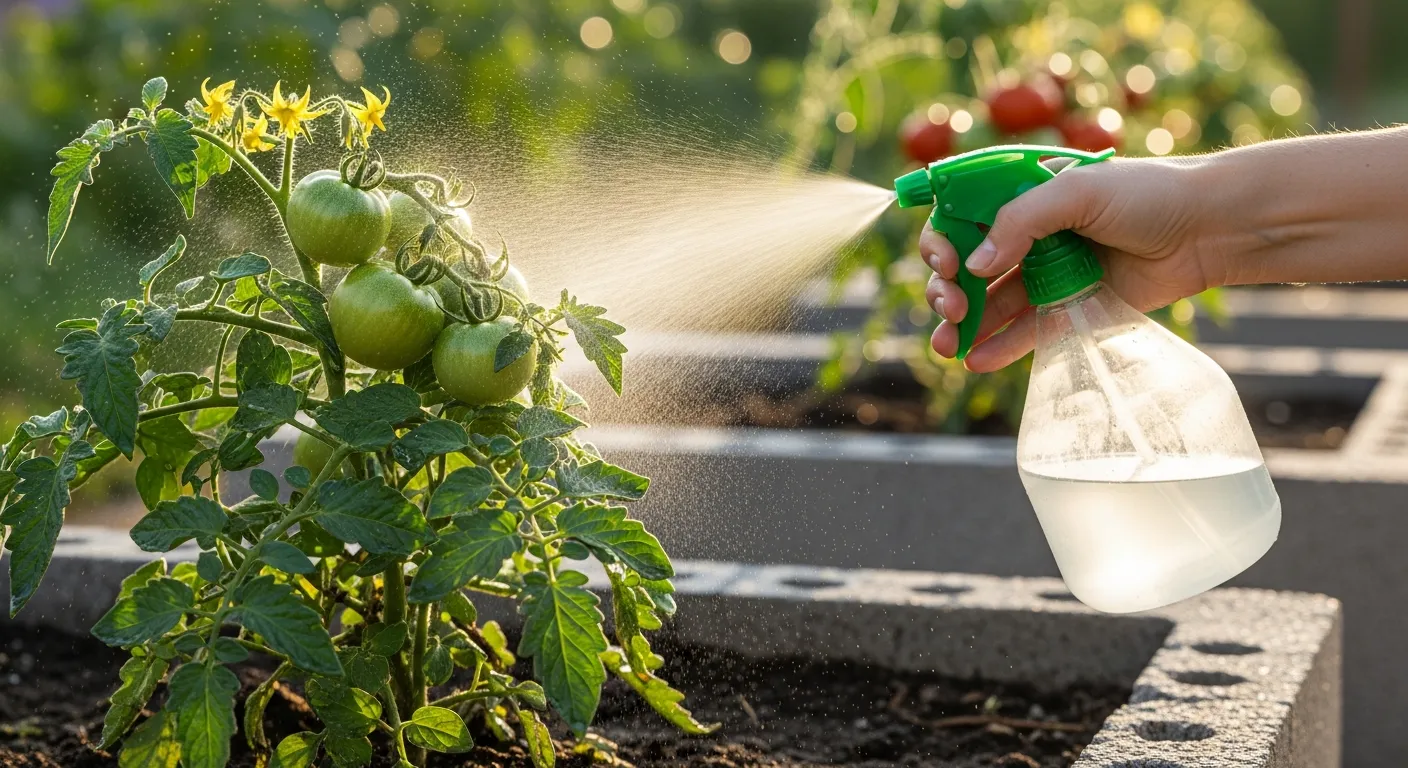
- Mix milk and water in the same proportion, i.e. 50-50 ratio, and pour it into a spray bottle. The diluted milk is beneficial for the plants. The ratio of milk and water may vary, which means you can even use a small amount of milk left in the jug, amounting to a quarter cup of milk.
- After 30 minutes of spraying the milk mixture, check if the liquid is sitting on the leaves or if it was absorbed. If liquid is sitting on the leaves, wipe it with wet clothes because plants like tomatoes develop fungal diseases due to prolonged exposure to moisture.
As a Soil Drench
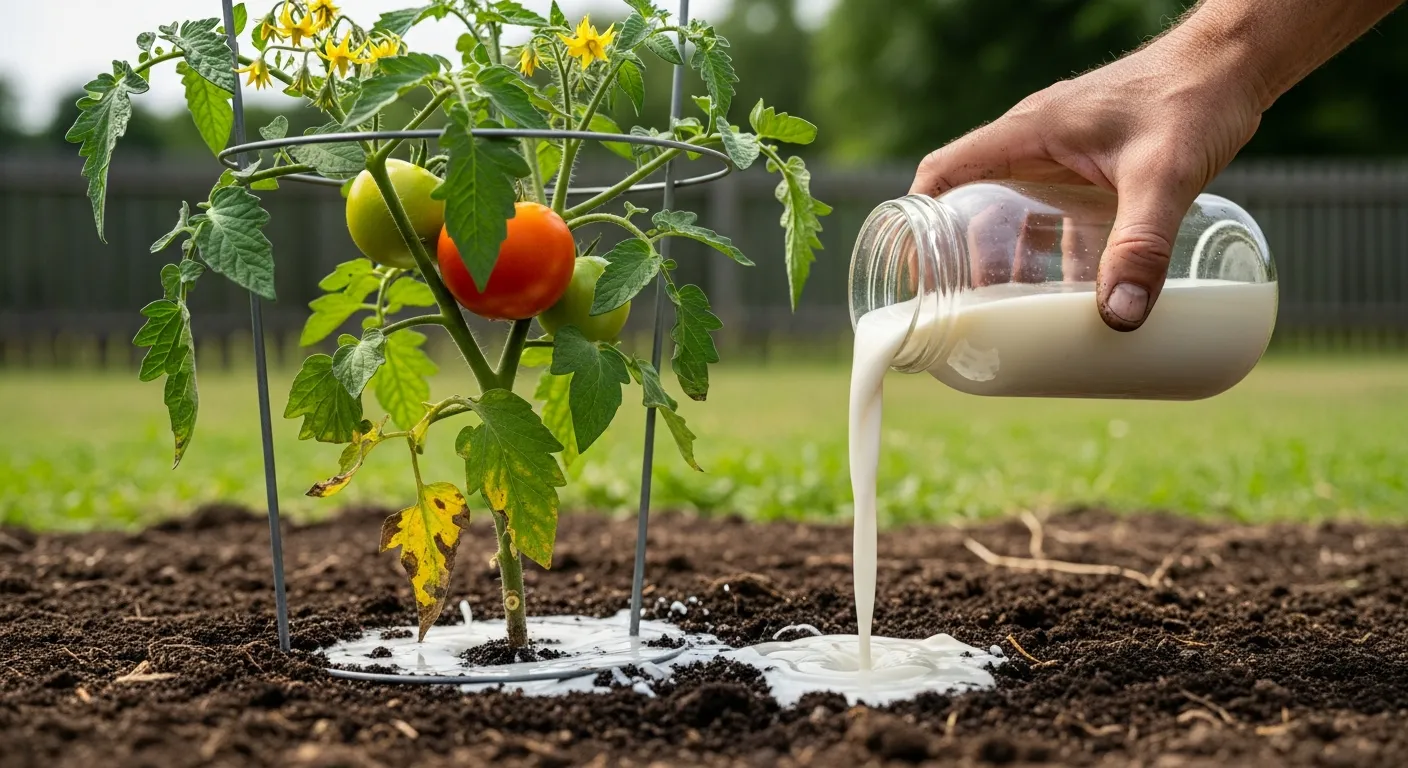
- The best way is to spray the mixture directly into the soil at the base of the plant.
- For a large garden, use a garden hose spray to spray the milk solution. 1 quart of milk is just enough to cover a 20- by 20-foot garden, while 5 gallons of milk should be enough for 1 acre.
| Some Tips | Don’t use fertilizer or any chemical pesticides on the plants immediately after using milk because fertilizer may kill the bacteria present in the milk, which can hamper the healthy growth of tomato plants. After each milk treatment, wait for a few days (10-14) before applying pesticides or fertilizers. This gives sufficient time for the plant to absorb nutrients from the milk. |
Can Too Much Milk Harm Tomato Plants?
Yes, overuse of milk can damage the tomato plants. This is because the bacteria present in the milk can cause wilt and stunted growth when too much milk is used. Usually, the same bacteria, when used in limited proportion, help in the healthy growth of the plant. If whole milk is overused, the fat in the milk causes a foul odor, whereas overuse of skim milk leads to black rot, soft rot, and Alternaria leaf spot in certain tomato crops.
Common Mistakes to Avoid
Using milk for tomato plants is highly effective as the bacteria in the milk boosts growth of the plant. However, there are a few mistakes you should avoid to prevent problems. The mistakes to avoid are:
Using Undiluted Milk
Always use diluted milk for the plant to prevent rot, foul odor, and pests. Undiluted milk, when sprayed on the plant, can sit on the leaves without getting absorbed, causing fungal diseases.
Applying Too Frequently
Avoid frequent use of milk for tomato plants because it can result in foul odor and stunted growth. The fat in the milk leads to an unpleasant smell when the fat breaks down. Try to maintain a gap of 10-14 days before treating the plant with milk.
Using Spoiled Milk
Don’t use spoiled or sour milk because it increases the chances of bad odor, attracting pests, and other fungal diseases. Even if you want to use spoiled milk, use it in a diluted form by mixing one part of milk to five parts of water.
Treating Milk as a Complete Fertilizer
Though milk provides nutrients like vitamins and calcium to the plant, there are other essential macronutrients as well, such as phosphorus, nitrogen, and potassium, which milk can’t provide.
Spraying During the Hottest Part of the Day
The best time to spray milk on tomato plants is early in the day, as it gives more time for the plant to absorb moisture, giving a dry leaves by night time. The dry tomato leaves help prevent bacterial and fungal diseases like mildew and blight.
Tomatoes aren't the only plant that responds well to a milk treatment, several houseplants benefit from it too, though the ratios and frequency differ quite a bit from what works for tomatoes. See which plants like milk if you're curious which ones.
Conclusion
Milk is a highly effective fertilizer for tomato plants, but there are a few things you should consider to avoid problems. Use milk in diluted form and use it less frequently (with a gap of 10-14 days) to avoid rot and foul smell.