


Controlling bugs in the backyard and garden can be a challenge. You're in the bug spray aisle with two bottles in your hands. One has a chemical name on the front. The other says it is made with plant oils and calls itself a "minimum-risk" product. The second one sounds safer, so it is tempting to toss it in the cart.
Before you do, it helps to know what "minimum risk" really promises, and what it does not. Here is the simple version.
What Is a Minimum-Risk Pesticide?
It is a bug or weed product made with minimal use of ingredients the EPA considers very low risk, such as cinnamon oil, peppermint oil, clove oil, rosemary oil, and cornmint oil. These products do not need an EPA registration number, which is why you will not see one on the bottle. The EPA explains the idea on its minimum-risk pesticides page.
Here is the part that matters for your yard. "Low risk" is not the same as "no risk." The label is about the ingredients on paper. It does not tell you how well the spray works, how long it lasts, or whether your cat should be near it.
If you want to know how a particular oil works, Cornell publishes simple profiles of each minimum-risk ingredient.
You may also see them called "25(b) products." That is just the name of the rule behind them, and you do not need to remember it.
Does It Actually Work?
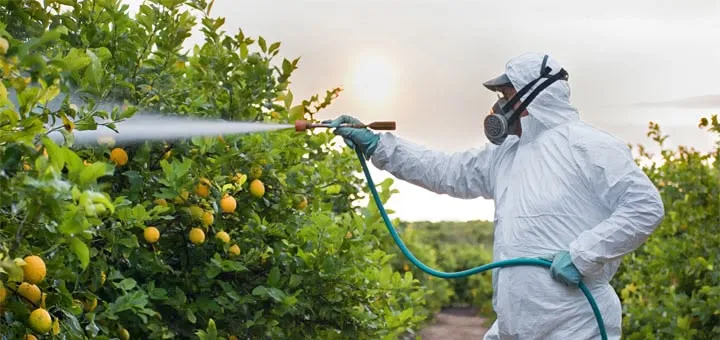
It works, but differently than chemical sprays. Plant oils tend to hit the bug on contact and then fade. They do not stay on the grass for weeks.
Take the Cutter products as an example. In our breakdown of what is inside Cutter Backyard Bug Control, the regular concentrate uses 0.16% lambda-cyhalothrin, a synthetic chemical built to last. The Essentials version uses cornmint oil at 1.00%, cinnamon oil at 0.75%, and peppermint oil at 0.25%, and it needs another round every 10 to 14 days.
Do the math on a 90-day summer. That is roughly six to nine rounds of spraying. If you hate yard chores, that is the real cost of the gentler option. It is not the price on the shelf.
Is It Safe for Kids and Pets?
Yes, it is safer than many chemical sprays, but not safe by default.
The biggest catch is cats. Cinnamon, clove, and tea tree oils can poison them, and cats are very sensitive to many essential oils. If you have a cat, ask your vet before you use an oil spray, and if you have already used it, keep the cat off the lawn until the area is fully dry.
Dogs can drool or get an upset stomach if they lick a wet, treated spot. Kids should stay off until everything is dry too. Our guide on how long to keep kids and pets off the lawn after spraying Cutter Backyard covers drying times and what to do if some gets on skin or in eyes. Those same habits apply here.
What About Bees and Butterflies?
This is where "natural" fools people the most. A plant-oil spray still kills the bugs it lands on, whether it’s a mosquito or a bumblebee.
Michigan State University Extension points out that nobody can honestly call a pesticide guaranteed "bee safe", and that some long-term effects on bees are not well studied. The simple fix is to spray in the evening, when bees aren't flying, and to skip any plants in bloom.
When a Minimum-Risk Spray Is a Good Idea?

I would reach for one in a few situations:
- A patio or deck before a cookout, when you want quick relief.
- Around a garden bed where you do not want a chemical sitting in the soil for weeks.
- A small problem area, like ants along a path.
In these cases, the short lifespan is a boon. The bugs go down, and you are not left with a long-lasting residue.
When to Avoid This Tool?
I would not count on one to control mosquitoes across a whole yard all season. If you miss one round, the bugs come right back, and a rainy week can wash the spray away before it does much.
For that kind of job, the honest options are a registered product used exactly as the label says, or a professional service. If you are leaning toward the chemical route, read about the pet and environmental risks of Cutter Backyard Bug Control first, so you know what you are taking on.
List of Things That Help More Than Any Spray
- Sometimes the bottle is not the best fix.
- Mosquitoes breed in standing water, so tip out buckets, bird baths, and plant saucers at least once a week.
- Keep grass short and trim thick shrubs near the patio, since bugs rest there during the day.
- A box fan on the deck keeps mosquitoes away from your seat better than most sprays do. Michigan State University Extension also notes that you can handle many pests without chemicals, so that a spray can be your backup plan instead of your first move.
Mistakes People Often Make With These Sprays
Most problems come from a few easy slips:
- Assuming Natural Means Harmless: It does not, especially for cats and bees.
- Spraying in the Middle of the Day: Bees are busiest then, and the sun can break down oils faster.
- Spraying Right Before Rain: The spray washes off, and you have wasted a round.
- Skipping the Second Round: With oils, the schedule is the whole point.
- Spraying Open Flowers: This is where pollinators get hurt.
| One More Tip | Test a small patch of a plant first and check it the next day. Oils can sometimes burn leaves, and a quick test saves you from a yard full of brown spots. |
A Quick Buying Check
You do not need to read the fine print for an hour. Just check three things on the bottle:
- Every ingredient is listed, with a percentage.
- It says the product is exempt from EPA registration, or it has an EPA number.
- It does not promise to protect you from disease. A real minimum-risk label is not allowed to say that.
If a bottle fails any of these, put it back.