

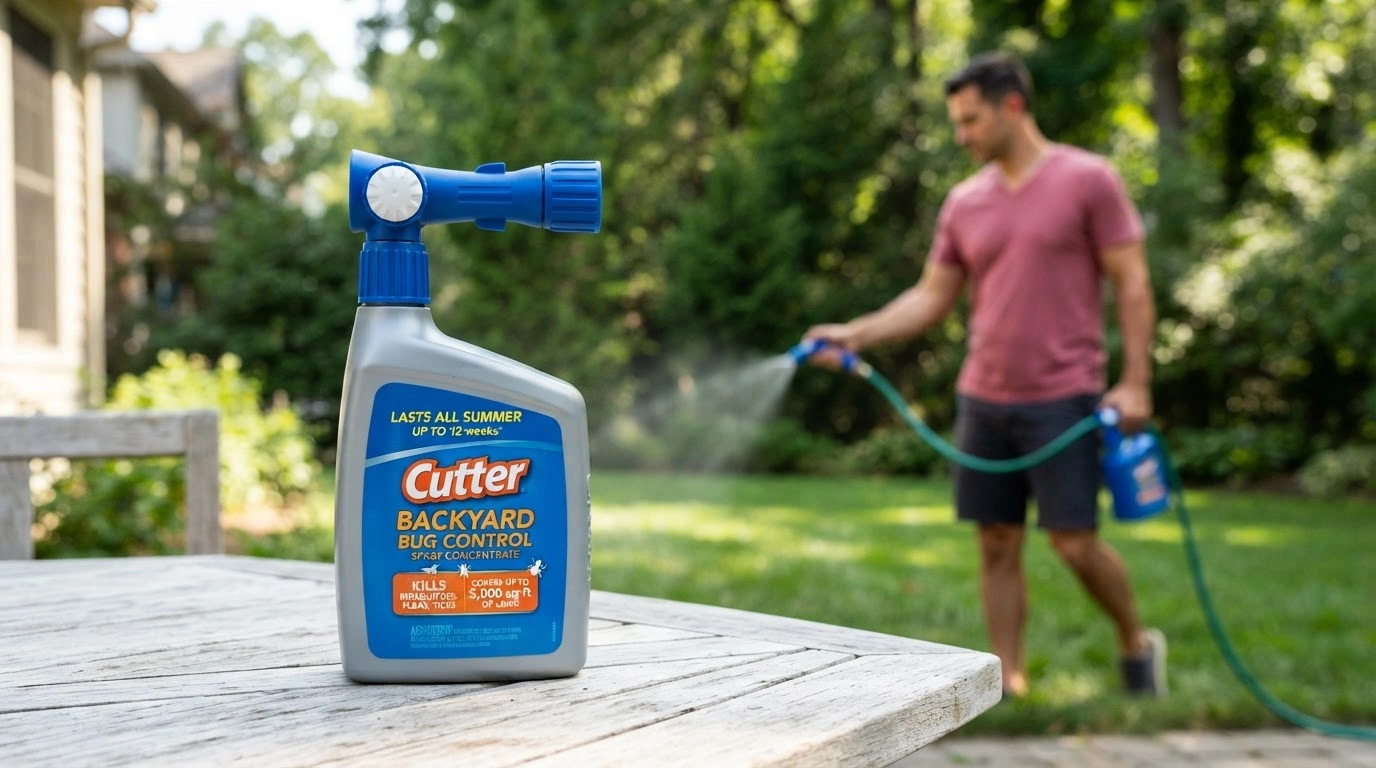
Bugs in the backyard are common problems that many homeowners often come across. Finding the bug control options is the real challenge. Cutter Backyard is a viable option, but they don't sell one bug spray; rather, a family of them, and that's where most of the confusion starts. Grab the standard Backyard Bug Control Spray Concentrate off a shelf at Home Depot, and you're holding a different chemical than the one in the Essentials line sitting right next to it, or the fogger in the aisle over. I pulled the actual EPA registration filings and safety data sheets for each version instead of relying on the front label, and the differences matter more than most reviews let on.
The Core Chemical: Lambda-Cyhalothrin
The standard Cutter Backyard Bug Control Spray Concentrate that comes with the hose-end bottle is what most people mean as "Cutter" contains lambda-cyhalothrin at 0.16% as its only active ingredient. Everything else in the bottle (about 99.84%) is water, a small amount of light aromatic naphtha, and an ethyl ester solvent that helps the active ingredient mix and spread.
Lambda-cyhalothrin is a synthetic pyrethroid, registered with the EPA back in 1988. According to the National Pesticide Information Center's technical fact sheet, it works by keeping sodium channels in an insect's nerve cells locked open, which disrupts the functioning of the nervous system. That's the twitching-then-paralysis you see in bugs. It's the same family of chemicals in professional-grade products like Demand CS, which is available at a lower cost and higher concentration.
The Chemical Composition of Cutter Backyard Bug Control Outdoor Fogger
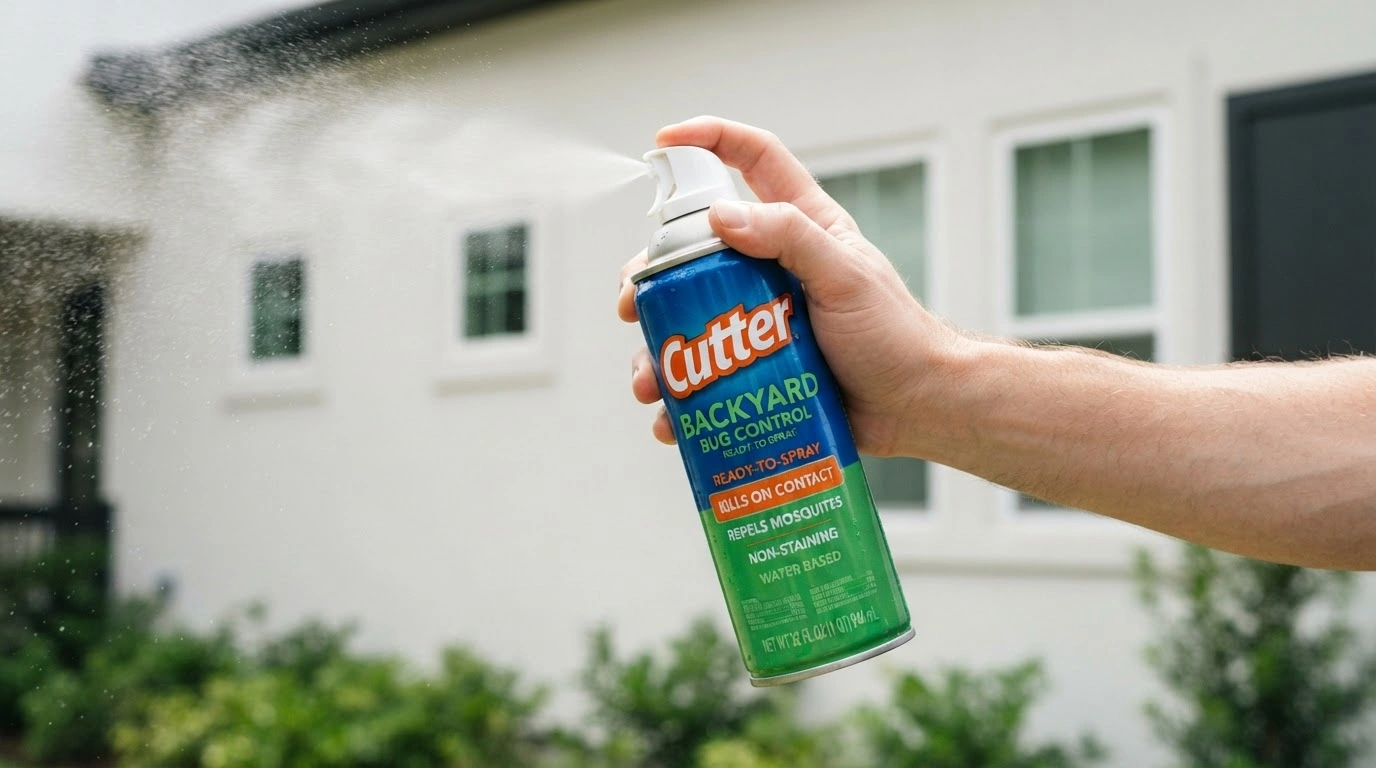
If you've used the Cutter Backyard Bug Control Outdoor Fogger, you weren't spraying lambda-cyhalothrin at all. Its safety data sheet lists phenothrin (0.20%) and tetramethrin (0.20%) as the active ingredients, and isobutane, distillates (petroleum), and hydrotreated light propane as other ingredients. Phenothrin and tetramethrin are both pyrethroids too, but they act faster, leaving shorter residual compounds, making it ideal for a quick fogging session before a barbecue. Many articles skip adding the fact that “ buying 'Cutter Backyard Bug Control' doesn't guarantee that you're getting the same chemical twice, and I've had readers email me confused after checking two different bottles.
The "Essentials" Bug Control Spray by Cutter
Cutter also makes an Essentials Bug Control Spray Concentrate that ditches synthetic pyrethroids altogether. Its label lists cornmint oil (1.00%), cinnamon oil (0.75%), and peppermint oil (0.25%) as active ingredients. It's registered as a minimum-risk pesticide under FIFRA, which means it's exempt from standard EPA registration because the ingredients are already on the agency's low-toxicity list.
I've tested this version on a section of lawn against mosquitoes, and it does knock down active populations fast. The only downside is that you will have to reapply every 10 to 14 days to keep pressure down, unlike the lambda-cyhalothrin version that claims to have a long-lasting impact. If you have kids or pets moving through the yard constantly and want to reduce re-entry wait times, that trade-off is usually worth it. If you want to spray once and forget about it for two months, it isn't.
Why the Concentration Matters?
A 0.16% concentration sounds negligible, and functionally it is low-risk when used as directed. The EPA classifies lambda-cyhalothrin as a Toxicity Class II to III compound depending on the formulation, not the most hazardous tier. But "low concentration" isn't the same as "no residual activity." This is because pyrethroids resist breaking down in sunlight and soil compared to natural pyrethrins; 0.16% can keep working on contact for weeks, which is the whole point of the product, and also the reason label directions about pets, ponds, and reapplication windows aren't just fine print.
For anyone who's already read up on what those active ingredients can do to pets, aquatic life, and beneficial insects, our breakdown of Cutter Backyard Bug Control's health and environmental risks provides more information in detail.
Lambda-cyhalothrin is also broad-spectrum enough to take out insects most homeowners don't actually mind having around, including ladybugs, which the label lists by name.