

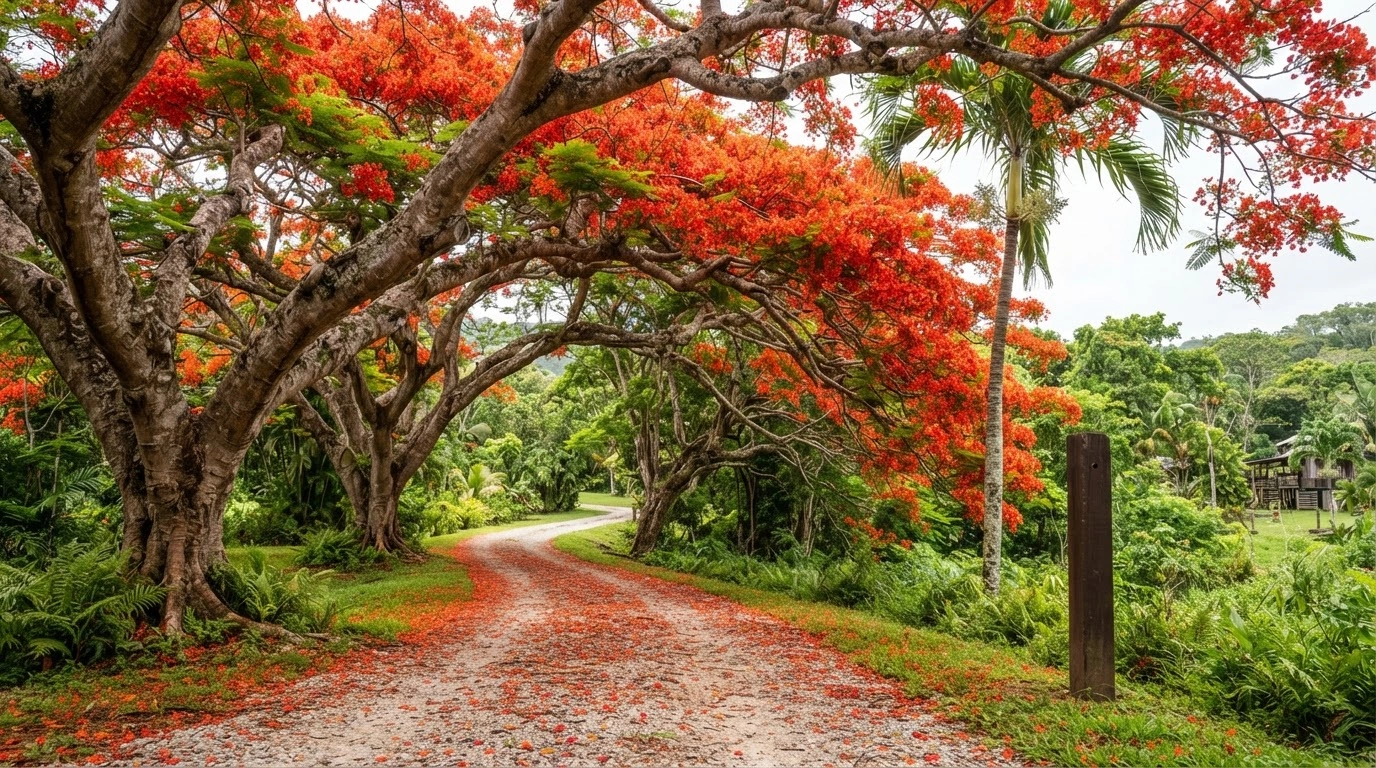
Flowering trees look stunning in the garden as it adds color to the surrounding area, adding positive vibes all around. Usually, spring gardens lean heavily on pastels, soft pinks, whites, and lilac flowers. However, orange flowers also add a burst of colors. When an orange flowering tree blooms, it doesn't blend in, rather offers a unique look to the garden because orange flowers are not commonly seen. This uniqueness makes gardeners fall for these trees.
Our guide to trees with orange flowers covered 13 varieties across every season. This time we’re narrowing to spring specifically, including a few cold-hardy picks, which most of the tropical heavy list skip it completely. Check your USDA zone and how much full sun the spot gets before choosing the orange flowering tree.
African Tulip Tree
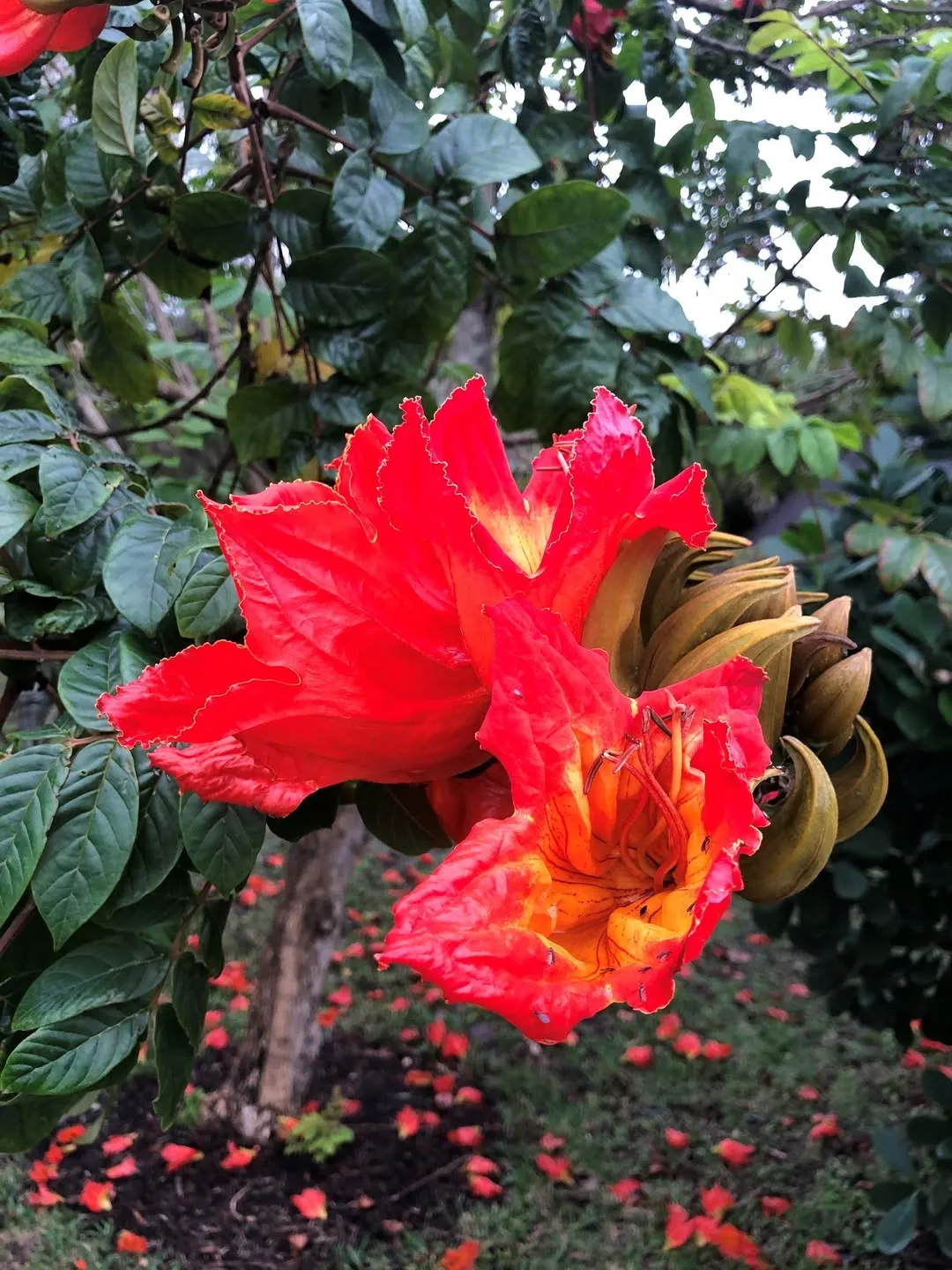
Spathodea campanulata produces fire-orange, tulip-shaped blooms from winter to late spring on a broad, shade-giving canopy. It is considered as an invasive variety in some tropical regions, so check local guidance first.
Zone: 10-12 | Light: Full sun | Height: 60-80 ft
Red Silk Cotton Tree
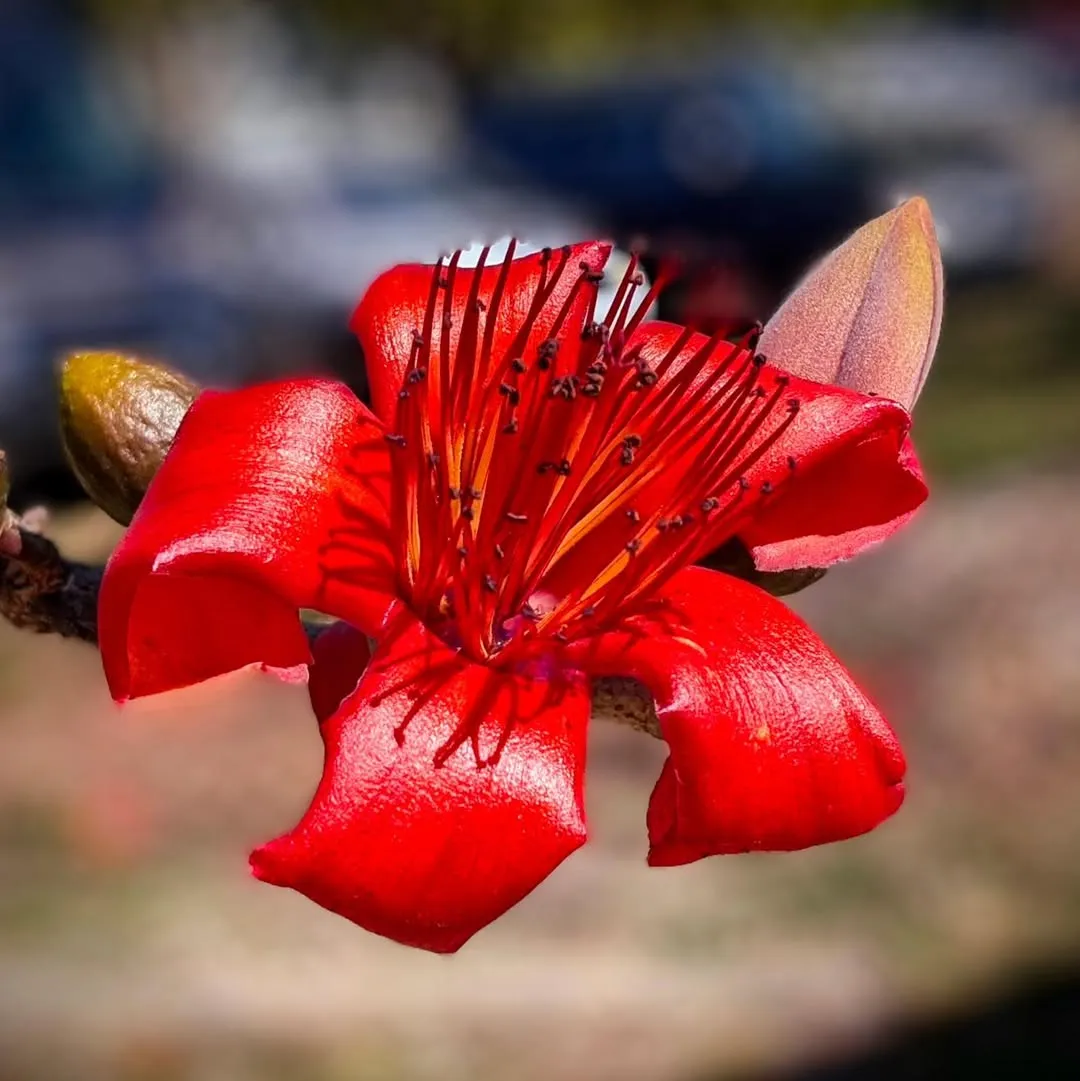
Bombax ceiba produces deep red-orange flowers on bare, thorny branches in late winter to early spring. Seed pods later release a cotton-like fiber that fills the areas around the patios or pools.
Zone: 10a-12b | Light: Full sun | Height: Up to 70 ft
Tulip Tree
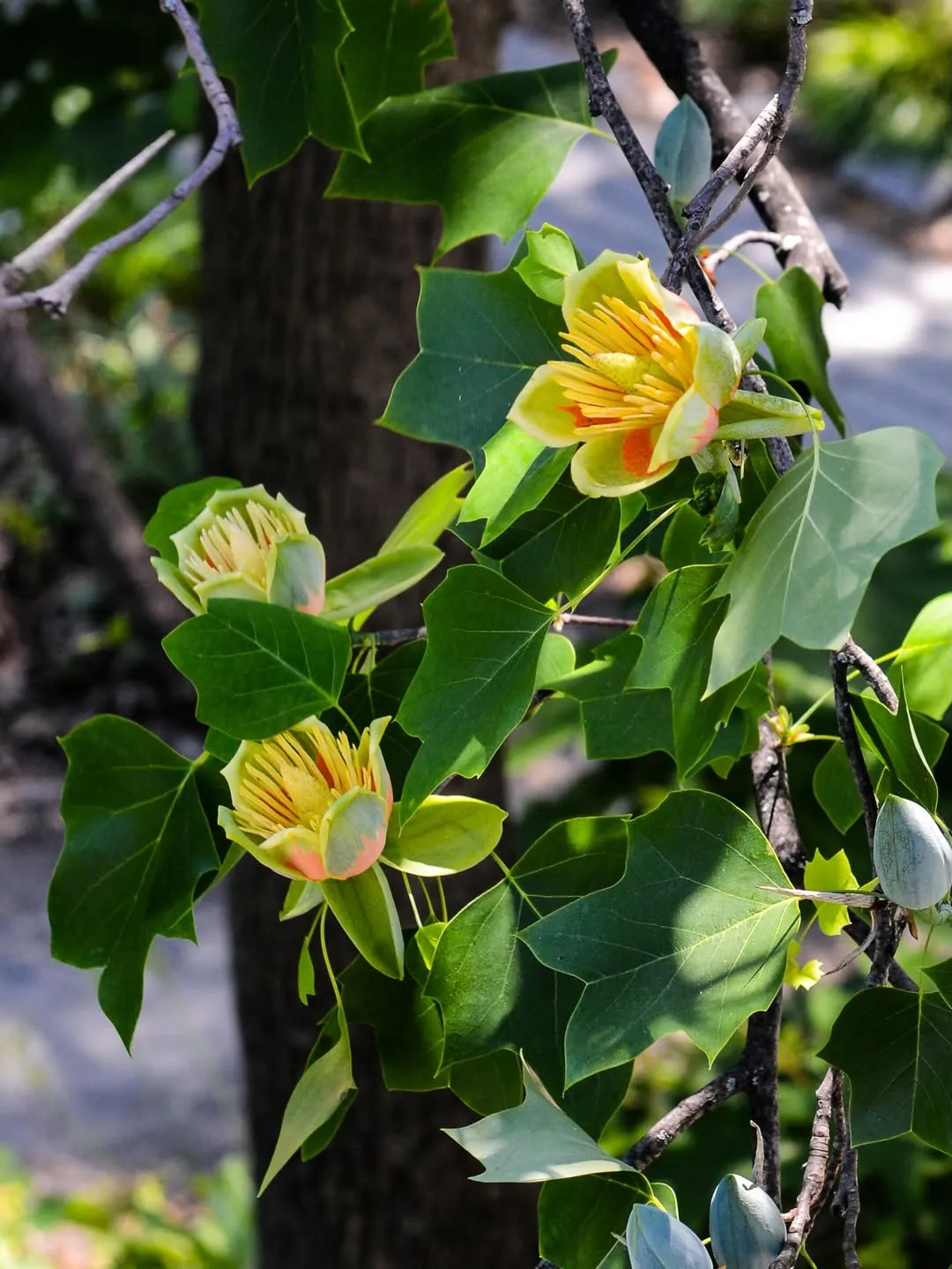
Liriodendron tulipifera bears yellow-green, cup-shaped flowers with an orange band at the base of each petal in late spring. As per the Missouri Botanical Garden, the flowers often go unnoticed because they open after the leaves are already fully grown. Tulip tree is one of the tallest trees , so it needs an open lawn, not a small yard.
Zone: 4-9 | Light: Full sun to part shade | Height: 60-90 ft
Japanese Flowering Quince
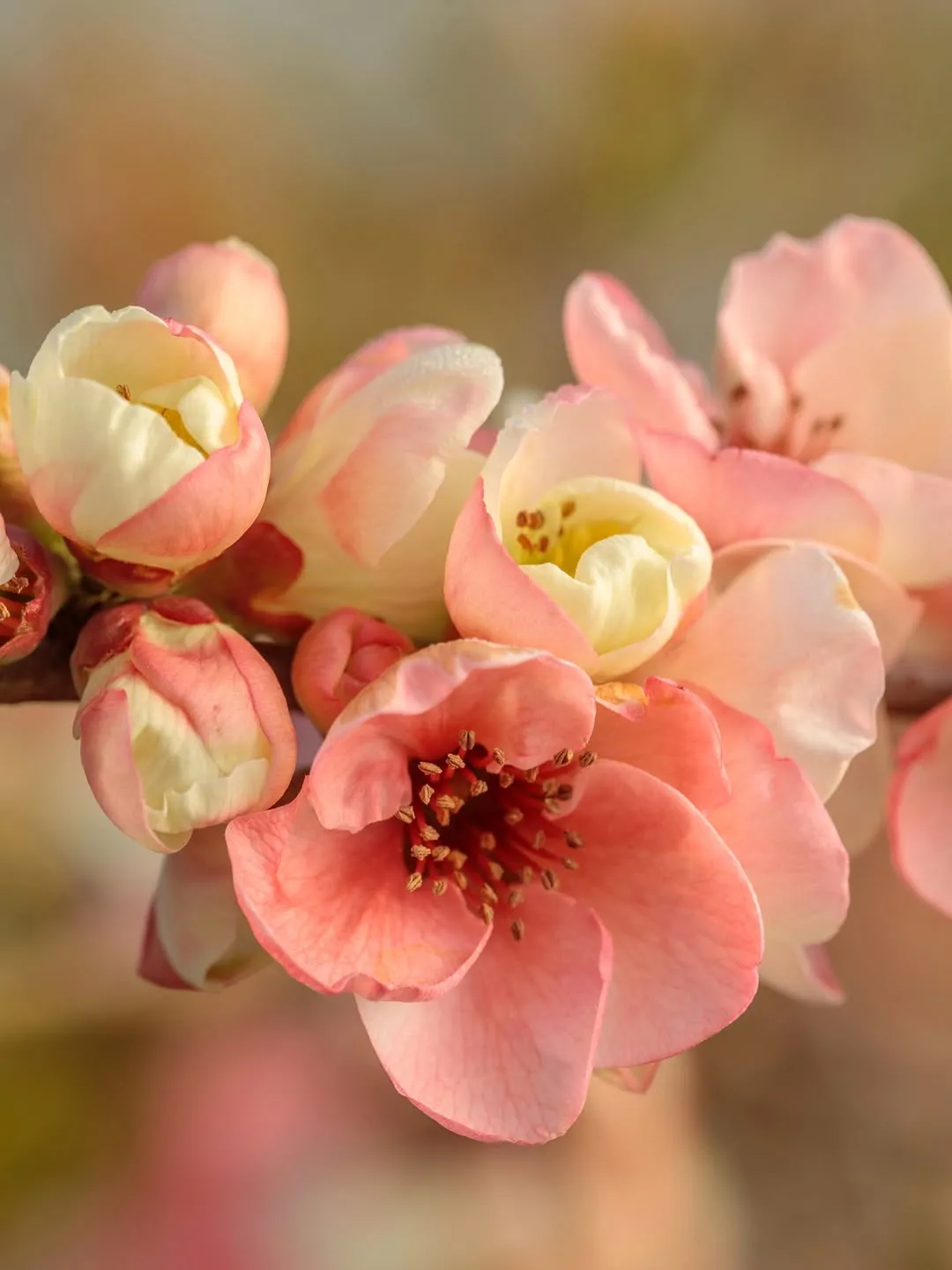
Chaenomeles japonica is the cold-hardy pick to bookmark. As per NC State Extension, orange to orange-red blooms open on bare stems in late winter. It flowers on old wood, so pruning before bloom removes next year's flowers, so, always prune lightly, right after the blooms fade.
Zone: 5-8 | Light: Full sun | Height: 3-6 ft (shrub form)
Coral Tree
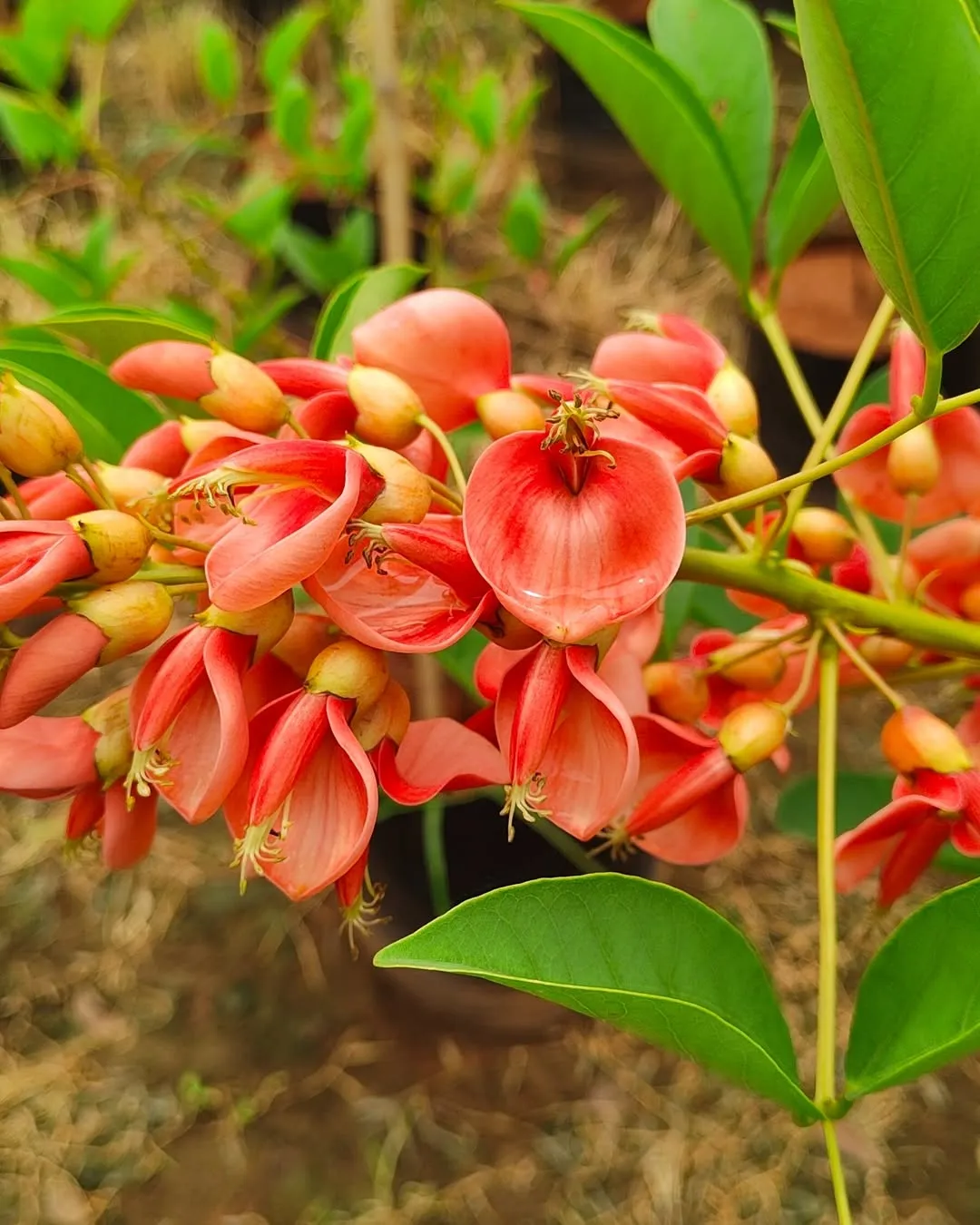
Erythrina coralloides known as a “hummingbird magnet”, blooms candlestick-shaped, red-orange flowers on bare, twisting branches in late winter to spring. Coral trees attract humming birds as the trees contain nectar. Thorny growth of the tree helps it prevent grazing animals, making it a better choice as a standalone tree.
Zone: 9-10 | Light: Full sun | Height: 25-30 ft
Silky Oak
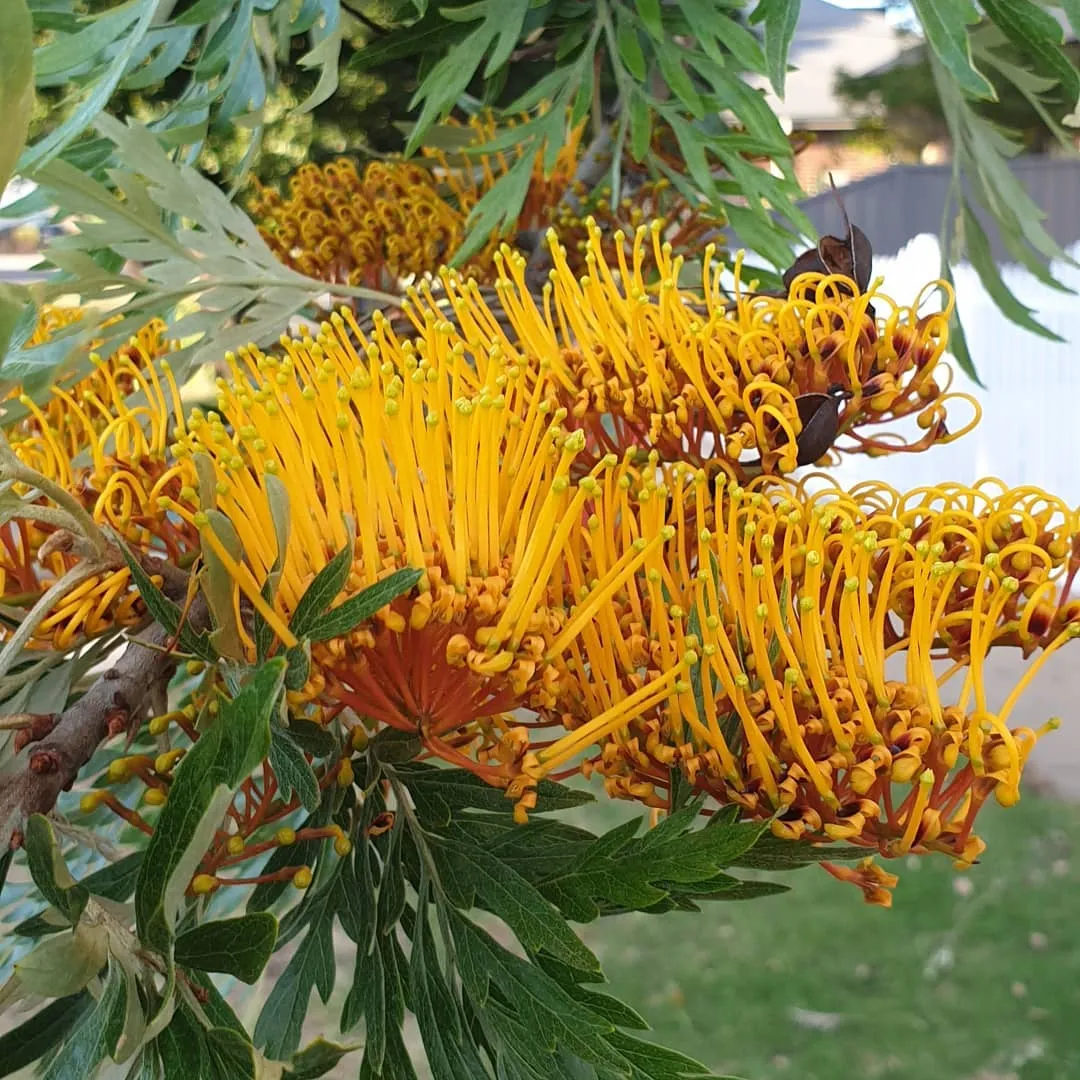
Grevillea robusta isn't a true oak, it's an Australian native with fern-like leaves and golden-orange, spidery flower spikes in spring. As it is a fast-growing variety with a vigorous root system, keep it clear of foundations and pipes. Fine leaf hairs can irritate skin for some people.
Zone: 9-11 | Light: Full sun | Height: 40-60 ft
Red Buckeye
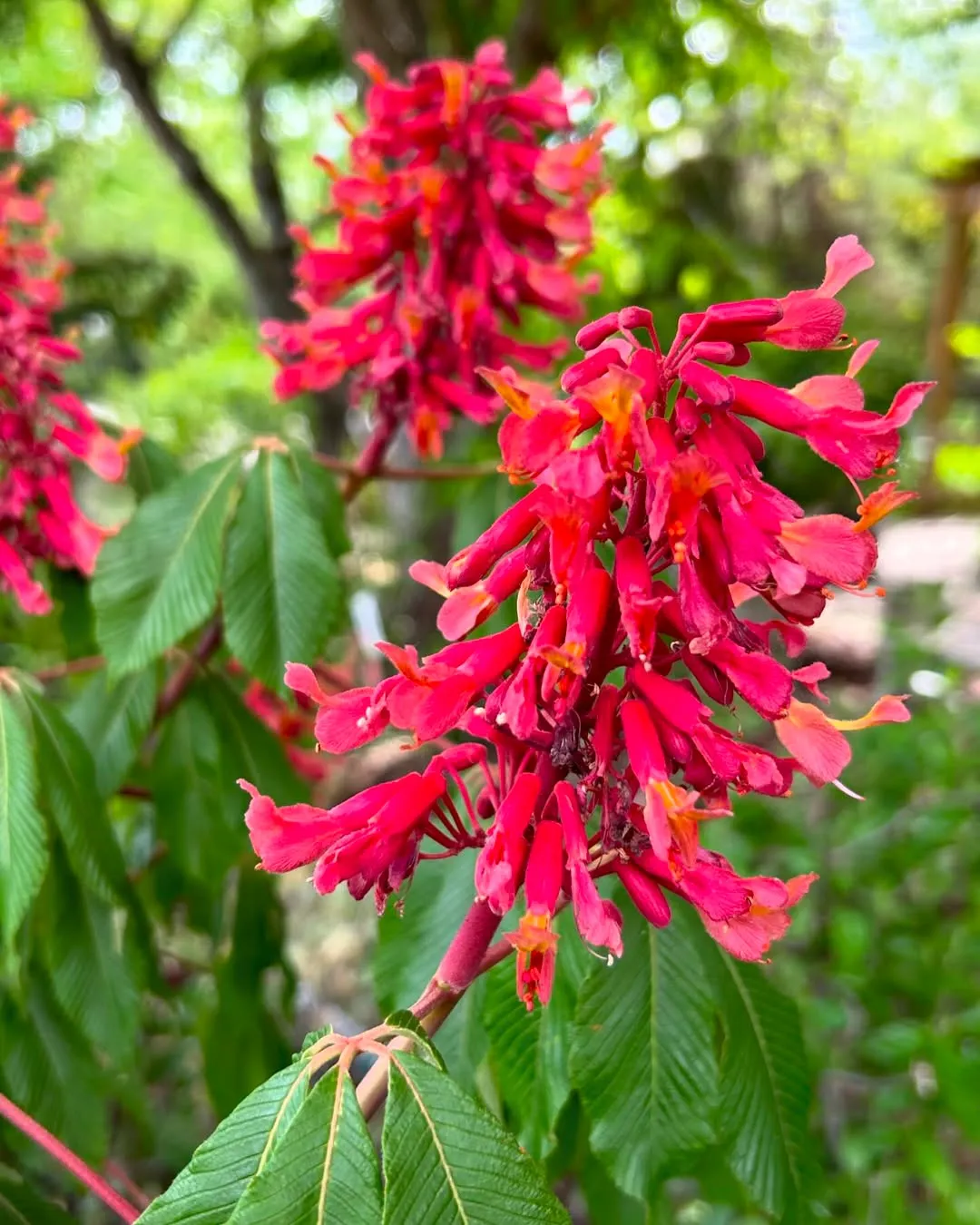
As per NC State Extension, Aesculus pavia produces 6-8 inch clusters of tubular red flowers in the spring that draw hummingbirds to the flowers. It's naturally an understory tree, so afternoon shade prevents leaf scorch in hot climates.
| Notes | Seeds and young shoots are toxic if eaten by kids or pets, so keep them away from the tree. |
Zone: 4-9 | Light: Part shade preferred | Height: 15-25 ft
Pomegranate
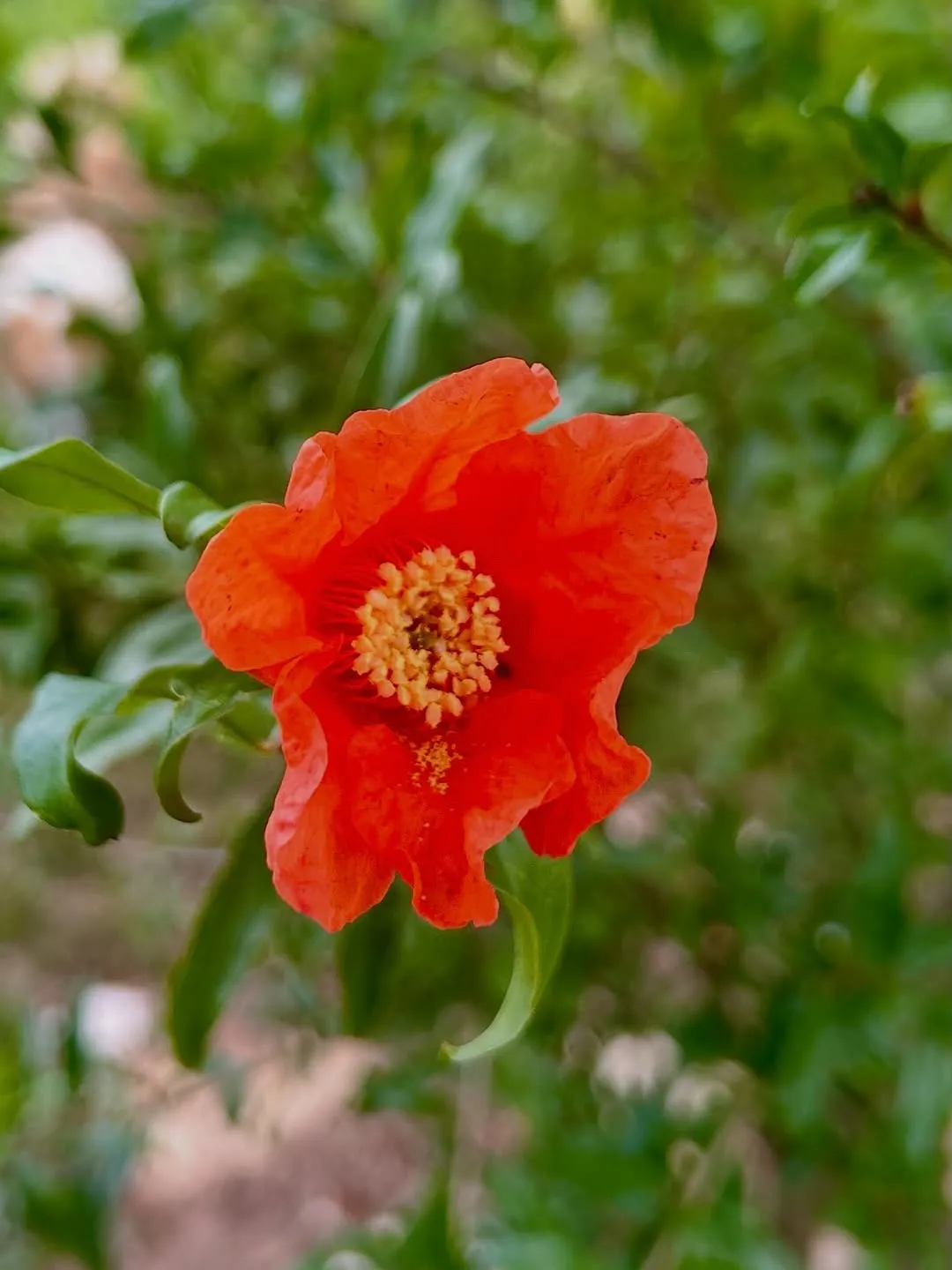
Punica granatum's orange-red, crepe-paper blooms appear late spring to early summer and then produce fruit. It is cold-hardier than most on this list and drought-tolerant once established. Double-flowering ornamental varieties often produce little fruit, so check the variety before buying.
Zone: 7-10 | Light: Full sun | Height: 12-20 ft
Cape Honeysuckle
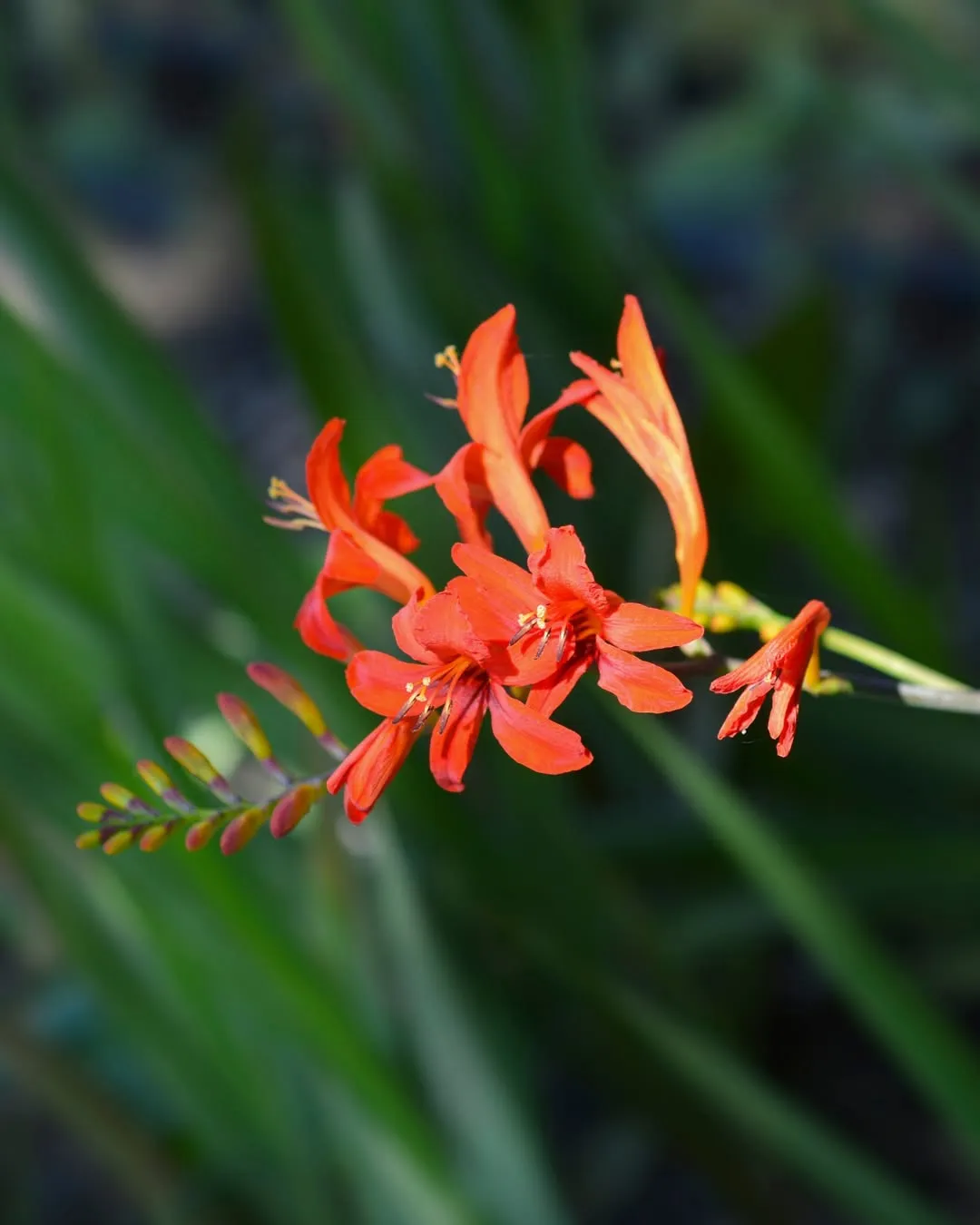
Tecoma capensis, grown as a shrub or trained into a small tree, produces tubular orange-red flowers from spring to fall in mild climates. It is an easy-to-care tree and drought-tolerant once established, but spreads by suckers, so you can expect minor maintenance.
Zone: 9-11 | Light: Part shade | Height: 6-10 ft
Geiger Tree
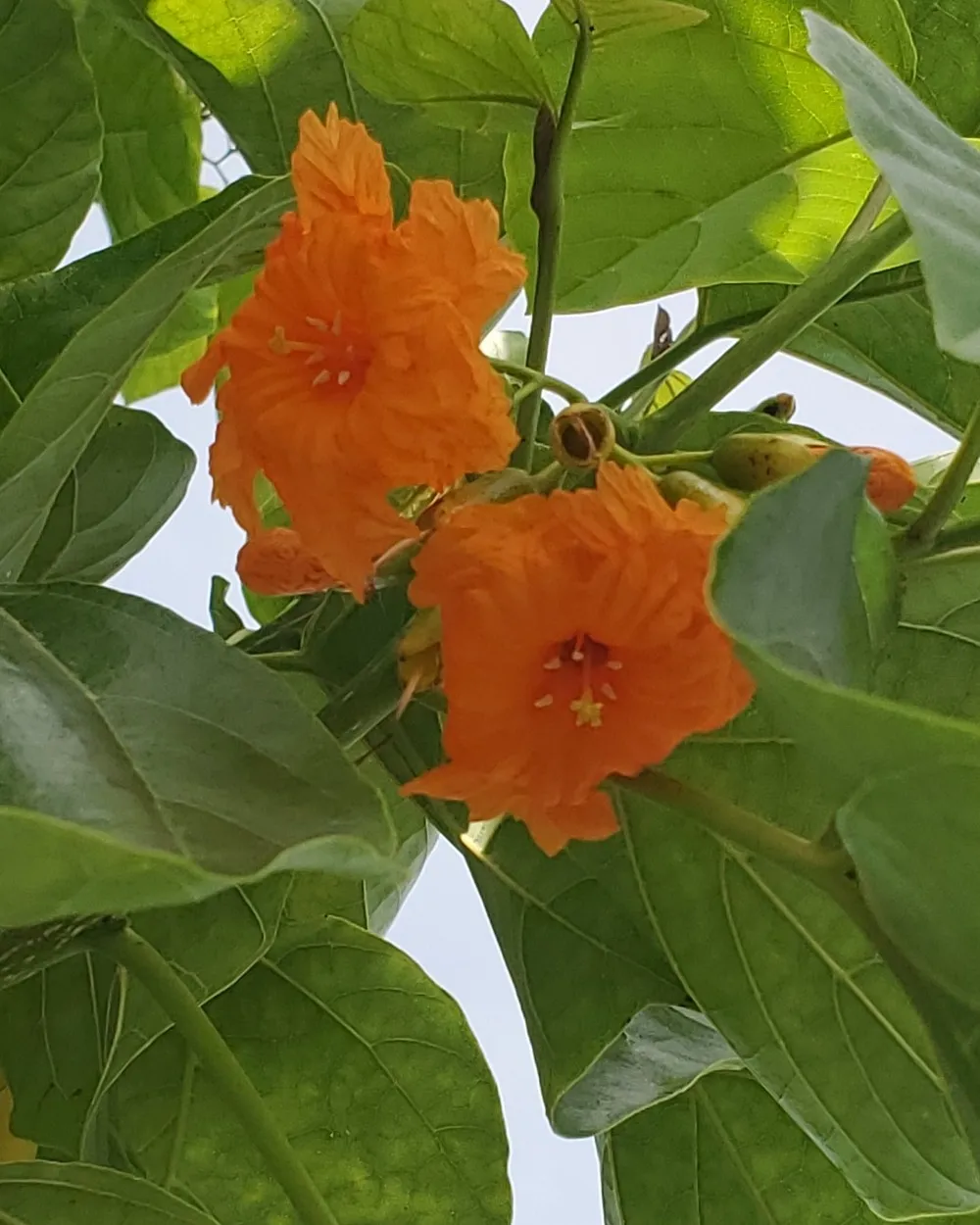
Cordia sebestena blooms deep orange, funnel-shaped flowers almost year-round in frost-free climates, heaviest in spring and summer. As it is salt and sand tolerant, it makes it a perfect coastal choice where other flowering trees struggle.
Zone: 10-11 | Light: Full sun | Height: 15-25 ft
Quick Comparison
| Tree | Bloom Season | USDA Zone | Height |
| African Tulip Tree | Winter-late spring | 10-12 | 60-80 ft |
| Red Silk Cotton Tree | Late winter-early spring | 10a-12b | Up to 70 ft |
| Tulip Tree | Late spring | 4-9 | 60-90 ft |
| Japanese Flowering Quince | Late winter-early spring | 5-8 | 3-6 ft |
| Coral Tree | Late winter-spring | 9-10 | 25-30 ft |
| Silky Oak | Spring | 9-11 | 40-60 ft |
| Red Buckeye | Spring | 4-9 | 15-25 ft |
| Pomegranate | Late spring-early summer | 7-10 | 12-20 ft |
| Cape Honeysuckle | Spring-fall | 9-11 | 6-10 ft |
| Geiger Tree | Year-round, peak spring/summer | 10-11 | 15-25 ft |
Planting and Care Tips
The right planting is undoubtedly an important stepping stone towards a successful and healthy planting. However, the right care is equally important. Here are some of the essential caring tips:
- Full Sun: Most of these trees require full sun for more than 6 hours.
- Wide Hole: It needs a hole twice as wide as the root ball, backfilled with native soil and a bit of compost.
- Sufficient Watering: Water the tree consistently through the first year, even if it’s a drought-tolerant species, then taper off.
- Balanced Fertilizer: Feed the tree lightly with a balanced fertilizer in early spring, too much nitrogen pushes leaves at the expense of flowers.
- Pruning: Prune the tree after the flowering period ends and remove the dead and damaged part of the tree to give a proper shape to the canopy. Avoid pruning heavily.
Common Mistakes to Avoid
- The biggest mistake gardeners make is pruning old-wood bloomers like Japanese flowering quince before flowering instead of right after the flowering. Pruning before flowering cuts off next year's buds entirely.
- The second commonly made mistake is planting understory trees like red buckeye in full sun, or giving a mature-40-foot silky oak a spot sized for a sapling.
- The third mistake is to overwater drought-tolerant species like coral tree and pomegranate, even after they get established. It causes more problems than underwatering.